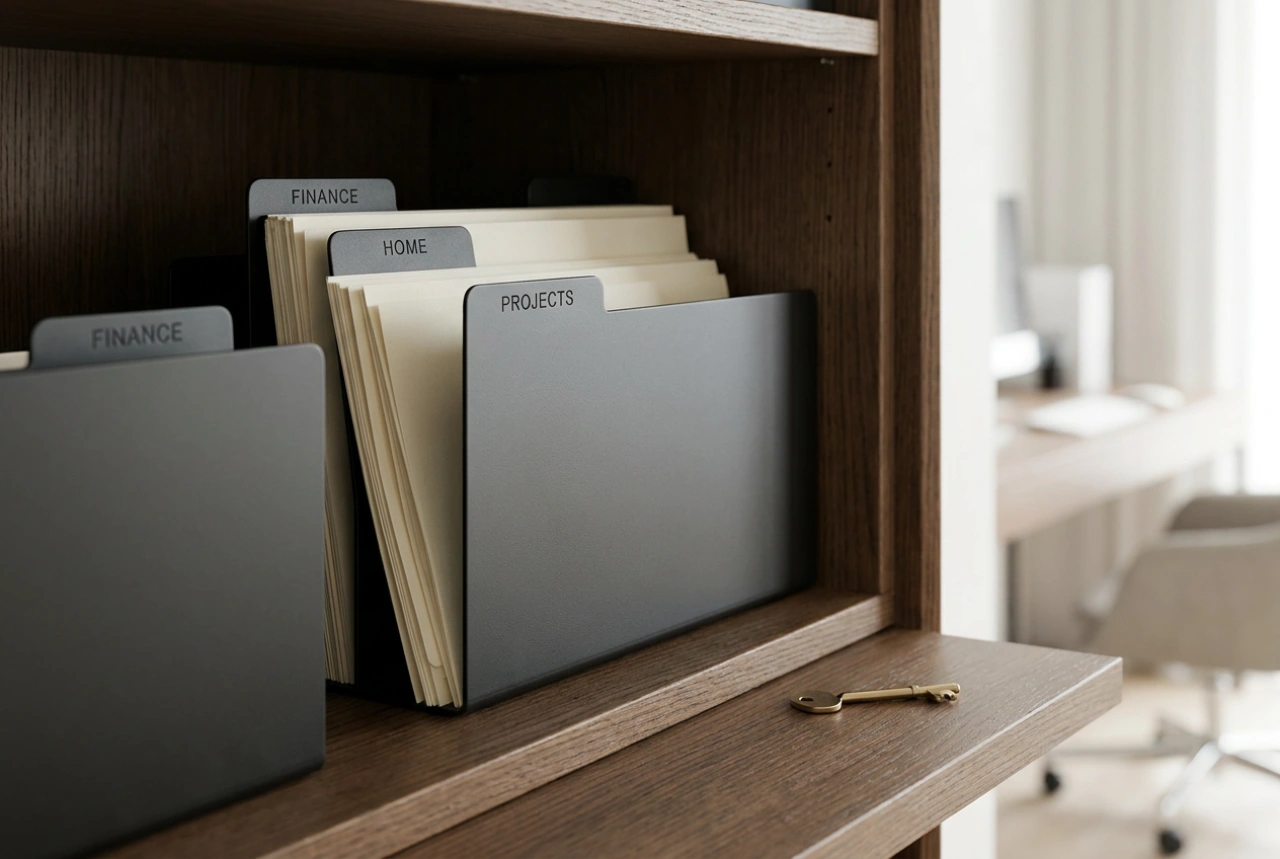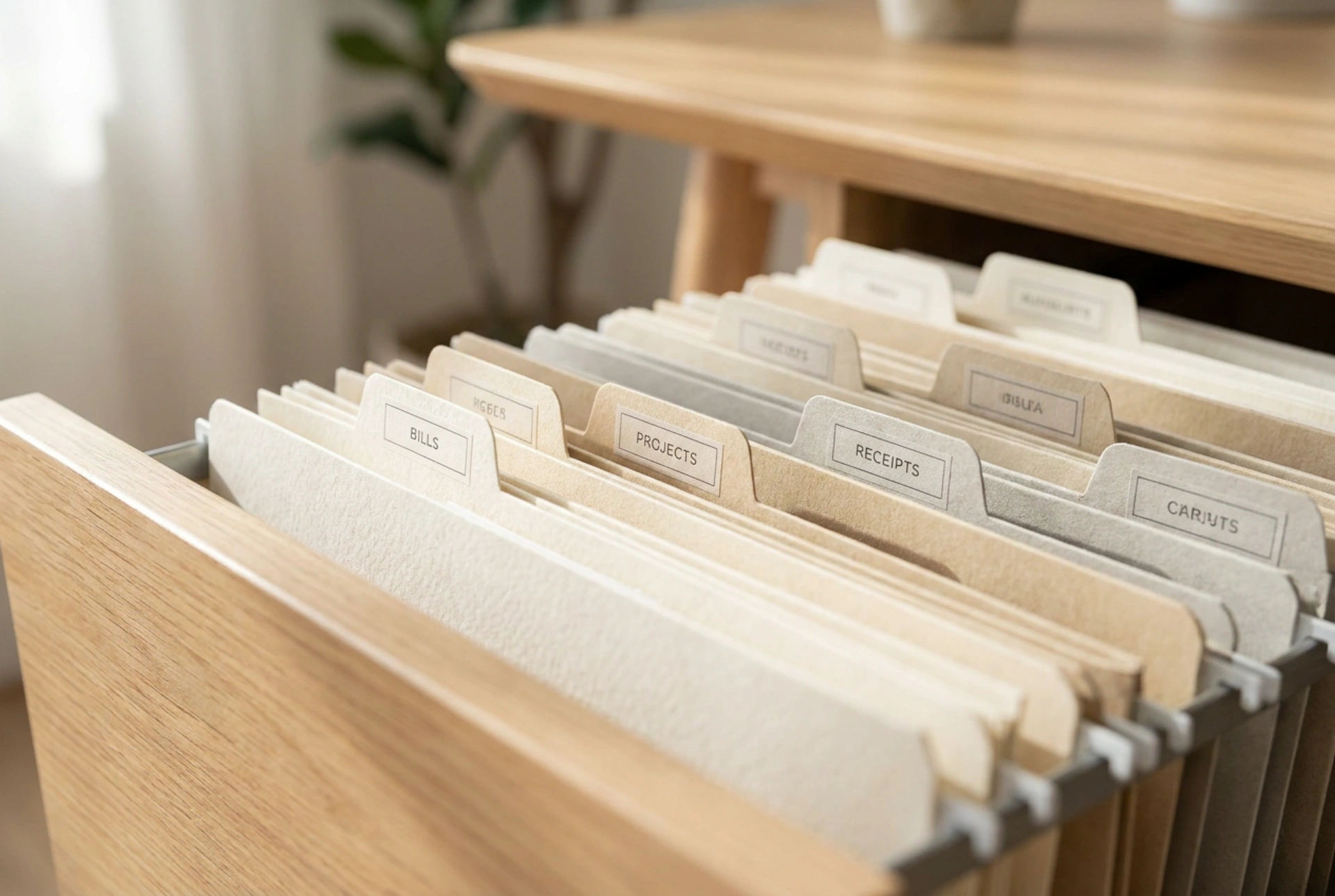


An efficient home archiving system relies on rapid visual retrieval, which is determined by the clarity, placement, and categorization of your folder labels.
The Physics of Visual Scanning and Label Placement
When searching through a filing drawer, the human eye processes information most efficiently when it can scan in a straight, uninterrupted line. This is why staggered tab indexing often fails in home archives. When tabs are placed in alternating positions (left, center, right), the eye must zig-zag across the drawer, which increases cognitive load and slows down retrieval time.
For the most efficient navigation, position all labels in a single, straight line, preferably on the far-left or far-right side of the folders. This consistent alignment allows you to flip through the folders like pages in a book, utilizing peripheral vision to scan the category names quickly. Additionally, ensure the font or handwriting is oriented horizontally; vertical labeling requires the brain to rotate the text mentally, delaying access.
The Chemistry of Adhesives and Paper Longevity
Choosing the right labeling medium is not just an aesthetic decision; it affects the physical preservation of your folders and documents. Standard pressure-sensitive adhesive labels contain synthetic glues that degrade over time. As these adhesives age, they undergo a process called polymerization decay, where the chemical bonds break down, turning the adhesive into a sticky, yellow residue that can seep through paper fibers and ruin the documents inside.
To prevent this chemical damage, use acid-free, archival-grade paper labels with a stable acrylic-based adhesive. Acrylic adhesives do not dry out, turn yellow, or bleed into the cellulose fibers of the paper folder. Alternatively, writing directly on high-density kraft paper folders using pigment-based archival ink is highly recommended. Pigment inks, unlike dye-based inks, rely on solid particles of color that sit on top of the paper fibers rather than soaking in, making them highly resistant to fading from light exposure and moisture.
Categorization Structure and Naming Conventions
The phrasing on your labels determines how quickly your brain registers where a document belongs. Avoid vague terms like "Miscellaneous" or "General Information," which create mental friction when filing. Instead, utilize a two-tier labeling system consisting of a broad category and a specific sub-category.
- Primary Category First: Start the label with the overarching department, such as "Finance" or "Property," followed by a specific descriptor. For example, write "Finance: Taxes 2023" instead of "2023 Tax Return." This ensures that all finance-related folders naturally group together alphabetically.
- Noun-First Rule: Always begin the label with a noun rather than an adjective or date. "Car: Insurance" is processed faster by the brain than "Annual Car Insurance Policy."
- Consistent Color Coding: Assign specific colors to broad categories (e.g., green for financial, blue for medical, red for identity documents) using small colored dots next to the text. This utilizes the brain's ability to process color wavelengths faster than written text, narrowing down the search area before you even read a label.
Maintenance and Order of Operations
A physical filing system is dynamic and requires a structured routine to prevent decay. When inserting new documents, place the newest paperwork at the front of the corresponding folder. This chronological order ensures that the most relevant information is always immediately accessible upon opening the folder. When a folder exceeds a thickness of two centimeters, the physical tension on the tab increases, causing the label to warp and become difficult to read. At this point, split the contents into a second folder, labeled with the same primary category followed by a Roman numeral (e.g., "Property: Maintenance I" and "Property: Maintenance II").