

Proper philatelic preservation relies on controlling environmental microclimates and physical handling techniques to prevent stamp adhesive from activating or degrading over time. Storing stamps securely in a stockbook requires understanding the chemical interactions between paper, gum, plastics, and humidity.
The Chemistry of Stamp Gum and the Threat of Moisture
Postage stamp adhesive, or gum, is highly hygroscopic, meaning it readily absorbs moisture from the surrounding air. Traditional stamps utilize natural gum arabic or dextrin, while modern issues rely on synthetic polyvinyl alcohol (PVA). When relative humidity (RH) rises above 55%, these adhesives transition from a dry, glassy state to a tacky, semi-liquid state. This process, known as plasticization, causes the stamp to adhere permanently to the stockbook pocket or page.
To prevent this chemical activation, you must maintain a stable microclimate. The ideal storage environment requires a relative humidity between 35% and 50%, paired with a temperature of 18°C to 22°C. Fluctuations in temperature cause dew point shifts within the album pages, leading to microscopic condensation. When the moisture evaporates, the dissolved gum recrystallizes, locking the stamp fibres into the plastic or glassine pocket. Utilizing silica gel desiccant packs within your storage cabinet can help buffer these humidity spikes, but they must be monitored and regenerated periodically.
Material Science: Selecting Acid-Free and Inert Storage
The chemical composition of your stockbook pages and protective strips directly influences the long-term stability of the stamp paper and gum. Standard commercial papers often contain lignin, an organic polymer that degrades over time to produce acidic byproducts. This acidity causes paper yellowing and brittle fibres, a process accelerated by moisture. Therefore, only stockbooks with acid-free, pH-neutral paper backing should be utilized.
The transparent strips or pockets that hold the stamps in place must be chemically inert. Avoid any materials containing polyvinyl chloride (PVC). Over time, PVC degrades and releases hydrochloric acid and volatile plasticizers (phthalates). These compounds migrate into the stamp paper, turning it oily, yellowing the colours, and chemically altering the gum. Instead, opt for pockets made of archival-grade materials:
- Glassine: A highly glazed, semi-translucent paper made from wood pulp that has undergone the supercalendering process. It is acid-free and highly resistant to air and moisture penetration.
- Polyester (Mylar): A highly stable, chemically inert polymer that provides excellent clarity and structural support without releasing harmful outgases.
- Polypropylene or Polyethylene: Safe, plasticizer-free alternatives that do not react with organic inks or adhesives.
Precision Handling and Insertion Techniques
Physical handling introduces contaminants that can degrade paper and cause stamps to adhere prematurely to the pockets. Human skin naturally secretes lipids, amino acids, and acidic sweat. When you touch a stamp with bare fingers, these substances transfer to the paper fibres, creating a nutrient-rich breeding ground for microscopic fungi (mould), commonly known in philately as foxing. Foxing causes permanent brown spots and can destroy the structural integrity of the paper.
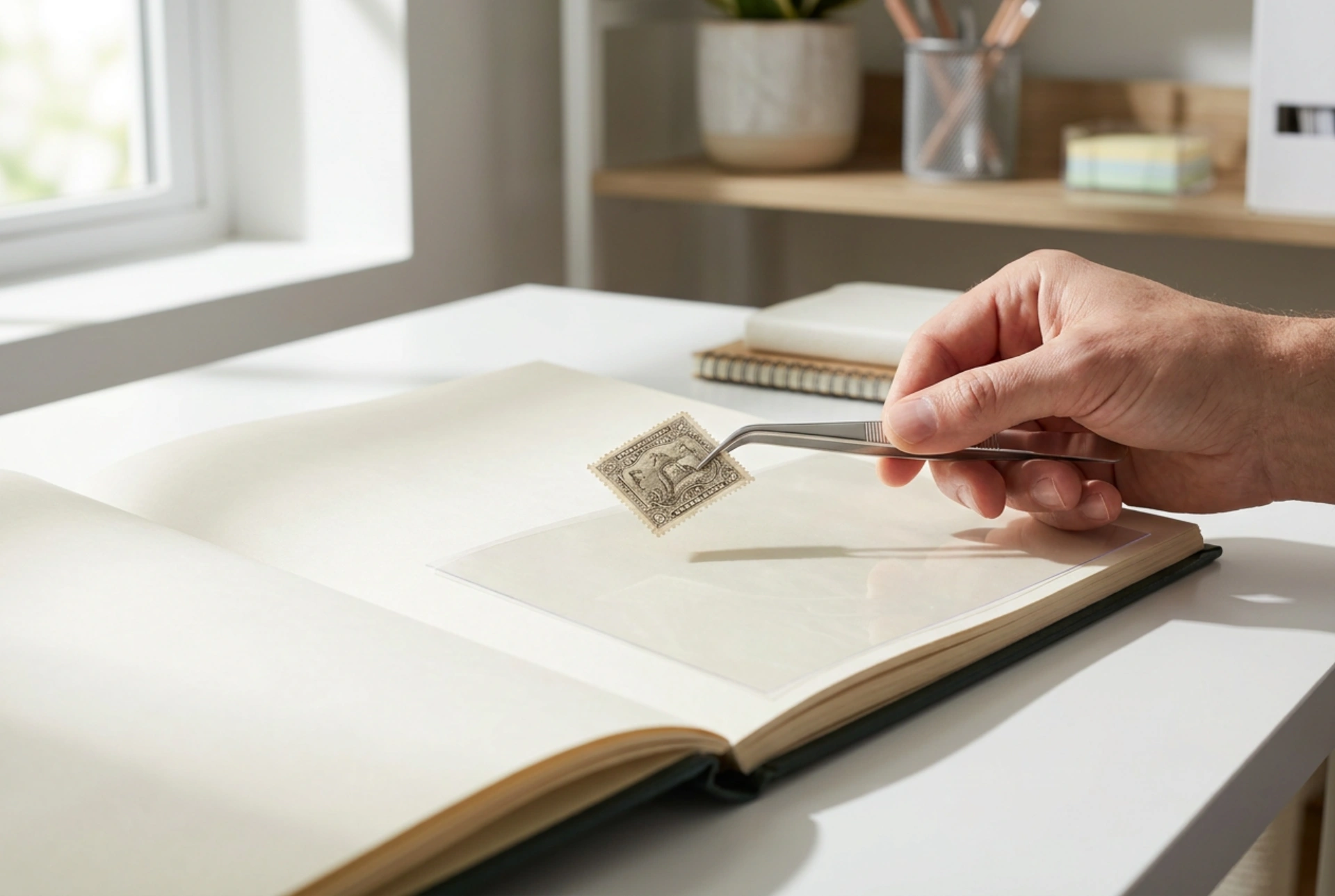
To manipulate stamps safely, always use specialized philatelic tweezers (tongs) made of non-magnetic stainless steel. These tweezers must have smooth, polished tips—either spade, round, or pointed—without serrations that could tear the delicate perforations. To insert a stamp into a stockbook strip without damage:
- Grasp the stamp gently near the centre of its body using the flat surface of the tweezer tips, applying minimal pressure.
- Slightly lift the protective strip of the stockbook page using the side of your tweezers to reduce friction.
- Slide the stamp into the pocket at a shallow angle, ensuring the delicate perforations at the bottom do not catch or bend against the edge of the pocket.
- Position the stamp so it is fully enclosed by the protective strip, leaving a small safety margin at the top to prevent physical shearing when pages are turned.
The Physics of Pressure: Storage Orientation and Density
Gravity and pressure play a significant role in preserving stamp gum. Storing stockbooks horizontally is a common mistake that leads to mechanical damage. When albums are stacked flat on top of one another, the cumulative mass exerts significant downward pressure on the lower pages. This constant pressure compresses the stamps against the plastic or glassine strips.
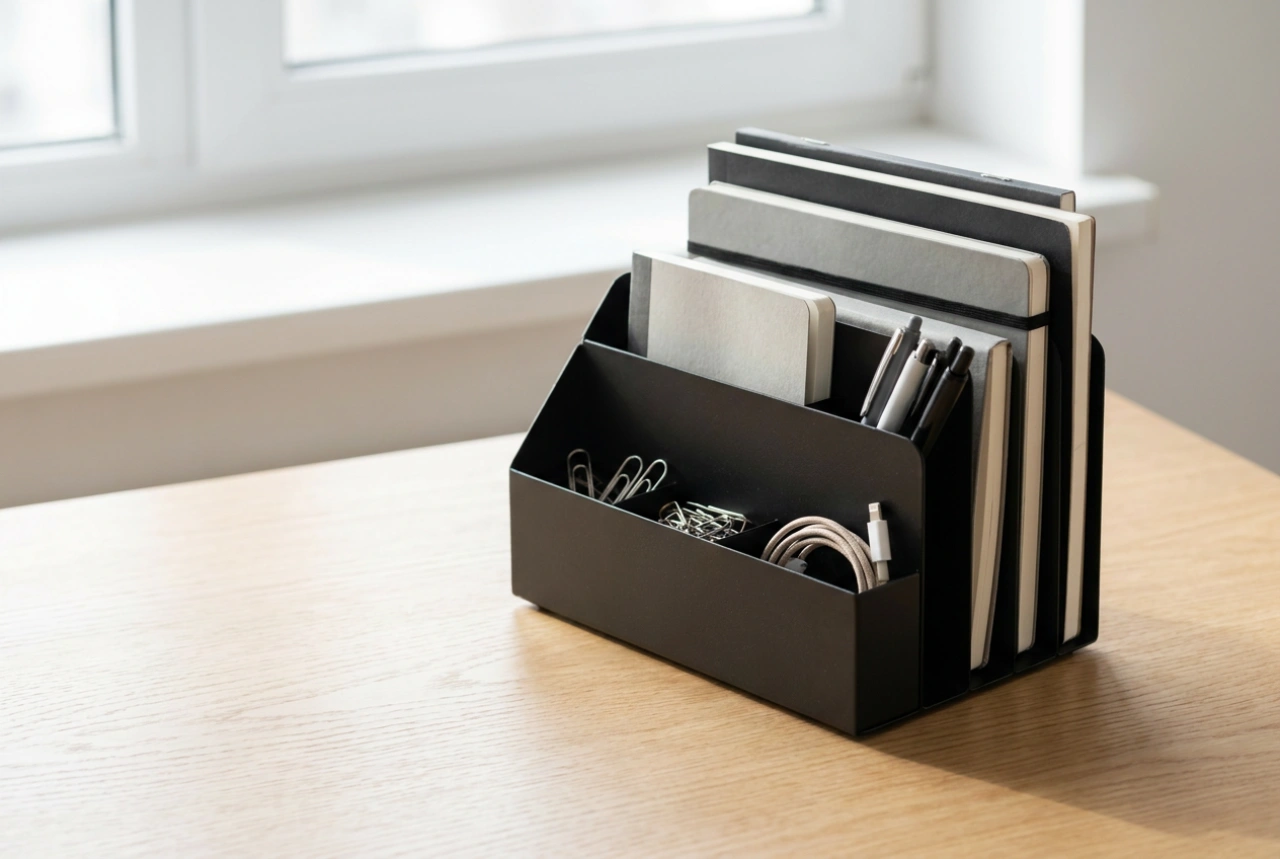
If there is even a minor fluctuation in humidity, this pressure forces the softened gum into intimate contact with the pocket material, facilitating a physical bond known as pressure glazing or sticking. To mitigate this risk, always store stockbooks vertically on shelves, much like books in a library. Avoid packing the albums too tightly on the shelf; there should be enough breathing room to allow minor air circulation while preventing lateral compression. This vertical alignment ensures that weight is distributed along the spine of the book rather than onto the delicate surfaces of the stamps themselves.