

Wooden salt and pepper mills are highly functional kitchen tools that require specific care to withstand moisture, friction, and skin oils. Protecting their structural integrity and ensuring the grinding mechanisms remain rust-free relies on understanding basic wood physics and simple organic chemistry.
The Physical Properties of Kitchen Wood
Wood is a naturally porous, hygroscopic material, meaning it actively absorbs and releases moisture from its surrounding environment. In a kitchen, mills are exposed to steam from cooking pots, ambient humidity, and natural oils from your hands. Without a protective barrier, raw or neglected wood will absorb this moisture, leading to structural warping, grain raising, and eventually deep-seated cracking. Furthermore, food particles and grease can penetrate the open cellular structure of the wood, creating a breeding ground for microbes.
To prevent these issues, the wood must be sealed with a hydrophobic barrier that fills the microscopic pores. This prevents liquid water from entering while allowing the wood to breathe slightly, adjusting safely to slow changes in ambient humidity without cracking.
The Chemistry of Wood Oils: What to Use and What to Avoid
Choosing the correct conditioning agent is critical to preserving both the wood and the flavor of your spices. You must never use kitchen cooking oils, such as olive, sunflower, rapeseed, or coconut oil, to treat wooden kitchenware. These are non-drying oils rich in unsaturated fatty acids. Over time, exposure to oxygen and light triggers a chemical process called oxidative rancidity. The double bonds in the fatty acids break down into volatile aldehydes and ketones, resulting in a sticky, tacky surface film and a highly unpleasant, rancid odor that can contaminate your salt and pepper.
Instead, rely on stable, food-safe synthetic or highly refined natural products:
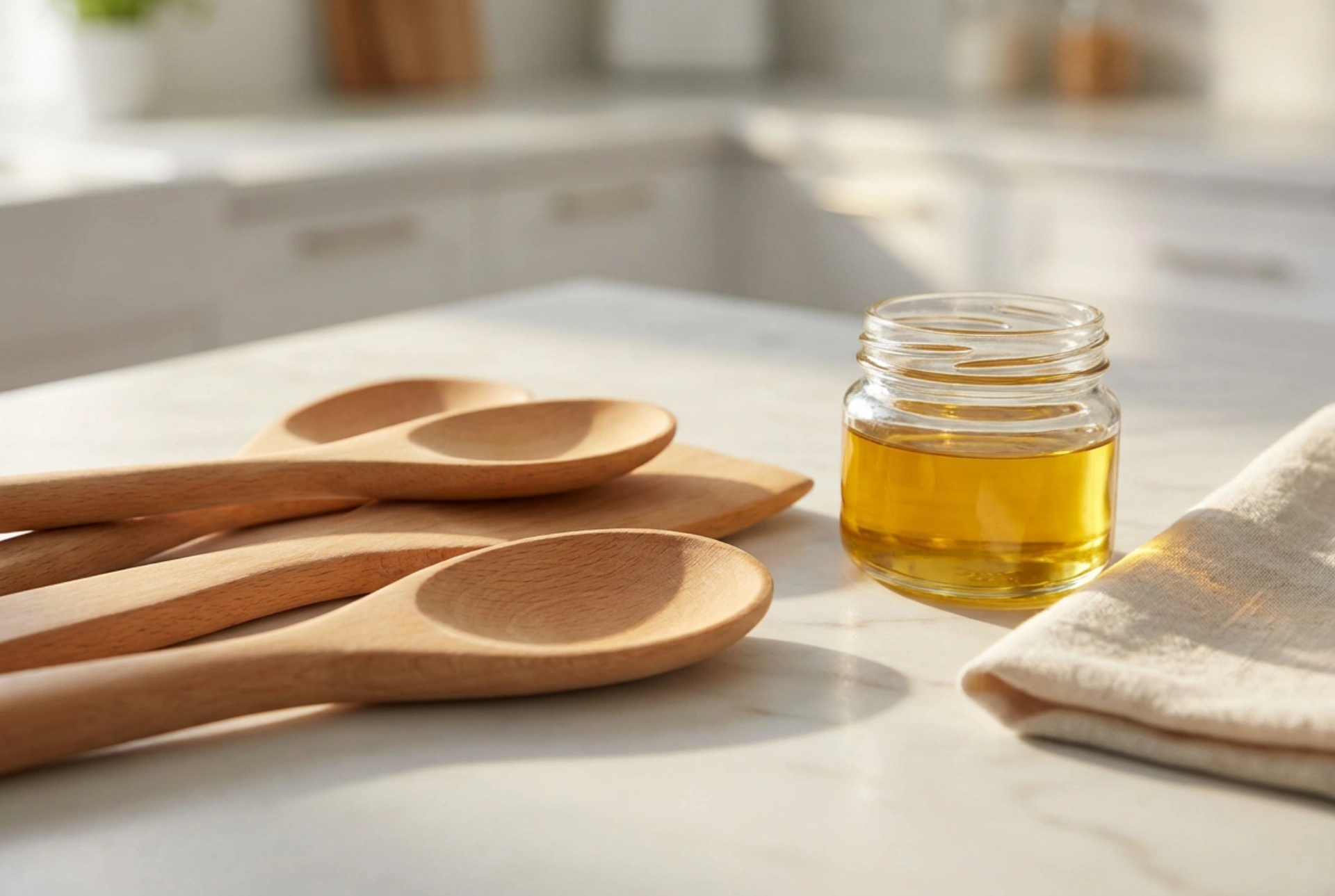
- Food-grade mineral oil: This is a highly refined, tasteless, and odorless petroleum distillate. Because it contains no organic fatty acids, it cannot oxidize or turn rancid. It penetrates deep into the wood fibers, displacing air and moisture.
- Liquid paraffin: Chemically identical to mineral oil, it provides excellent deep-tissue saturation for thirsty wood.
- Beeswax and Carnauba wax: These natural waxes are rich in long-chain esters. When melted into mineral oil or applied as a topcoat, they create a hard, water-resistant crystalline barrier on the surface that resists wear and gives the wood a soft, natural luster.
How to Clean and Oil the Exterior of Your Mill
Regular maintenance should be performed every few months, or whenever the wood begins to look dry and matte. The process requires patience and a strict avoidance of excess liquid water.
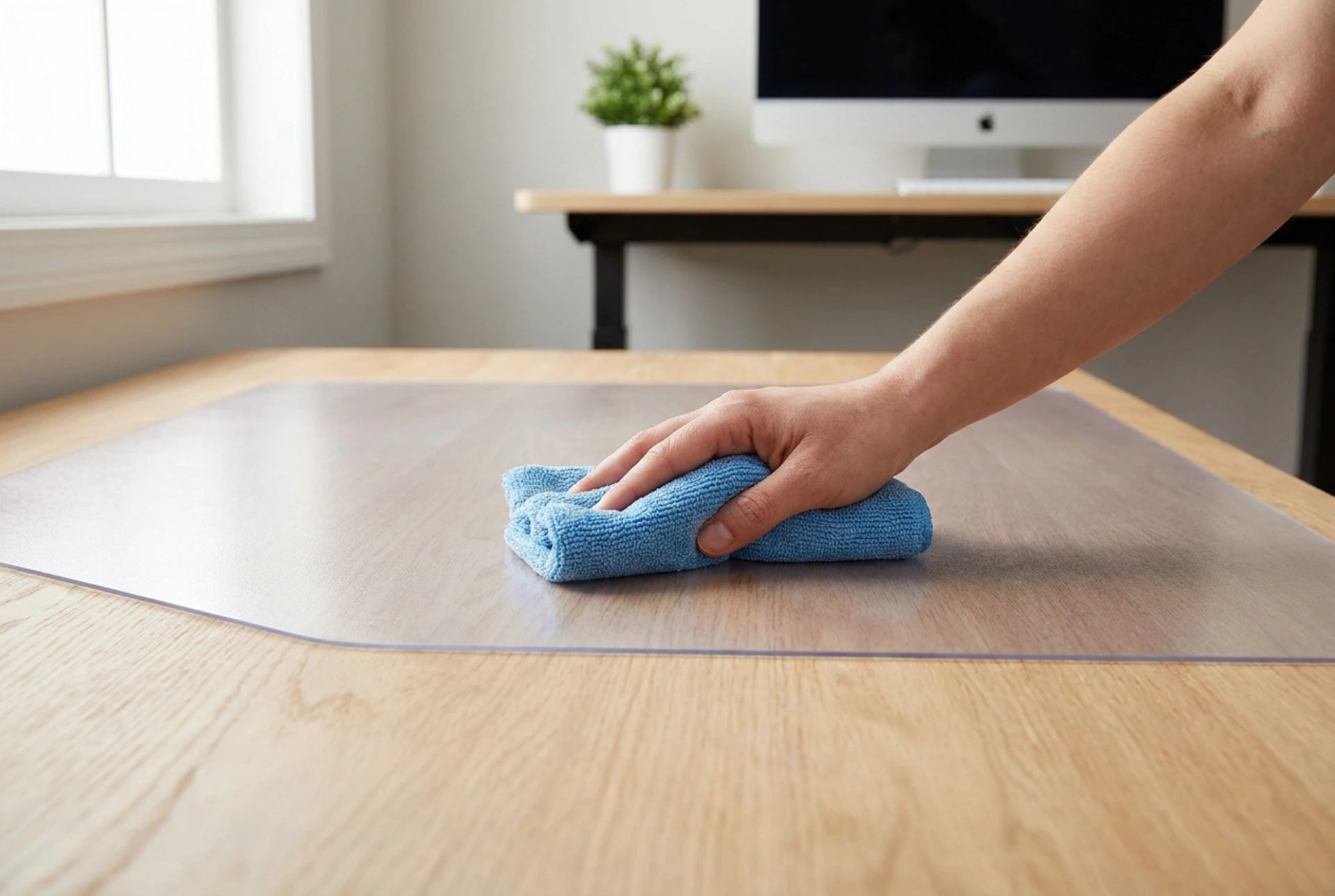
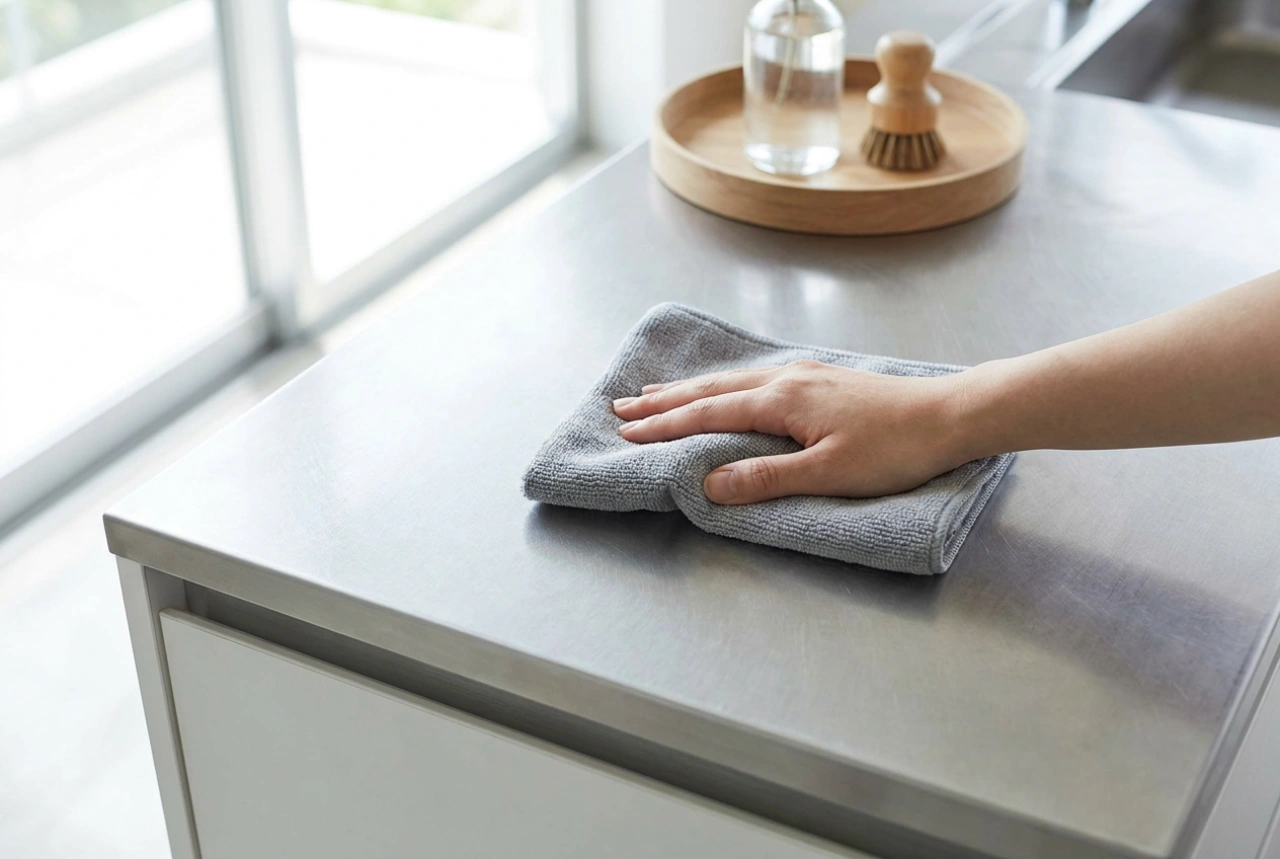
First, wipe down the exterior of the mill with a lint-free microfiber cloth that has been lightly dampened with warm water. Never submerge the mill in water or place it in a dishwasher; the sudden saturation will cause the wood fibers to swell rapidly, destroying the adhesive bonds and warping the body. Dry the surface immediately with a clean towel and let it air-dry completely in a well-ventilated area for at least two hours.
Once dry, apply a small amount of food-grade mineral oil or a wood-conditioning cream to a soft cloth. Rub the oil into the wood, following the direction of the natural grain. This ensures the fluid enters the open ends of the wood capillaries. Allow the oil to penetrate for twenty to thirty minutes. Finally, take a clean, dry cloth and vigorously buff the surface to remove any unabsorbed oil. The surface should feel completely dry and smooth to the touch, not oily or greasy.
Preserving the Internal Grinding Mechanism
The interior of a wooden mill houses the metal or ceramic grinding mechanism, which requires entirely different maintenance than the wooden exterior. Water must never be introduced to the inside of a mill.
Pepper mills usually contain hardened carbon steel or stainless steel mechanisms designed to shear peppercorns. If water enters a steel mechanism, it initiates electrochemical oxidation (rust), ruining the sharp cutting edges. Salt mills, on the other hand, feature ceramic mechanisms because sodium chloride is highly corrosive to metals, accelerating galvanic corrosion in the presence of even minor atmospheric moisture.
To clean either mechanism safely, empty the mill of spices. Pour in a tablespoon of dry, uncooked white rice. Grind the rice through the mill. As the hard rice grains pass through the mechanism, they physically scrape away residual spice oils, spice dust, and absorbed moisture. The rice flour produced will carry away these contaminants. Empty the remaining flour, wipe the base of the mechanism with a dry brush, and refill your mill with fresh salt or pepper.