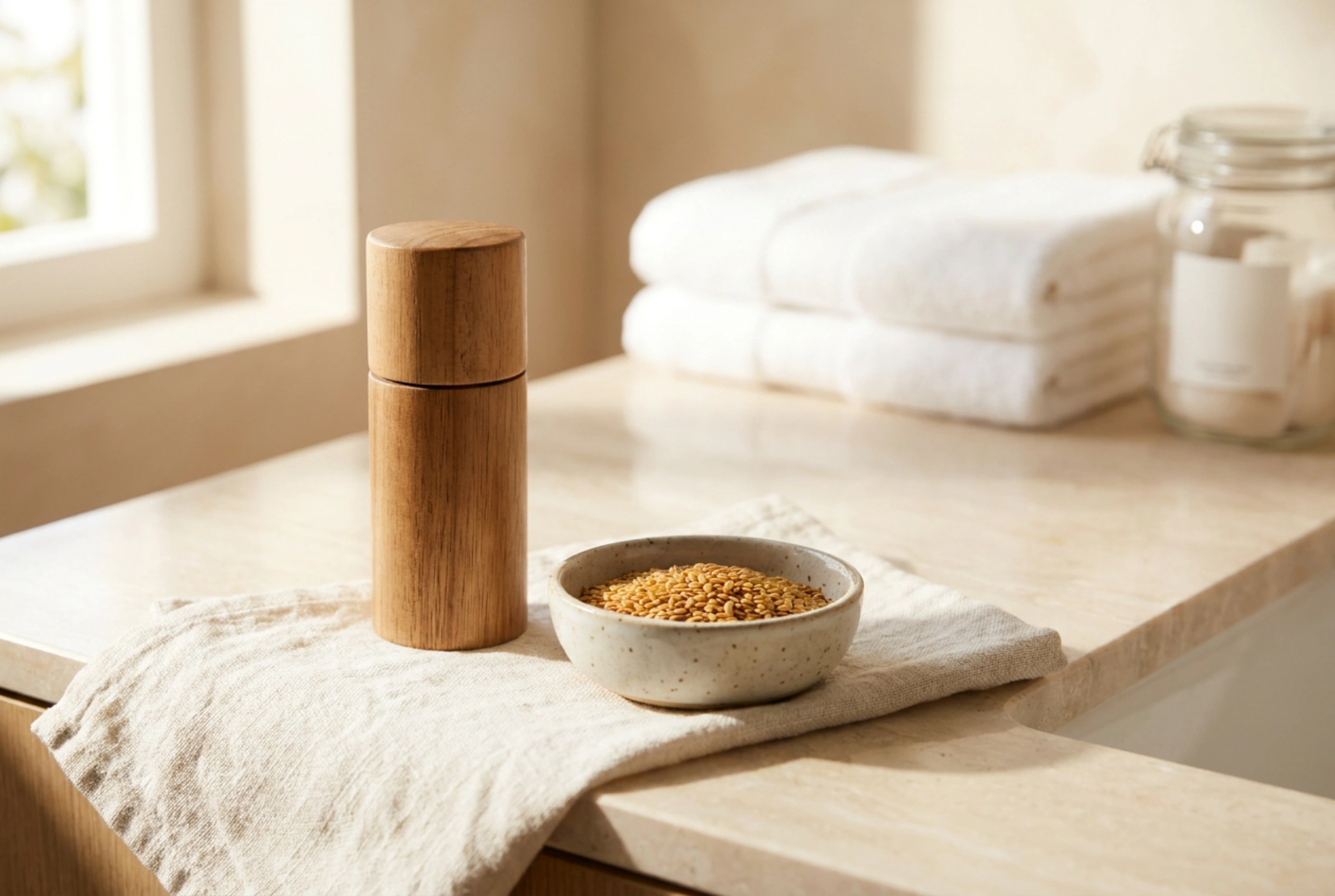


Grinding flaxseeds, sesame, or nuts releases heavy oils and mucilage that quickly coat grinder blades and burrs, leaving a sticky, rancid residue that water will only turn into a glue-like paste. Cleaning these delicate mechanisms requires dry, oil-absorbing materials and a systematic mechanical approach to protect the motor and prevent rust.
The Chemistry of Oily Seed Residue
Flaxseeds are rich in alpha-linolenic acid and contain soluble mucilage fibers. When these seeds are ground, the cell walls rupture, releasing lipids and polysaccharides. If you attempt to clean this residue with water, the mucilage hydrates, swelling into a thick, sticky gel that binds to the metal surfaces of the burrs or blades. Once dry, this gel hardens like varnish, locking up the moving parts. Furthermore, moisture introduced into a grinder chamber risks corroding carbon steel burrs and damaging internal electrical components. Therefore, the removal of oily residues must rely on mechanical friction and dry chemical absorption rather than aqueous dissolution.
The Starch Absorption Method
To lift lipids without liquid solvents, you must introduce a dry, highly absorbent medium with high surface area and structural hardness. Raw, dry white rice is the ideal agent for this process. Rice grains contain dense crystalline starch structures that act like microscopic sponges, drawing free oils into their outer layers. Additionally, as the grinder pulverises the hard rice grains, the resulting sharp particles physically scrape away the oily film stuck to the cutting edges.
Step-by-Step Rice Cleaning Process
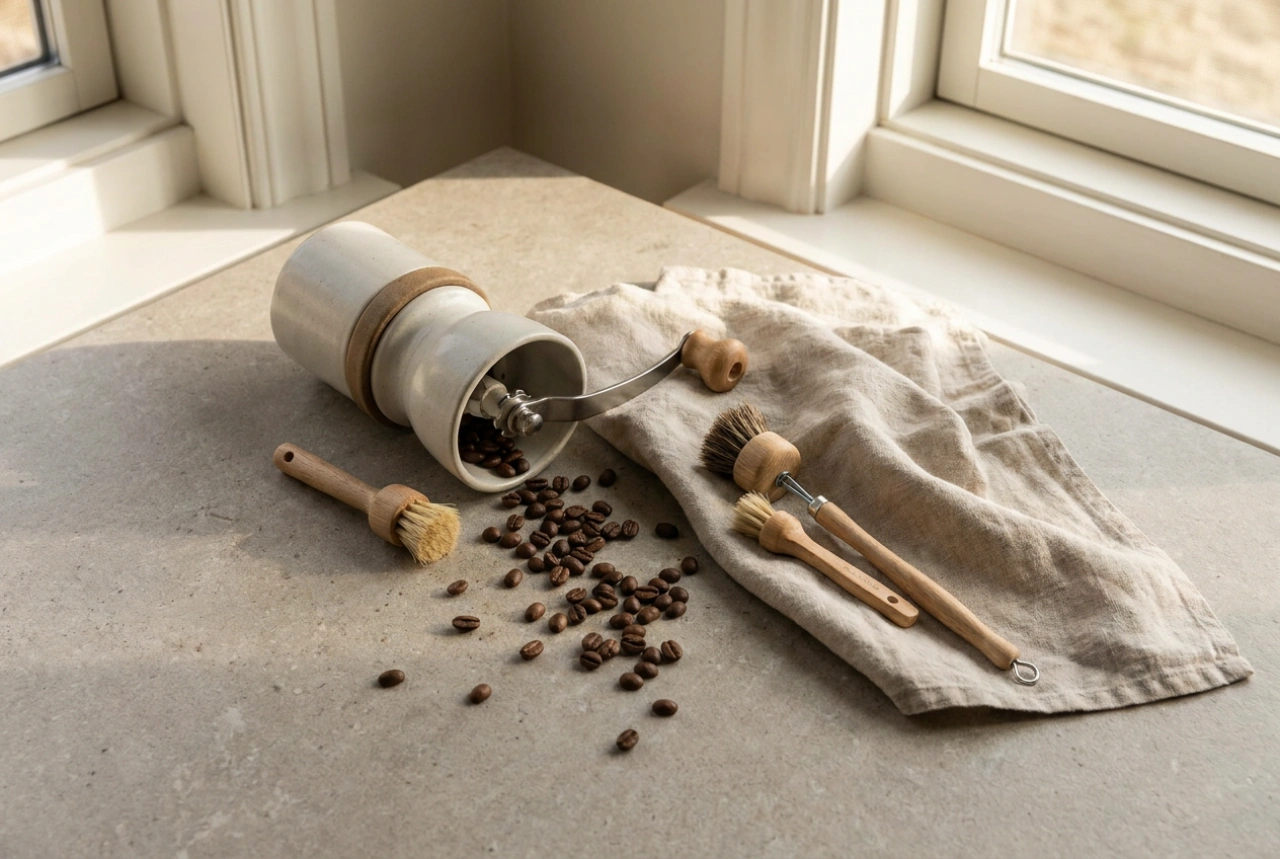
- Clear the loose debris: Use a dry, stiff-bristled utility brush to sweep away any loose seed hulls and powder from the chamber and chute.
- Introduce the absorbent medium: Pour approximately two to three tablespoons of uncooked, dry white rice into the grinding chamber. Do not use parboiled or instant rice, as these lack the hardness required for mechanical scrubbing.
- Run the grind cycle: Process the rice on a medium-coarse setting for 15 to 20 seconds. The rice will transform into a fine, oil-saturated flour, carrying the trapped lipids with it.
- Discard and inspect: Empty the flour. If the powder still shows a yellow or brown tint from the seeds, repeat the process with a fresh tablespoon of rice.
How Friction Heat Affects Oily Residues
During the grinding process, the mechanical friction between the seeds and the metal burrs generates localized heat. This thermal energy lowers the viscosity of the seed oils, causing them to spread thinly across the steel surfaces and penetrate micro-porosities in the metal. When the grinder cools down, these oils solidify into a stubborn, tacky film. Running dry rice immediately after processing oily seeds takes advantage of this warmed state, allowing the starch to absorb the lipids before they fully cure onto the metal surfaces.
Neutralising Rancid Odours with Sodium Bicarbonate
Linseed and nut oils oxidise rapidly when exposed to air, producing volatile organic compounds that emit a sour, rancid smell. While rice removes the physical oils, it may not completely neutralise these odours. Sodium bicarbonate (baking soda) acts as a mild amphoteric chemical agent that reacts with acidic rancid oil molecules, converting them into odourless salts. To apply this, mix a teaspoon of baking soda with the second batch of cleaning rice. The abrasive action of the rice will distribute the bicarbonate powder into the micro-crevices of the burrs, neutralising the volatile compounds at a molecular level.
Final Detailing and Maintenance
After grinding the absorbent mixture, a fine white powder of starch and baking soda will remain in the crevices. This must be cleared thoroughly to prevent it from absorbing moisture from the air later on. Use a soft, dry microfibre cloth to wipe the walls of the chamber. For inaccessible areas around the axle or lower burr, use a dry, clean brush or a dedicated air blower to dislodge the remaining dust. Never use damp cloths or liquid sprays inside the chamber, as even minor condensation can trigger oxidisation of the steel components and lead to premature wear.