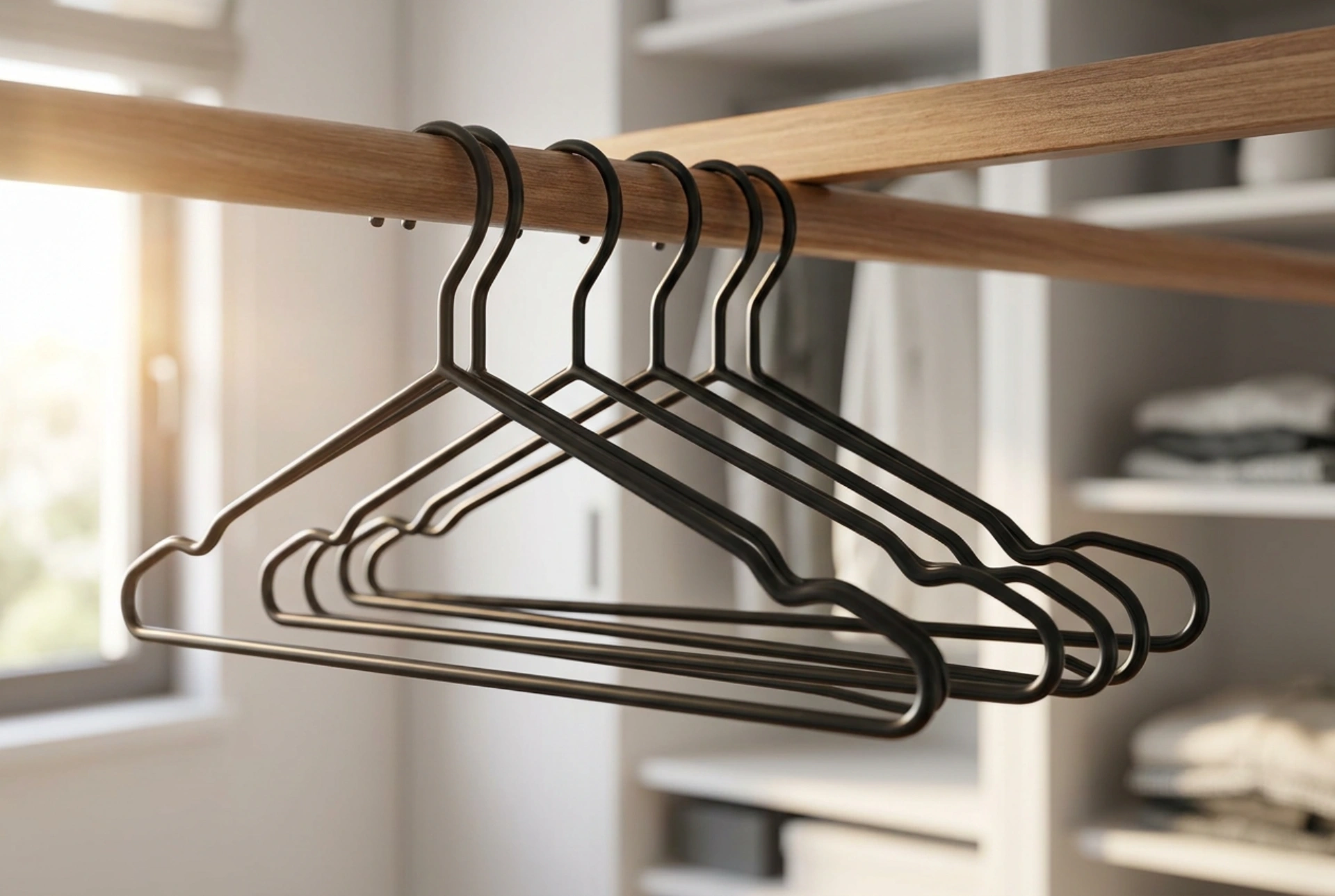


Selecting the correct metal clothes hanger is not merely an aesthetic choice, but a practical decision that directly impacts the preservation of garment fibres and the structural integrity of your wardrobe. Understanding the material science behind different metals and surface finishes prevents fabric snagging, rust transfer, and the permanent deformation of shoulders.
Understanding Metal Alloys and Weight Distribution
The primary function of a hanger is to counteract gravity without distorting the textile. When choosing metal hangers, the tensile strength and gauge of the metal are critical. Lightweight aluminium hangers offer excellent corrosion resistance due to a naturally occurring oxide layer, making them ideal for high-humidity environments like bathrooms or laundry rooms. However, aluminium has lower yield strength than steel, meaning it can easily deform under the weight of heavy woollen coats or structured winter jackets.
For heavier garments, carbon steel or stainless steel hangers are superior. Carbon steel provides immense structural rigidity but must be coated to prevent oxidation. Stainless steel, containing chromium, forms a self-healing passive layer of chromium oxide that blocks oxygen diffusion to the iron beneath, ensuring lifetime rust protection. When evaluating steel hangers, thicker wire gauges (typically 3mm to 4mm) distribute the downward force of heavy garments over a larger surface area, preventing the wire from cutting into the shoulder seams of heavy coats.
The Chemistry of Surface Finishes and Fabric Protection
Raw metal should never come into direct contact with apparel. Changes in atmospheric humidity can trigger chemical reactions, leading to metal oxides (rust) transferring onto organic fibres like cotton, linen, and silk. To prevent this, manufacturers employ several surface treatment techniques:
- Powder Coating: This process electrostatically applies a dry polymer powder to the metal, which is then cured under heat to form a hard, non-porous thermoplastic or thermoset layer. Powder-coated hangers resist chipping, moisture, and chemical exposure, making them highly durable and gentle on delicate weaves.
- Electroplating: This electrochemical process deposits a thin layer of another metal (such as chrome, brass, or nickel) onto the steel base. Electroplated surfaces are exceptionally smooth, reducing the coefficient of friction so garments slide on and off easily. However, highly polished chrome offers very little grip, which may cause wide-neck garments to slip off.
- Anodisation: Primarily used for aluminium, this electrochemical process thickens the natural oxide layer, creating a highly durable, corrosion-resistant, and non-reactive finish that cannot chip or peel.
Avoiding the Shoulder Bump: Physics of Hanger Geometry
The dreaded 'shoulder bump' occurs when the concentrated pressure of a thin hanger pushes upward against a fabric under tension. When a garment hangs, its weight pulls downward, concentrated at the outermost points of the hanger. If the end of the hanger is thin and abrupt, the fabric stretches locally beyond its elastic limit, causing permanent deformation.
To prevent this, look for metal hangers with contoured, widened ends. These flared profiles mimic the natural human shoulder, distributing the load across a broader surface area and preserving the natural drape of tailored suits and delicate knits. Additionally, the slope angle of the hanger should closely match the shoulder slope of the garment—typically between 15 and 20 degrees—to prevent the collar from collapsing or the shoulders from puckering.
Selecting Features for Specific Textile Types
Different fabrics require different mechanical properties from a hanger. Heavy denim and trousers benefit from a solid steel bar equipped with a non-slip silicone sleeve. The silicone increases static friction, keeping the trousers securely in place without leaving crease marks. Delicate silk, satin, and synthetic materials require ultra-smooth, polished surfaces or integrated notches to secure strap-based garments without snagging the fine threads. For heavy knits, hangers should be avoided entirely to prevent vertical stretching; however, if hanging is necessary, thick, contoured metal loops wrapped in non-reactive textiles are the safest option.