

A mirrored wardrobe is a highly effective tool for transforming a cramped hallway into an open, welcoming space by manipulating light and human spatial perception. Understanding the science of reflection and positioning allows you to double the visual depth of your entryway without physical alterations.
The Physics of Light and Perceived Spatial Depth
The human brain determines the size of a room based on visual boundaries and the behaviour of light. When light strikes a standard wall, it undergoes diffuse reflection, scattering in multiple directions and defining the physical boundary of the room. A mirror, however, causes specular reflection, where light rays bounce off the smooth silvered surface at the exact same angle they arrived. This clean reflection tricks the visual cortex into perceiving a continuation of the room, effectively doubling the apparent distance to the wall.
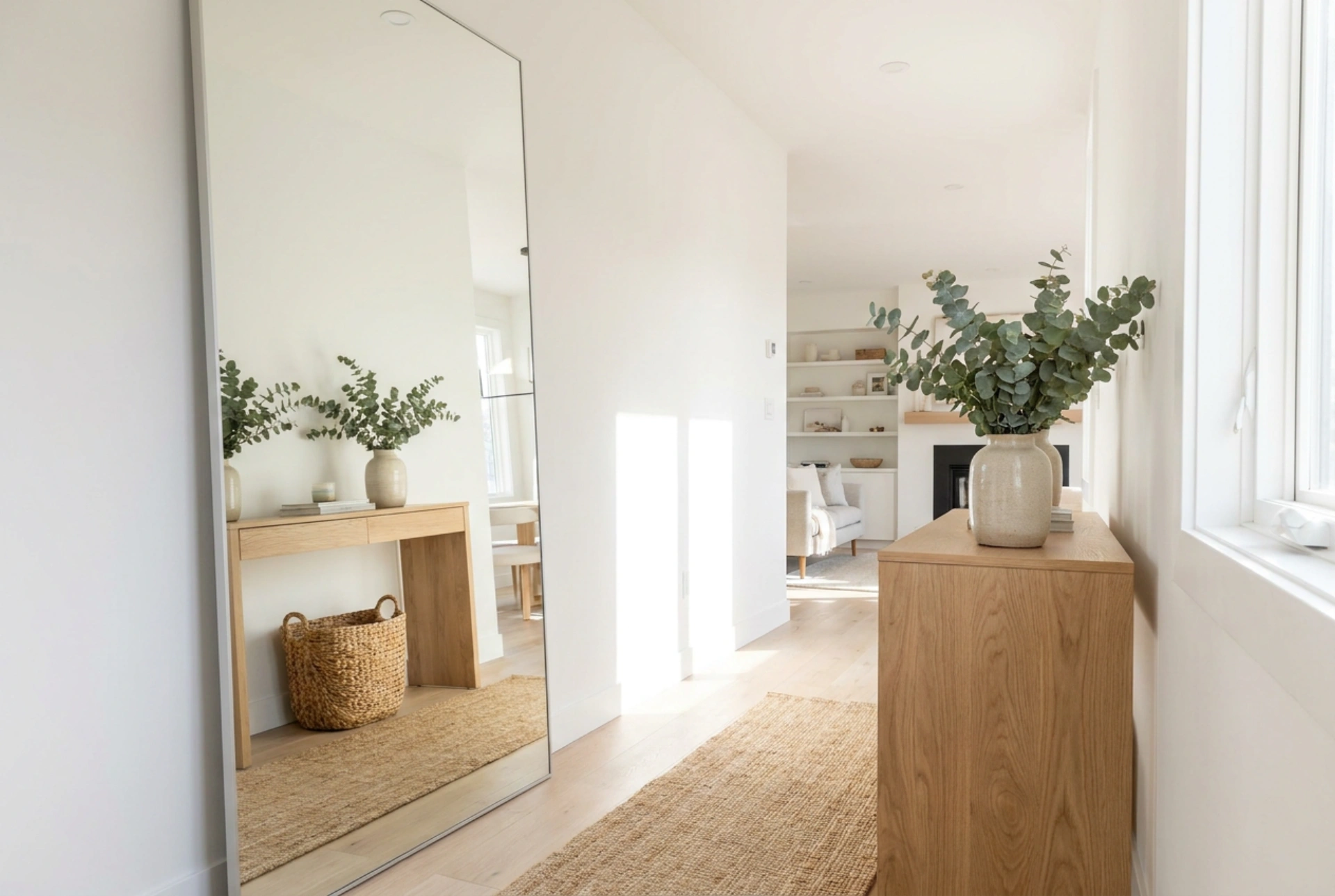
To maximise this optical illusion, the quality of the glass and the silvering process are critical. Modern high-quality mirrors use float glass coated with a thin layer of silver or aluminium, sealed with protective paint layers to prevent oxidation. Placing a large, floor-to-ceiling mirror panel on a wardrobe door ensures that the reflection covers both the floor and ceiling lines. This seamless vertical integration prevents the brain from easily identifying where the physical wall ends and the reflection begins, making narrow corridors feel significantly wider.
Strategic Placement for Light Optimization
The position of your mirrored wardrobe relative to light sources determines how bright and open the entryway will feel. To harness natural light, position the wardrobe adjacent to, rather than directly opposite, windows or glass-panelled doors. Direct opposition can cause harsh glares and bounce intense beams back outside, whereas an adjacent angle of incidence scatters the incoming light deeper into the dark corners of the hallway.
When dealing with a completely windowless entryway, artificial light placement becomes paramount. Avoid placing bright spotlights directly above the mirror, as this casts harsh downward shadows and highlights every fingerprint on the glass. Instead, position diffused ceiling lights or wall sconces so that their light paths intersect with the mirror at a 45-degree angle. This distributes a soft, indirect glow across the entire hallway, mimicking the expansive feel of natural daylight.
Maintaining the Illusion: The Chemistry of Streak-Free Glass
For a mirror to successfully expand a space, the glass must remain completely transparent and free of light-diffracting particles. Dust, oils, and cleaning residues scatter light randomly, breaking the optical illusion of depth and drawing attention to the glass surface itself. Achieving a flawless surface requires understanding the chemistry of glass cleaning.
Avoid using heavy commercial detergents that contain silicones or artificial fragrances, as these leave microscopic films that catch the light. Instead, use a simple solution of isopropyl alcohol and distilled water (a 1:1 ratio) or a highly diluted acetic acid (white vinegar) mixture. Isopropyl alcohol acts as a rapid solvent for greasy fingerprints, breaking down lipids without leaving a residue, while distilled water ensures no mineral deposits (limescale) are left behind during evaporation.
The application technique is just as vital as the chemistry. Spray the cleaning solution onto a clean, tightly woven microfibre cloth rather than directly onto the mirror. This prevents the liquid from pooling at the bottom edges of the frame, which can degrade the silver backing over time (a process known as silver rot). Wipe the surface using a systematic Z-pattern, starting from the top corner and working downward, to ensure uniform coverage and eliminate overlapping streak lines.
Complementing Reflections with Color and Texture
A mirror only reflects what is already in the room; therefore, the surrounding wall colours and textures dictate the success of the optical enlargement. Highly textured, dark walls absorb light, limiting the effectiveness of the reflection. To amplify the mirrored effect, paint the surrounding walls in light, neutral tones with a satin or eggshell finish. These finishes have a slight sheen that subtly bounces light, working in harmony with the mirror's specular reflection to create a seamless flow of light.
Avoid placing high-contrast, cluttered coat racks or shoe piles directly opposite the wardrobe mirror, as the reflection will double the visual clutter, making the entryway feel more chaotic rather than spacious. Instead, aim for a clean, minimalist view in the reflection, such as a plain wall, a neat console table, or a simple piece of art, to reinforce the feeling of an organised, open space.