

Storing damp towels and worn garments in the bathroom often leads to trapped humidity, stale odors, and the rapid growth of mildew. Understanding the relationship between airflow, material properties, and moisture control allows you to select and maintain a laundry bin that actively preserves fabric freshness.
The Physics of Airflow and Moisture Accumulation
When damp fabrics are placed into an airtight container, the relative humidity inside quickly reaches one hundred percent. This warm, stagnant environment is ideal for the proliferation of fungal spores and anaerobic bacteria, which break down sweat and organic residue to produce volatile organic compounds (VOCs) experienced as musty odors. To prevent this chemical process, moisture must evaporate faster than the bacteria can multiply. A high-quality laundry receptacle must facilitate continuous passive ventilation, allowing air to circulate freely through the weave or perforations, drawing moisture away from the textiles.
Material Science: Selecting the Right Structure
Different materials interact with moisture and humidity in distinct ways, impacting the cleanliness of your stored laundry.
Natural Woven Fibers
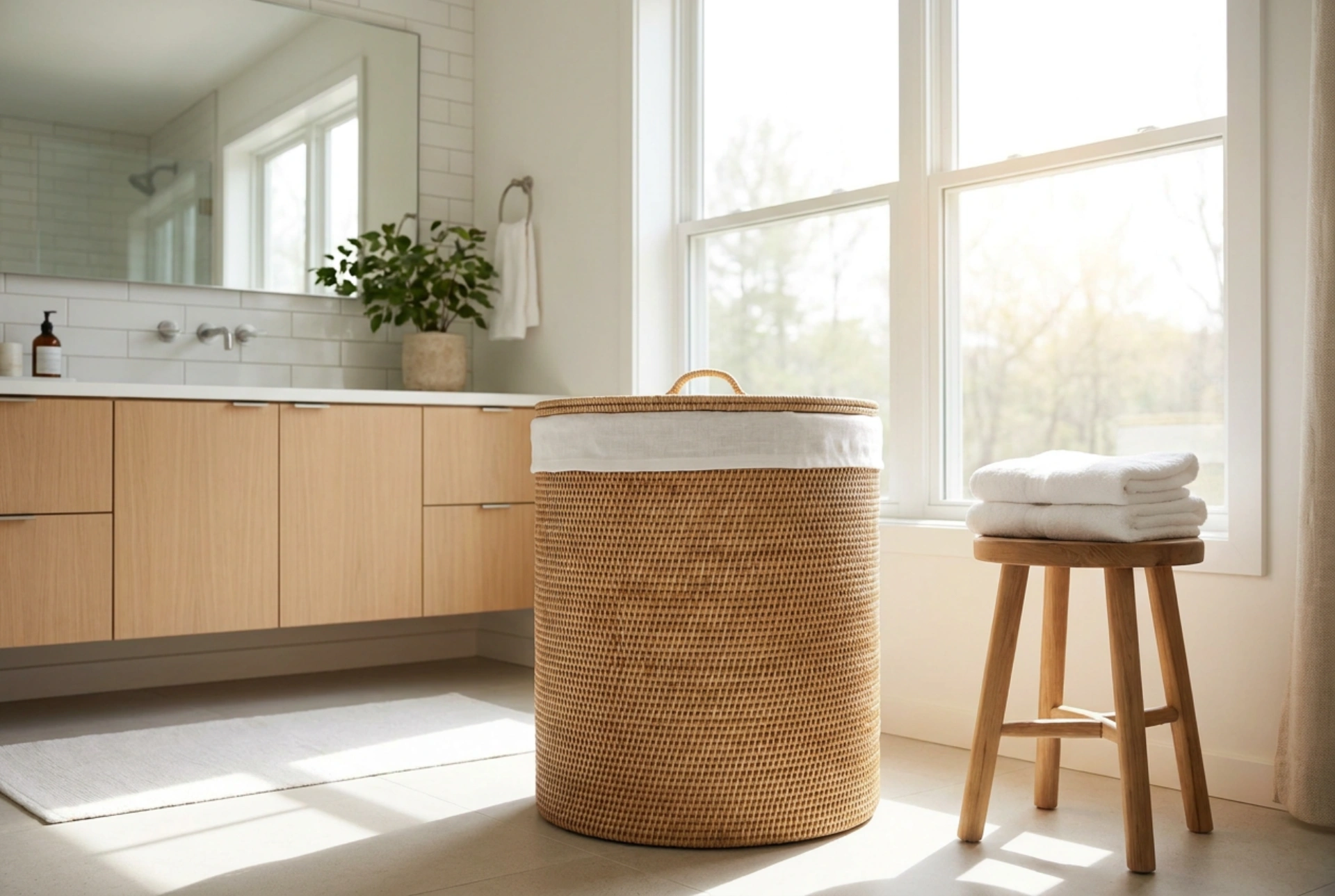
Materials like rattan, willow, or seagrass possess natural capillaries that absorb minor surface moisture and release it into the surrounding air. Their open-weave structure provides maximum surface area for ventilation. However, raw, untreated wood fibers can absorb too much moisture over time, leading to mold within the basket itself. Opt for baskets with a light, non-toxic protective glaze or those paired with a removable canvas liner.
Perforated Synthetics and Metals
High-grade polymers and powder-coated metals do not absorb moisture, making them highly hygienic and easy to sanitize. When engineered with sufficient ventilation holes, these materials offer excellent durability in high-humidity zones like small bathrooms. They are completely impervious to mold penetration, though they lack the natural moisture-buffering capacity of organic fibers.
Breathable Fabric Liners
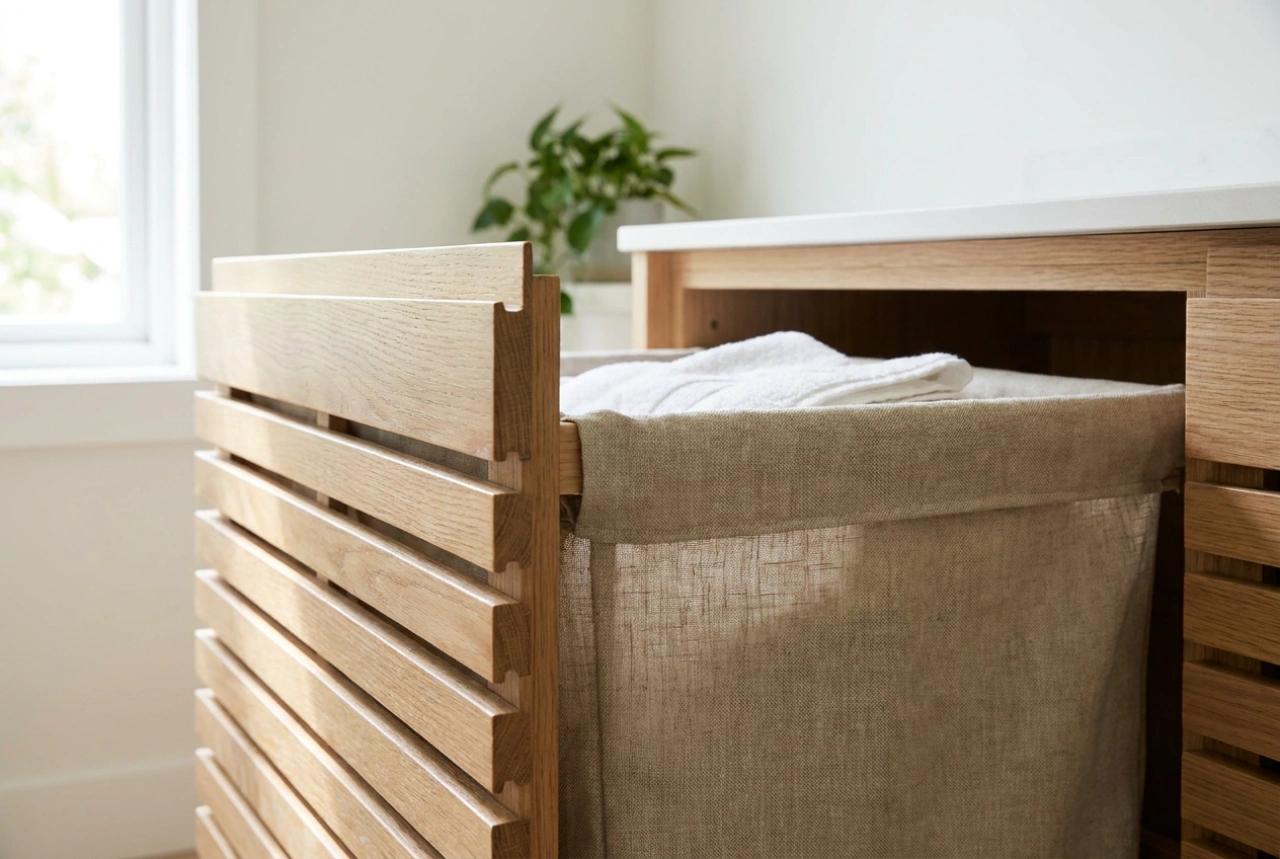
An internal liner made from natural cotton or linen acts as a protective barrier. It prevents delicate garments from snagging on woven wood while absorbing excess humidity. Because these fibers are highly breathable, they do not block the essential airflow provided by the outer basket structure.
Strategic Placement and Room Dynamics
Where you position your laundry container directly affects its performance. Avoid placing the basket in enclosed, unventilated corners or directly adjacent to the shower where steam condensation is highest. Position it in an area with active air movement, such as near a bathroom door, under a window, or close to an exhaust vent. Raising the basket slightly off the floor on small legs or a platform prevents cool, damp air from pooling beneath the base, ensuring consistent multidirectional airflow.
Maintenance Routines for Odor Prevention
Even the most breathable basket requires regular maintenance to prevent the buildup of microscopic spores. Wash the removable fabric liner every two weeks at a minimum temperature of sixty degrees Celsius to thermal-kill any latent bacteria. For the basket structure itself, wipe the surfaces monthly using a mild solution of oxygen bleach or diluted white vinegar. These agents break down the cell walls of fungi and neutralize alkaline odor molecules without degrading the structural integrity of the basket materials. Ensure the basket is completely dry before returning clean liners or clothing to it.