

Damp, dirty textiles enclosed in a dark space create the perfect breeding ground for microbial growth and volatile organic compounds. Eliminating laundry hamper odours requires controlling humidity, choosing the right materials, and applying basic chemical neutralizers rather than masking smells with synthetic fragrances.
The Chemistry Behind Laundry Odours
To stop laundry basket smells, we must understand their origin. Human sweat contains water, lipids, and proteins. While fresh sweat is virtually odourless, bacteria residing on our skin—primarily species of Staphylococcus and Corynebacterium—break down these organic compounds. The byproducts of this metabolic process are volatile organic acids, such as isovaleric acid (which produces a pungent, cheesy smell) and butyric acid. When damp clothes are piled together, the relative humidity inside the hamper rapidly rises above 60%. This microclimate accelerates bacterial reproduction and encourages the growth of mildew and mould fungi, which release musty-smelling spores.
Material Science: Selecting the Right Basket
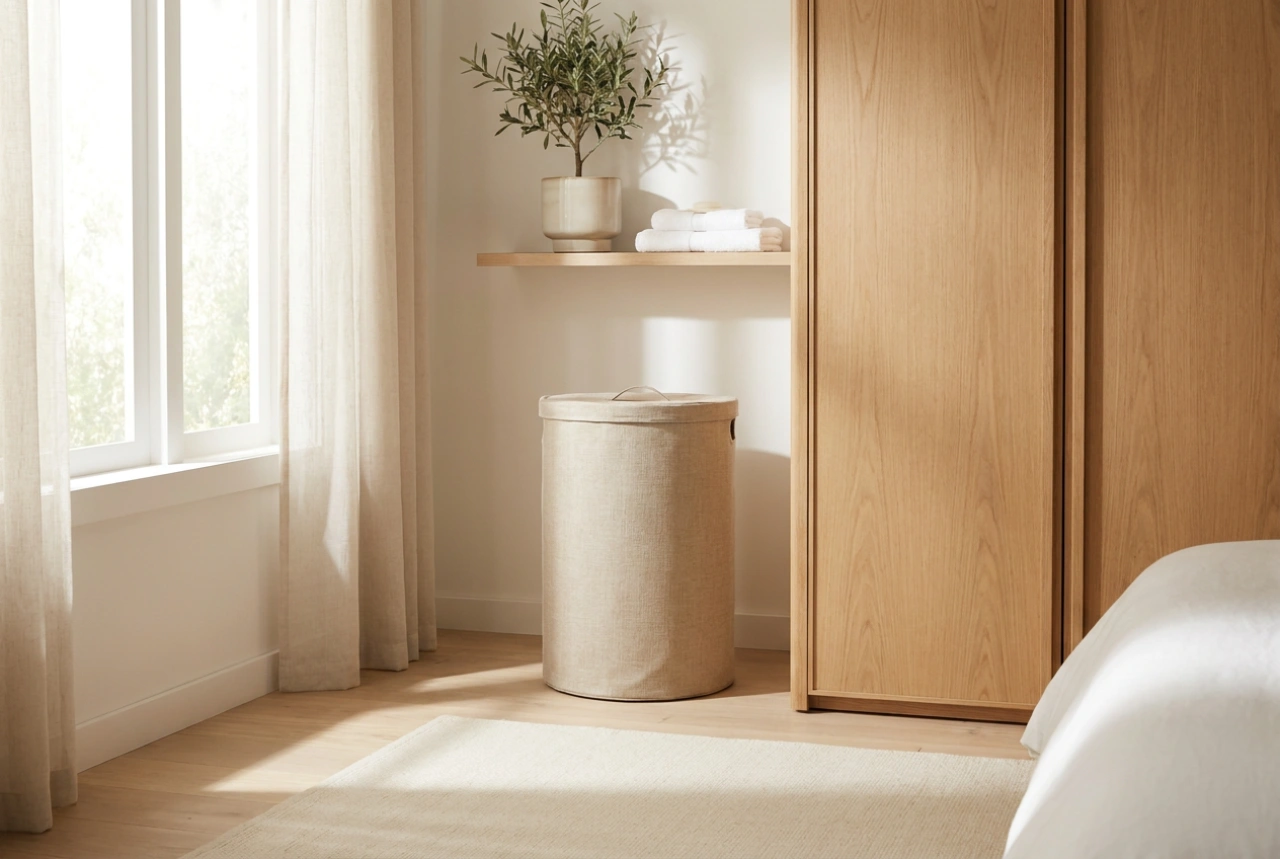
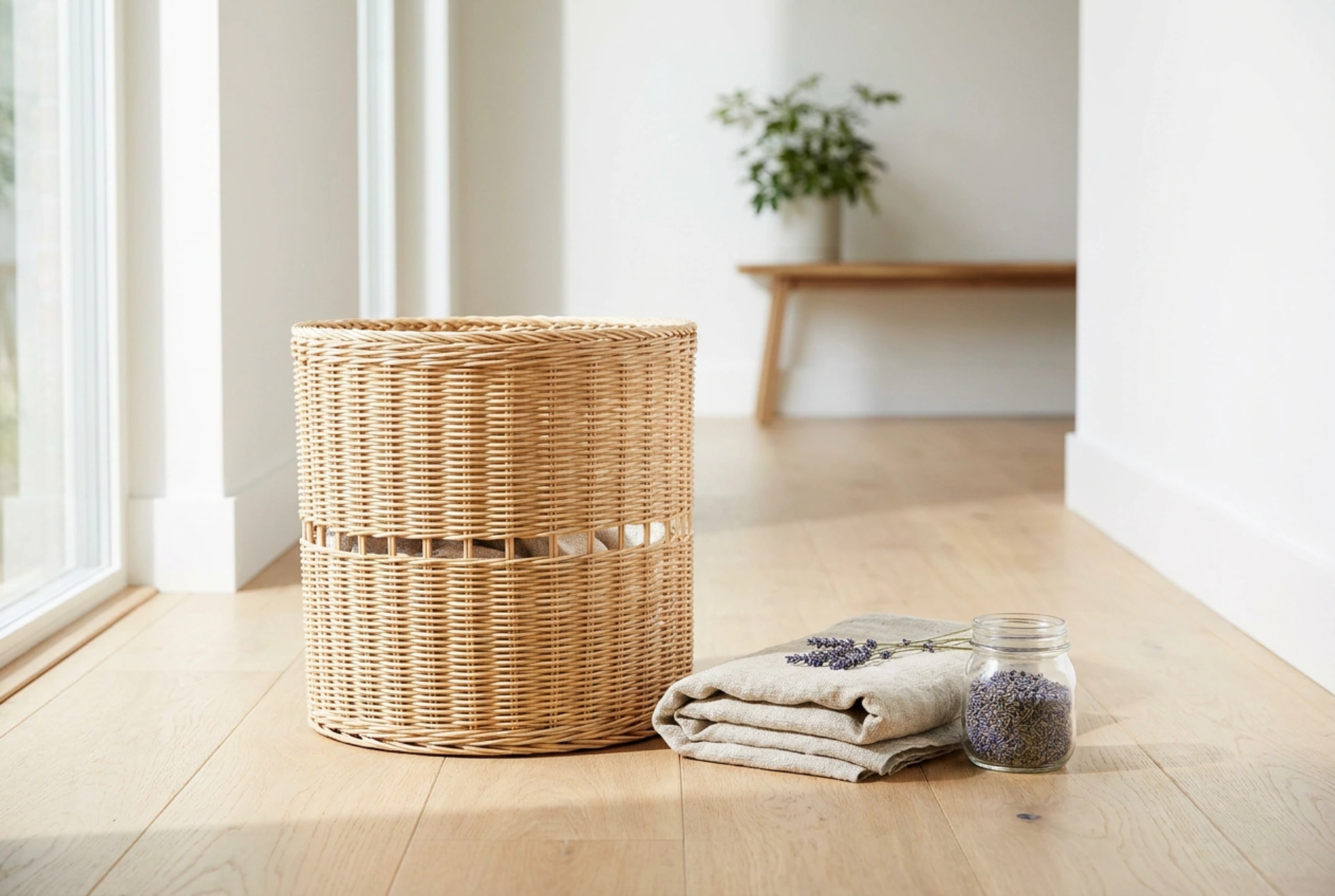
The physical structure of your laundry hamper plays a crucial role in gas exchange and evaporation. Solid plastic baskets act as vapor barriers, trapping moisture and heat inside. This accelerates the chemical decomposition of organic matter. Instead, opt for baskets constructed from natural, breathable materials such as woven wicker, rattan, or linen-lined bamboo. These materials allow continuous airflow, which aids in the passive evaporation of residual moisture. If you prefer synthetic materials, ensure the basket features dense perforation on all sides to facilitate cross-ventilation, preventing stagnant air pockets from forming at the bottom.
The Golden Rule of Moisture Management
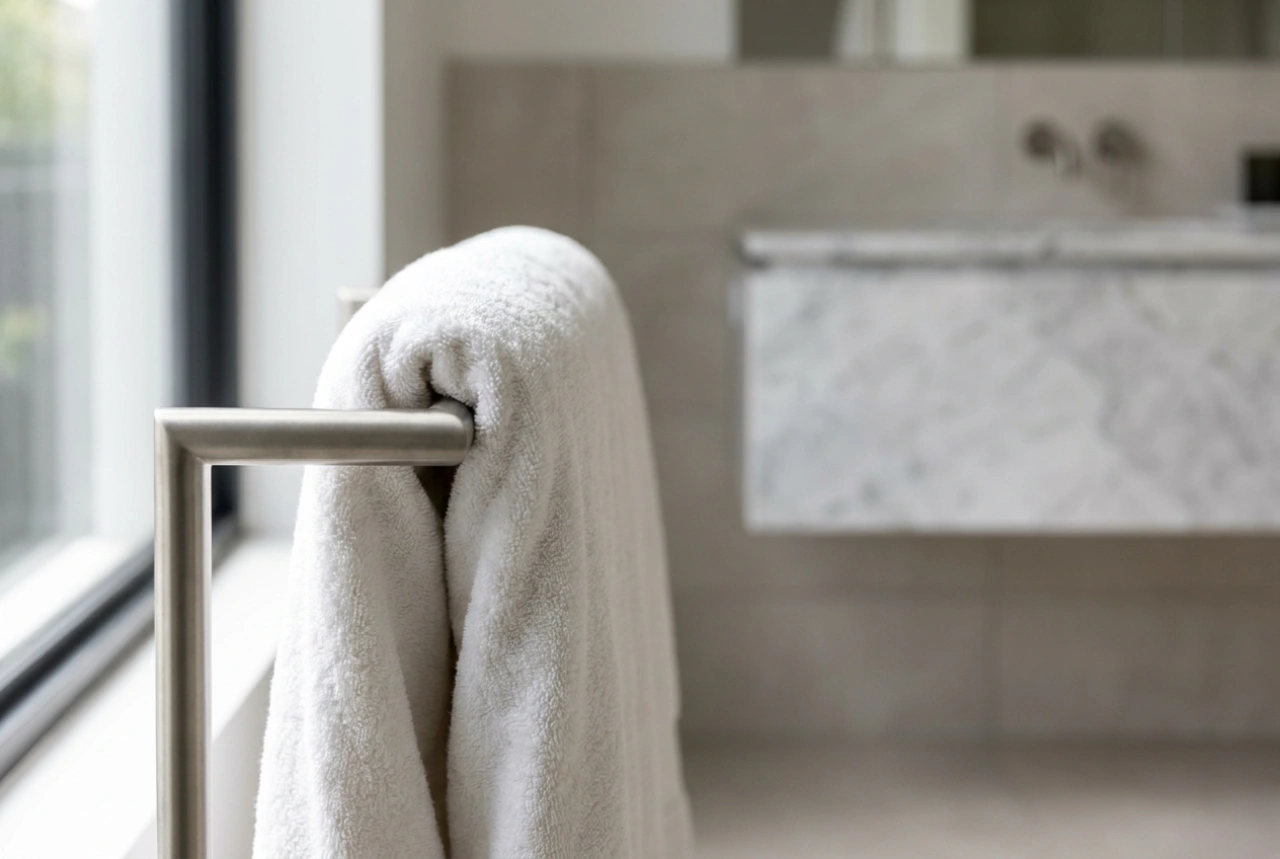
Water is the primary catalyst for microbial activity. Introducing even a single damp item, such as a used bath towel or a sweaty workout shirt, into a dark hamper will ruin the microenvironment of the entire basket. Before placing any damp textile into the hamper, drape it over a drying rack or a bathroom hook until it is completely bone-dry. This simple thermodynamic step deprives bacteria and fungal spores of the free water required to fuel their enzymatic reactions, halting odour production before it begins.
Chemical Neutralisation vs. Masking
Many commercial deodorisers rely on heavy synthetic perfumes that merely mask odours without eliminating the source. A scientific approach involves neutralising the odour molecules chemically. Sodium bicarbonate (baking soda) is an amphoteric substance, meaning it can react chemically with both highly acidic and highly alkaline odour molecules, converting them into odourless salts. Sprinkling a thin layer of sodium bicarbonate at the bottom of the hamper liner absorbs moisture and neutralises volatile acids. Alternatively, pouches filled with activated charcoal or zeolite minerals can be hung inside the basket. Zeolites are crystalline aluminosilicates with a highly porous molecular structure that physically traps and locks away gas molecules through adsorption.
Sanitation and Maintenance Protocols
An odour-free laundry system requires regular sanitisation of the container itself. If your hamper uses a fabric liner, wash it bi-weekly at a minimum temperature of 60°C to denature microbial proteins and kill bacterial colonies. For wicker or plastic baskets, wipe the interior surfaces monthly with a dilute solution of oxygen bleach (sodium percarbonate dissolved in warm water) or white vinegar (acetic acid). Oxygen bleach releases active oxygen, which oxidises organic residues and destroys cellular membranes of pathogens without leaving behind toxic fumes. Ensure the basket is completely dry before returning it to service.
Quick Maintenance Checklist
- Never place wet towels or sweaty athletic wear directly into the hamper.
- Choose ventilated wicker, rattan, or heavily perforated containers over solid plastic.
- Use sodium bicarbonate or activated charcoal pouches to adsorb volatile organic compounds.
- Wash fabric liners at 60°C every two weeks to destroy bacterial colonies.
- Sanitise the empty basket monthly using oxygen bleach or a diluted acetic acid solution.