

Pull-out drawer laundry systems optimize space while keeping soiled garments hidden, but managing moisture, weight, and airflow within closed cabinetry requires a careful understanding of material science and mechanical dynamics. Properly configured, these integrated systems prevent fabric degradation and streamline your laundry cycle.
Understanding the Mechanics of Drawer Slide Load Limits
Integrating a laundry basket into a deep cabinet drawer transforms how we manage household waste textiles, but it introduces significant physical stress on the cabinet's hardware. Unlike standard cutlery drawers, a laundry drawer must withstand both high static weight and dynamic force. Damp towels, heavy cotton denim, and accumulated bedding can easily exceed 15 to 20 kilograms in a single compartment. When selecting or retrofitting drawer runners, it is essential to look at the dynamic load capacity. Standard runners are often rated for 30 kilograms, but high-capacity, full-extension ball-bearing slides rated for 50 kilograms or more are necessary to prevent sagging and ensure smooth operation over thousands of cycles.
Placing heavier items towards the rear of the drawer minimizes the leverage exerted on the extended slides, reducing the physical strain on the mounting screws and preventing the front panel from misaligning over time.
Airflow Dynamics and Material Selection to Prevent Mildew
Stored laundry naturally retains ambient humidity, body heat, and organic residues, creating a microclimate ripe for microbial activity. Inside a sealed cabinet drawer, the lack of natural ventilation can lead to the rapid proliferation of anaerobic bacteria and mold, resulting in the characteristic musty odor of stale laundry. To counteract this, the materials used for the internal containers must promote passive air exchange.
- Perforated Polymers: High-density polyethylene bins with engineered ventilation slots allow multidirectional airflow. They are non-porous, meaning they do not absorb moisture or harbor bacterial colonies.
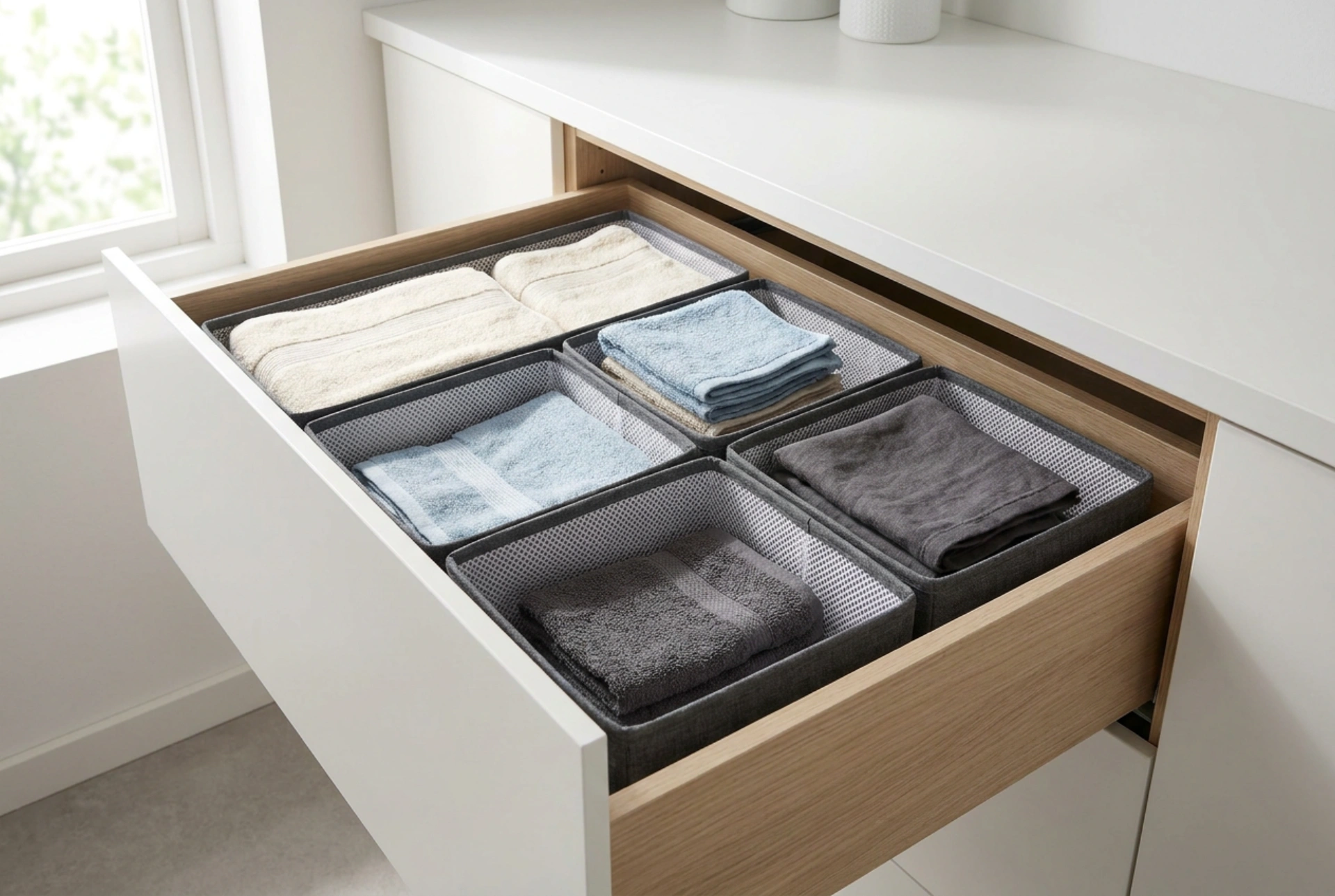
- Synthetic Mesh: Polyester mesh inserts provide maximum surface area for moisture evaporation. These materials do not retain water molecules and dry rapidly, ensuring damp gym wear does not transfer moisture to adjacent dry items.
- Removable Liners: Fabric bags must be washed regularly at high temperatures (60 degrees Celsius) to eliminate embedded fungal spores.
Avoid solid wood or unventilated MDF inserts within the drawer cavity, as they absorb moisture, leading to warping and mildew.
Scientific Sorting: Categorization at the Point of Disposal
An effective drawer sorting system relies on chemical and physical categorization to protect textile fibers and maximize washing efficiency. By dividing a deep drawer into modular compartments, you can categorize garments instantly, eliminating the need to handle dirty linen twice.
The first compartment should hold high-temperature whites and cottons. These fabrics can withstand aggressive wash cycles and benefit from being kept separate from colored items to prevent dye migration. The second compartment is for low-temperature colored synthetics, which require gentle surfactants and lower thermal energy to preserve molecular dye bonds. The third compartment should hold delicate woolens, silks, or highly soiled items requiring pre-treatment.
Keeping these categories distinct prevents cross-contamination of fibers. Rough denim fibers can abrade delicate synthetic activewear during storage if compressed together, leading to premature pilling.
Maintaining Chemical Hygiene in Concealed Enclosures
Because the drawer cavity remains closed, volatile organic compounds and moisture can accumulate on the inner cabinet walls. Periodically sanitizing this zone is crucial. Once a month, the drawer should be fully extended and emptied. Wipe down the interior surfaces using a mild, non-ionic surfactant solution or a diluted oxygen-based bleaching agent. Avoid using harsh chlorine bleach inside wooden cabinetry, as it can degrade protective sealants and corrode the metal runner mechanisms.
To actively manage residual moisture, place passive desiccants, such as activated charcoal pouches, in the rear corners of the drawer cavity. Activated charcoal works via physical adsorption, trapping odor-causing molecules within its highly porous microscopic carbon lattice, thereby maintaining a neutral environment.