

A disorganized spice cabinet is more than just a visual nuisance; it slows down cooking times and leads to duplicate purchases of ingredients you already own.
The Chemistry of Preservation: Why Glass Outperforms Plastic
Spices contain volatile essential oils that give them their distinct aromas and flavors. When stored in plastic containers, these compounds can react with the polymers, degrading the container and causing the spice to lose its potency rapidly. Glass is a chemically inert material, meaning it does not react with the acidic or volatile compounds found in herbs and spices. It acts as an impermeable barrier against moisture and oxygen, two of the primary catalysts for flavor degradation and bacterial growth. By utilizing non-porous glass jars, you ensure that the delicate chemical profile of everything from ground cumin to dried oregano remains intact for months longer.
Visual Inventory and the Psychology of Cooking
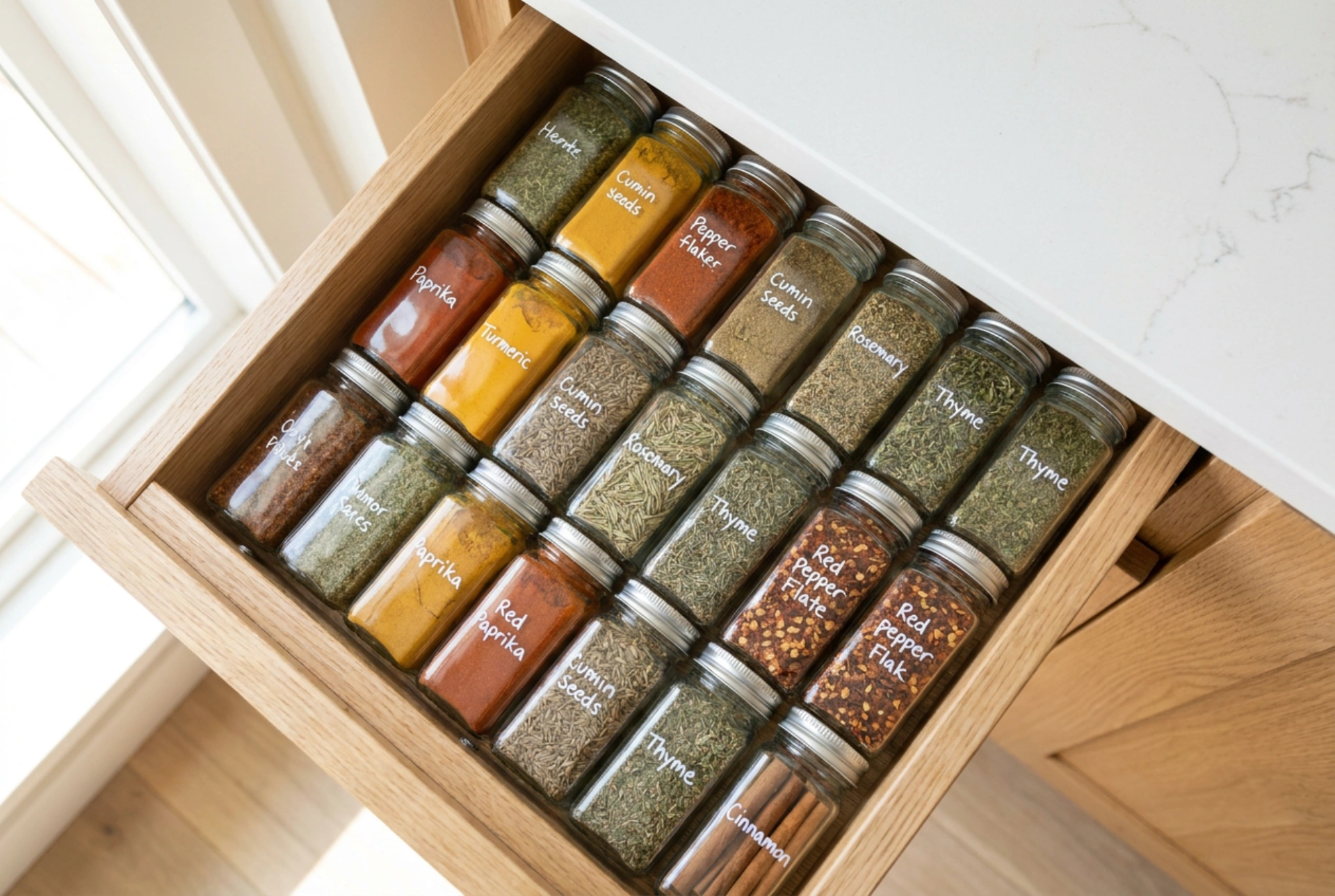
Human brains process visual information significantly faster than text. When spices are kept in their original, mismatched supermarket packaging, your eyes must scan and read multiple different brand layouts to find a single ingredient. Standardizing your storage with uniform glass jars eliminates this cognitive friction. A quick glance reveals the color, texture, and exact quantity remaining. This transparency prevents the common mistake of running out of a key ingredient mid-recipe, and stops you from purchasing a third jar of paprika because the first two were hidden behind opaque packaging.
Optimal Placement and Heat Management
Where you store your glass jars is just as critical as the material itself. While glass protects against moisture, clear glass does not block ultraviolet (UV) light, which accelerates the breakdown of organic compounds in dried herbs. For maximum longevity, store your uniform glass jars in a dark drawer or a closed pantry rather than on an open wall rack near the stove. Heat is another major catalyst for flavor loss. Placing your spices directly above the stovetop subjects them to constant temperature fluctuations and rising steam. A deep kitchen drawer fitted with angled inserts is the optimal physical setup, keeping the jars organized, protected from light, and easily accessible from above.
A Step-by-Step Transition Guide
Converting your spice collection into a streamlined glass jar system requires a methodical approach to maintain cleanliness and prevent contamination.
- Empty and Clean: Wash all new glass jars thoroughly in warm water with a mild detergent. Ensure they are completely dry before filling; even a single droplet of moisture trapped inside can cause mold to develop.
- Filter and Sort: Check the freshness of your current spices. If a spice has lost its aroma when rubbed between your fingers, it has lost its culinary value and should be discarded.
- Funnel and Fill: Use a dry stainless steel funnel to transfer the spices into the jars. Avoid using plastic funnels, as static electricity can cause fine powders to cling to the sides.
- Label Instantly: Apply waterproof, oil-resistant labels to the side or lid of the jar. Always note the date of filling on the bottom to keep track of freshness.