

Storing fresh baked goods under a glass cake dome is more than an aesthetic choice; it is a highly effective way to regulate humidity and slow down the staling process. By understanding the physical laws of moisture migration and starch retrogradation, you can significantly extend the shelf life of your cakes, pastries, and bread.
The Science of Staling and the Glass Microclimate
To understand why glass is an ideal medium for storing baked goods, one must first look at why baked goods go stale. Staling is not merely a process of drying out; it is primarily caused by starch retrogradation. During baking, starch granules absorb water and gelatinise. As the baked good cools and ages, these starch molecules (specifically amylose and amylopectin) gradually realign and recrystallise, returning to a hard, structured state. This process releases bound water molecules, which migrate to the crust or escape into the air.
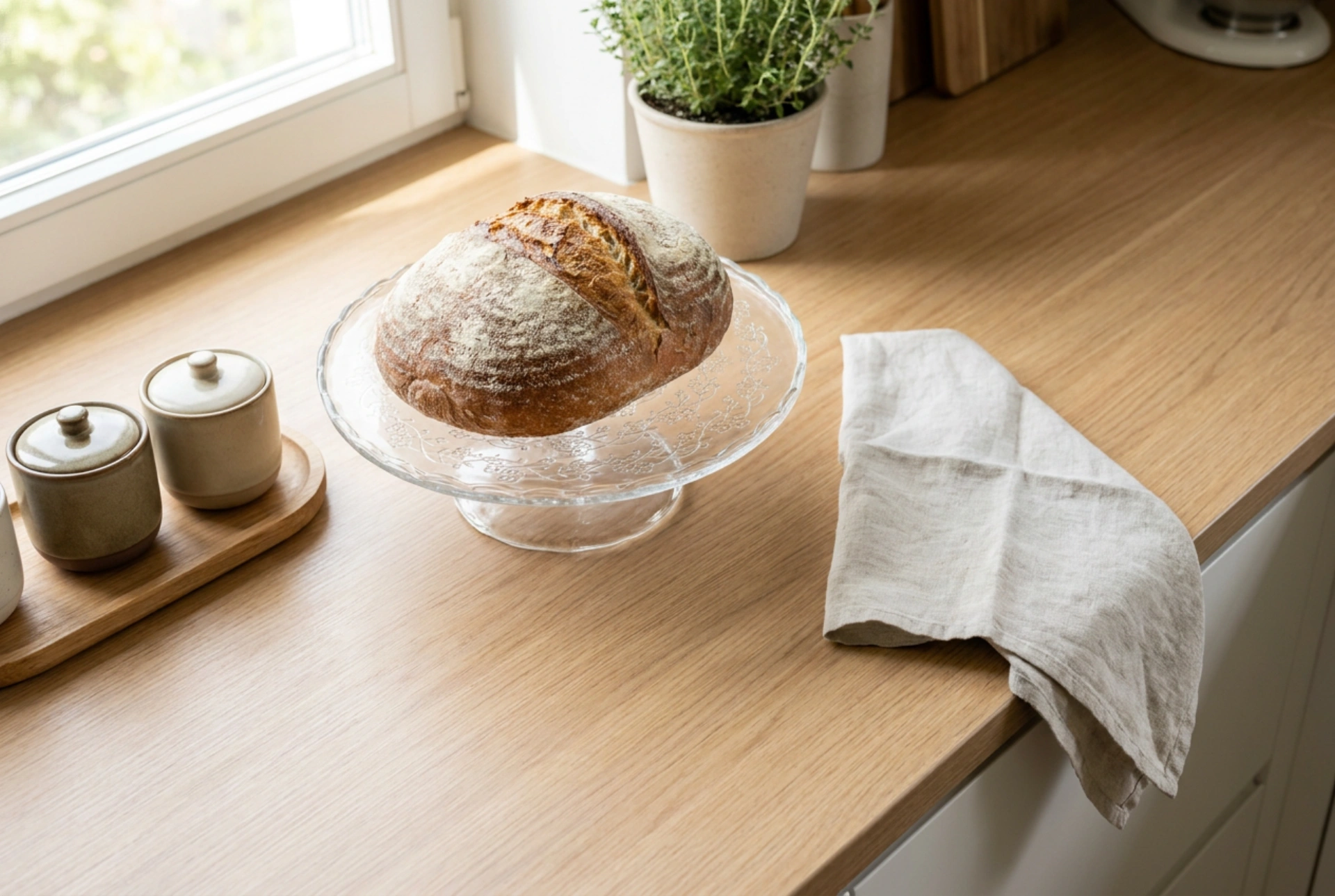
Glass is a completely non-porous, chemically inert material. When you place a loaf of sourdough or a sponge cake under a glass dome, it creates a closed microclimate. The moisture evaporating from the crumb is trapped within the dome, elevating the relative humidity of the internal air. This high humidity prevents the outer layers of the baked good from drying out too rapidly. Unlike plastic, glass does not absorb or impart any chemical odours, preserving the clean, natural aroma of your butter, yeast, and flour.
Preventing Condensation: The Golden Rule of Cooling
The most common mistake when using glass cake stands is enclosing the baked goods while they are still slightly warm. This triggers a rapid thermodynamic cycle: warm air holds more water vapour than cold air. As the warm air rising from the bread hits the cooler glass surface, it cools down rapidly, reaching its dew point. This causes water vapour to condense back into liquid water droplets on the inside of the dome. These droplets then drip onto the crust, creating wet patches that ruin the texture and accelerate mould growth.
Always allow baked goods to cool completely to room temperature on a wire rack before transferring them to the glass stand. If you are storing highly hydrated breads or moist fruit cakes, place a folded linen towel or a small sheet of parchment paper at the base of the stand under the item. The linen or paper acts as a natural buffer, absorbing any excess localized moisture without stripping the air of the humidity needed to keep the crumb soft.
Optimising Placement and Thermal Dynamics
Because glass is transparent, it is highly susceptible to the greenhouse effect. If a glass cake stand is placed in direct morning sunlight or near a heat source like an oven, the air inside the dome heats up rapidly. This elevated temperature accelerates chemical reactions, including the breakdown of fats and the propagation of mould spores. Place your glass stand in a cool, shaded area of your kitchen counter to maintain a stable, moderate temperature.
Tailoring the Environment to Different Baked Goods
- Crusty Yeasted Breads: These require a balance between moisture retention and crispness. To keep the crust from turning leathery, leave the glass dome slightly propped open (using a folded napkin or toothpick) to allow a tiny amount of air exchange.
- Sponge Cakes and Muffins: These benefit from a fully sealed glass dome. The trapped moisture keeps the crumb tender. Ensure there are no dairy-based fillings or fresh creams, which require refrigeration rather than counter storage.
- Pastries and Croissants: High-fat laminated doughs go soft quickly in high humidity. Storing them in a glass dome is ideal only for short periods (less than 24 hours). For longer storage, a loose-fitting cover is preferable to preserve the crispness of the buttery layers.