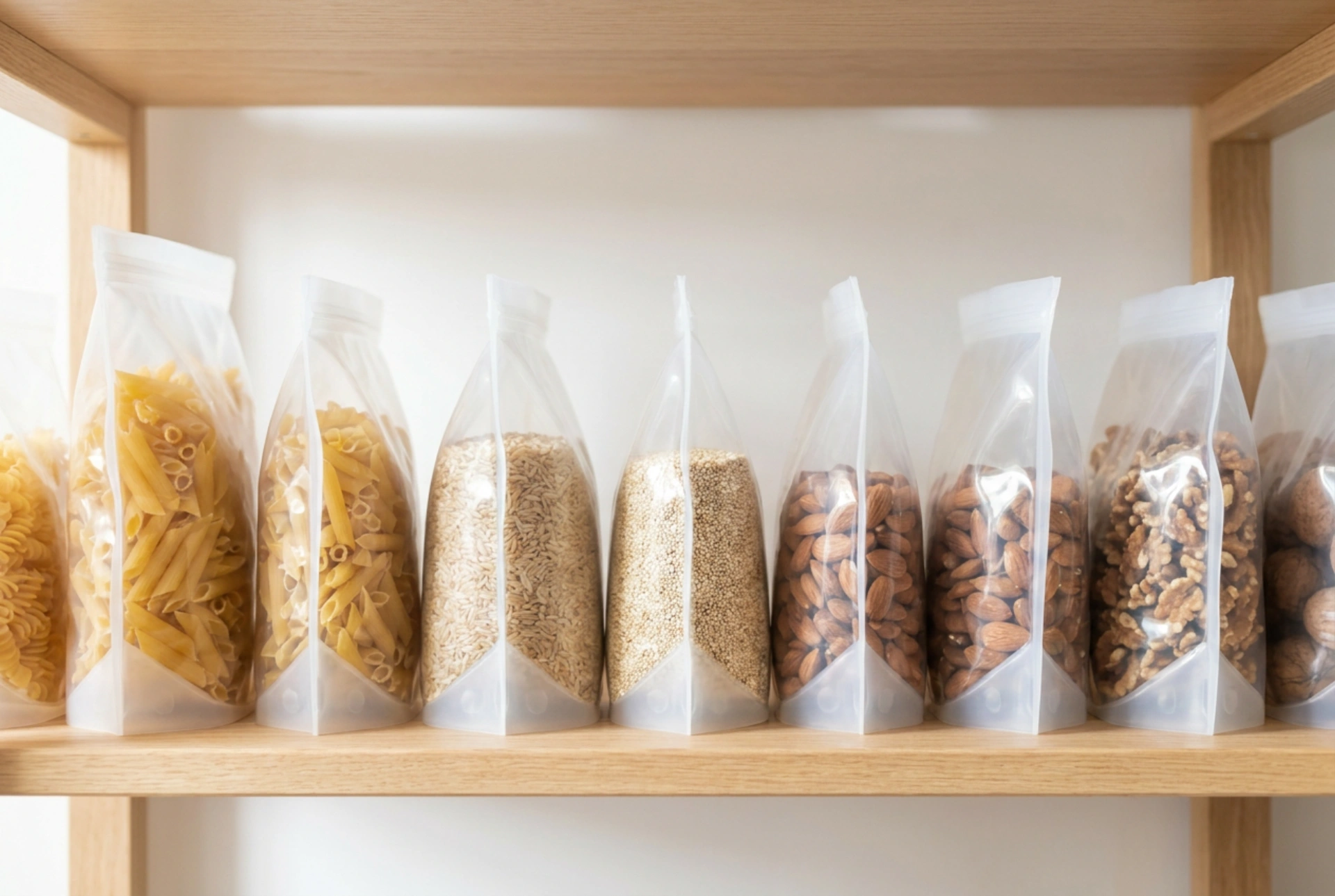


Maximising the shelf life of dry kitchen supplies requires controlling three primary environmental catalysts: moisture, oxygen, and pests. Plastic zipper storage bags, typically made from low-density polyethylene (LDPE), offer an effective, flexible barrier against these elements when used with an understanding of physical and chemical preservation principles.
The Science of Polymer Barriers in Dry Storage
Low-density polyethylene (LDPE) is the standard material for food-grade zipper bags due to its high flexibility, tensile strength, and chemical inertness. From a material science perspective, LDPE exhibits a low moisture-vapor transmission rate (MVTR). This means it acts as a highly effective barrier against ambient humidity, preventing dry foods like crackers, flour, and salt from absorbing water molecules from the air, a process known as hygroscopy.
However, polymers are semi-permeable to gases over long periods. While LDPE restricts airflow, it does not completely halt oxygen migration. To mitigate this, dry goods highly susceptible to oxidation—such as nuts, whole-wheat flours, and seeds containing unsaturated lipids—should be stored in thick-walled zipper bags (at least 50 to 75 microns) and kept in dark, cool environments. Reducing light exposure is vital, as photons accelerate lipid photo-oxidation, leading to rancidity and off-flavors.
The Mechanics of the Zipper Seal and Air Exclusion
The mechanical efficiency of a zipper bag relies entirely on its interlocking tracks. These male-and-female profiles deform slightly under pressure to snap together, creating a continuous frictional seal. Any particulate matter, such as flour dust or sugar crystals, trapped within these tracks will compromise the seal, creating microscopic pathways for air and moisture transfer.
To achieve a reliable airtight state, follow this systematic closing technique:
- Seal the zipper approximately ninety percent of the way across, leaving a tiny opening at one end.
- Gently press the bag from the bottom upwards, flattening it against a clean work surface to expel the maximum volume of air.
- Alternatively, for durable items, use the water displacement method: slowly lower the bag into a container of water up to the zipper line, allowing hydrostatic pressure to push the air out, then seal the final section.
- Slide your thumb and forefinger firmly across the entire track once more to ensure complete mechanical engagement.
Pantry Pest Prevention and Material Limits
One of the primary structural threats to dry kitchen supplies comes from pantry pests, specifically the larvae of Indianmeal moths and various flour beetles. While a properly sealed zipper bag prevents adult insects from entering and laying eggs, the larvae of certain species possess mandibles strong enough to chew through thin LDPE film (under 50 microns).
To protect susceptible grains, cereals, and starches, use heavy-duty, puncture-resistant freezer bags. The increased thickness of these films acts as a physical barrier that larvae cannot easily penetrate. Furthermore, sealing dry goods immediately upon bringing them home restricts the spread of any pre-existing, microscopic insect eggs that may have been present in paper packaging, isolating the contamination to a single, discardable bag.
Thermal Limits and Reusability Guidelines
LDPE has a relatively low melting point, typically between 105°C and 115°C, but it begins to soften and lose its structural integrity at temperatures as low as 70°C. Never expose standard zipper food bags to boiling water or high-heat dishwashers, as this deforms the locking tracks and compromises the polymer chain alignment, rendering the bag permanently unsealable.
For safe cleaning and reuse, wash the bags by hand using lukewarm water (under 40°C) and a mild, grease-cutting detergent. Avoid abrasive sponges that can scratch the inner surface; these micro-scratches create harbors for bacterial colonization. Air-dry the bags thoroughly upside down on a clean rack before reuse, ensuring no moisture remains inside to trigger mold growth.