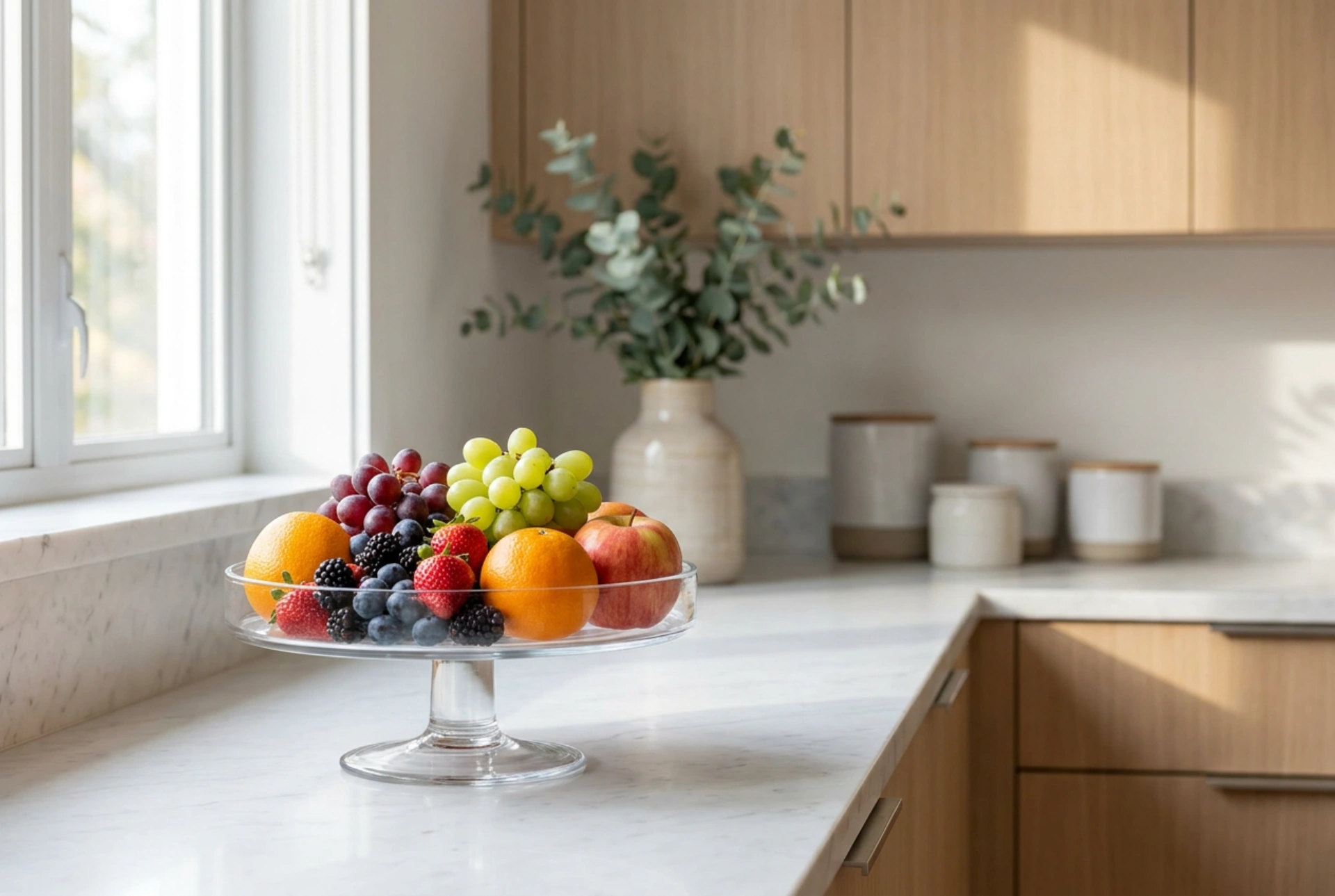


Arranging fruit on a glass stand is a simple way to elevate your kitchen's aesthetic, but improper placement can lead to rapid decay, moisture buildup, and premature ripening due to invisible chemical interactions.
The Chemistry of Ripening: Managing Ethylene Gas
The primary culprit behind rapidly spoiling fruit is ethylene, a natural plant hormone released as a gas that triggers ripening. Some fruits are heavy ethylene producers, while others are highly sensitive to it. When organizing a glass stand, separating these categories is essential to prevent a chain reaction of decay.
- Ethylene Producers: Bananas, ripe pears, peaches, and apples emit high volumes of ethylene. They should never be tightly packed next to sensitive varieties.
- Ethylene-Sensitive Fruits: Berries, grapes, citrus fruits, and leafy garnishes will degrade, soften, and mold rapidly when exposed to ethylene gas.
On a tiered or flat glass stand, position ethylene-sensitive items like grapes on the outer edges or upper tiers, while keeping ethylene producers isolated or placing them on the stand only when they require quick ripening.
Airflow Dynamics on Glass Surfaces
Unlike wooden bowls or wire baskets, non-porous glass surfaces do not absorb moisture or allow air to circulate from below. Condensation is the enemy of fresh fruit, as trapped moisture creates the perfect breeding ground for mold spores and bacterial rot.
To counteract this, pay close attention to stacking density. Avoid piling fruits in multiple dense layers. Arrange larger, structural fruits like citrus or pineapples at the base to create natural gaps. These gaps allow air to flow freely between the pieces, regulating temperature and dispersing moisture. Additionally, always ensure that fruits are completely dry before placing them on the glass; washing them immediately before consumption, rather than prior to storage, is the safest practice.
Physical Protection and Weight Distribution
Bruising accelerates cellular breakdown, releasing sugars and moisture that attract pests and facilitate rot. When building your display on a glass stand, structural integrity is key to preserving the delicate skins of soft fruits.
The Golden Rule of Weight Distribution
Always place heavy, hard-skinned fruits like oranges, grapefruits, or unripe pears at the bottom of the arrangement. These serve as a stable, physical foundation. Medium-weight fruits like plums or apricots can form the next layer, while delicate, soft-skinned fruits like fresh figs, berries, or ripe grapes must rest gently on top.
Minimal Contact Points
Minimize the surface area contact between individual fruits. Instead of packing items tightly to fill every void, embrace a minimalist aesthetic. This not only showcases the elegant design of the glass stand but also ensures that if one piece begins to spoil, the physical contact is minimized, preventing the rot from spreading to neighboring fruit.
Temperature and Placement Zones
The microclimate of your kitchen plays a decisive role in fruit preservation. Glass can conduct and retain heat quickly when exposed to direct energy sources. Position your glass fruit stand away from direct sunlight, ovens, and refrigerators, which vent warm air. A cool, shaded area with gentle air movement will keep the glass surface temperature stable, preserving the cellular structure of the fruit for several days longer.