

Selecting the right container for bread is not just an aesthetic choice, but a decision rooted in material science and moisture regulation that directly impacts how long your loaf stays fresh.
The Dual Challenge of Bread Degradation
To understand why bread spoils, you must understand two opposing physical processes: staling and molding. Staling, or starch retrogradation, occurs when starch molecules within the crumb recrystallize, expelling water and turning the bread dry and hard. Conversely, when moisture is trapped in a completely sealed, non-porous environment like a plastic bag, the relative humidity rises to nearly one hundred percent. This creates a perfect microclimate for mold spores to germinate and colonize the crust. Preventing both processes requires a delicate balance of controlled ventilation and moisture retention.
The Role of Wood in Moisture Regulation
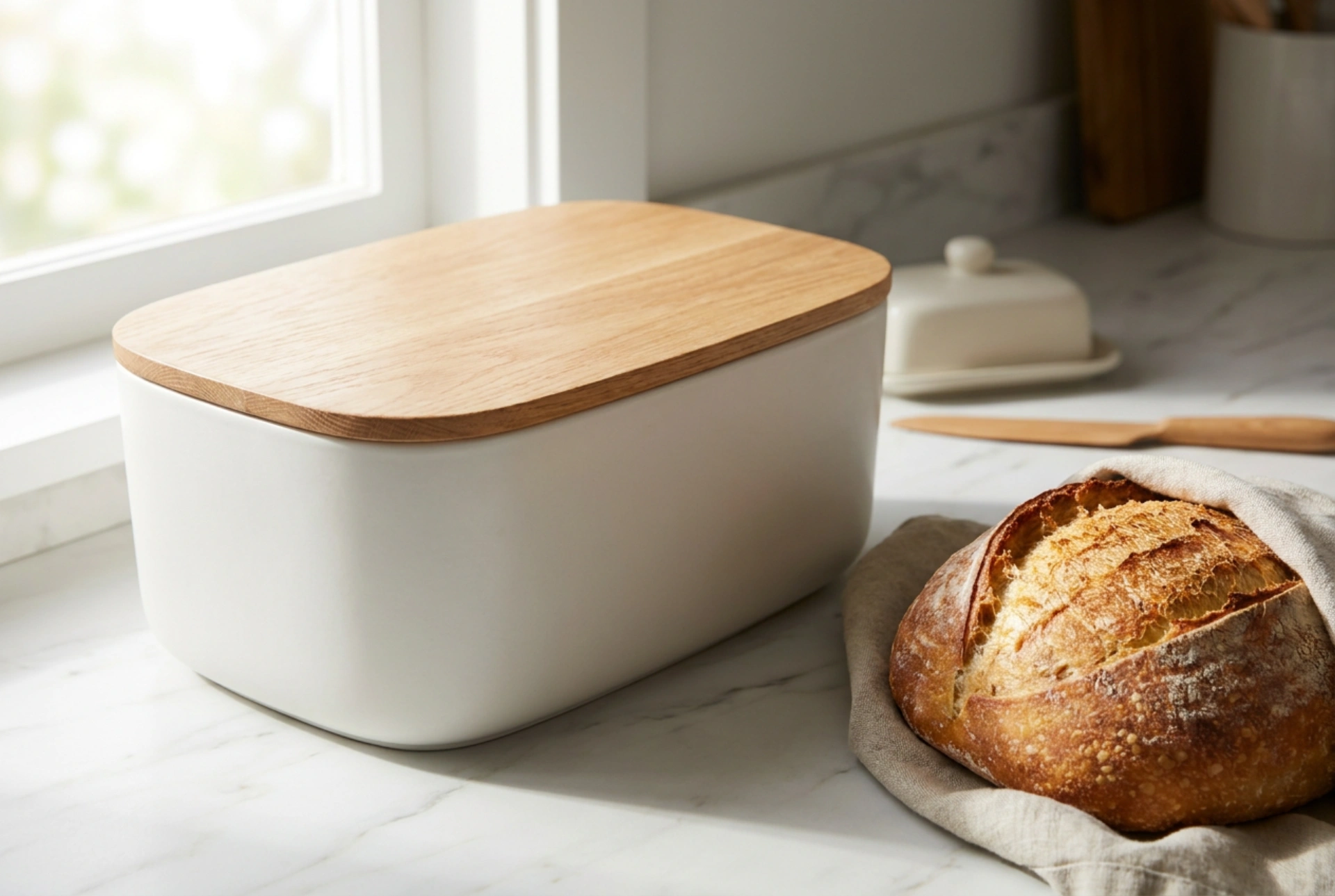
Wood is a naturally hygroscopic material, meaning it possesses the ability to absorb and release water vapor from the surrounding air to maintain equilibrium with its environment. In a bread box, a wooden element, such as a lid or a base, acts as a natural humidity buffer. When the bread releases moisture into the box, the wood absorbs the excess vapor, preventing the damp conditions that promote mold growth. If the internal air becomes too dry, the wood slowly releases its stored moisture back into the container, keeping the crumb soft and pliable without allowing the crust to become soggy.
How to Maximize Airflow and Positioning
For the hygroscopic properties of wood to work effectively, proper air circulation is essential. Avoid placing your bread box in areas with high temperature fluctuations, such as directly next to the oven, refrigerator, or in direct sunlight. Heat accelerates both the evaporation of water from the crumb and the growth of mold. When placing bread inside, do not overcrowd the chamber; leave sufficient space around the loaf so that air can circulate and interact with the wooden surface. If your wooden lid also doubles as a cutting board, always ensure it is completely dry before returning it to the box to prevent localized moisture buildup.
Maintaining Your Wooden Bread Box
To ensure the wood continues to breathe and absorb moisture, it must be cared for without harsh chemicals or excessive water. Never submerge the wooden component in water or place it in a dishwasher, as this will cause the grain to swell, warp, or crack. Instead, wipe the interior surfaces weekly with a dry or slightly damp cloth to remove flour and crumbs. To sanitize the wood without blocking its pores, wipe it with a dilute solution of food-grade white vinegar, which acts as a natural mild antimicrobial agent, and allow it to air-dry completely before sealing it again.