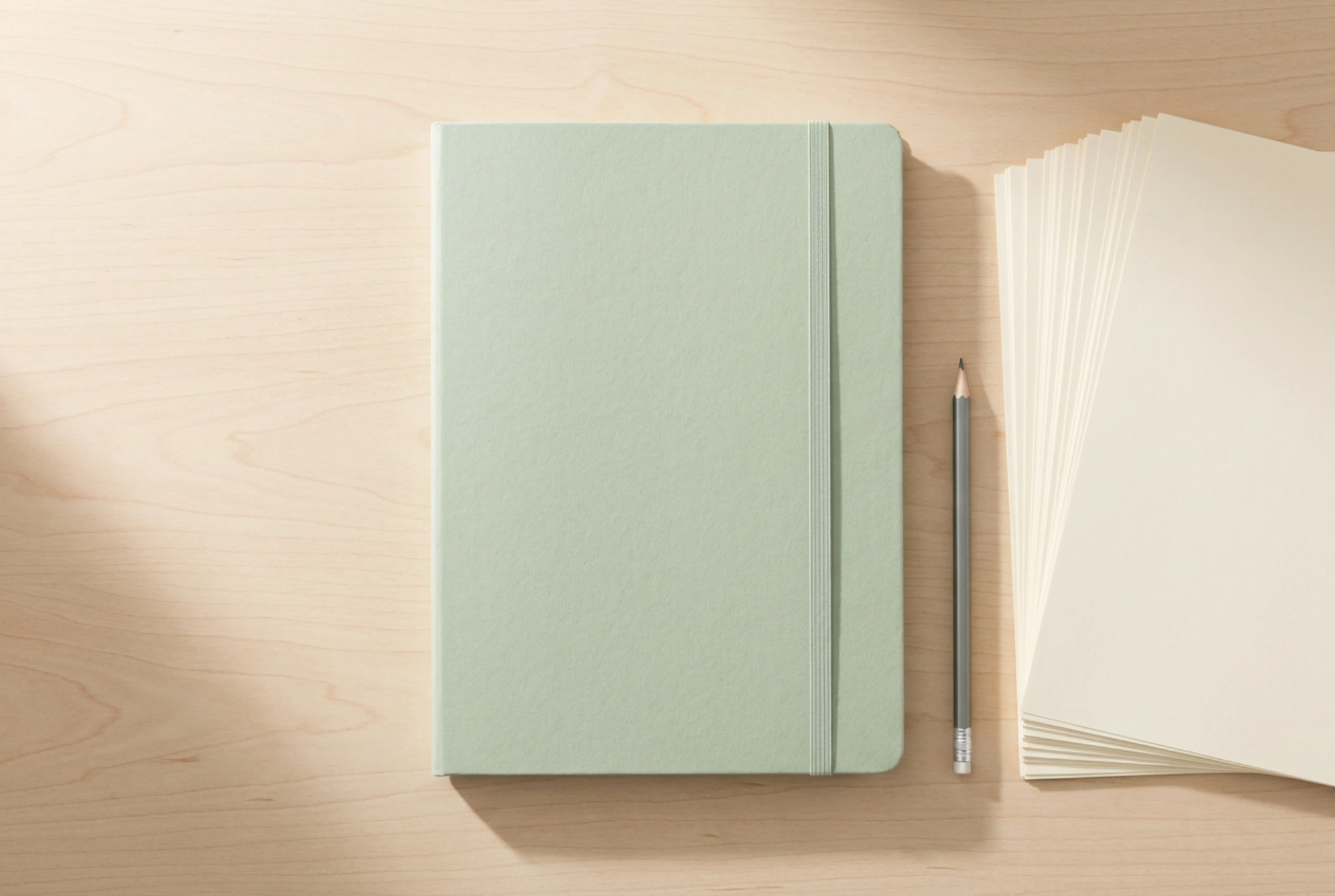


Managing the daily influx of school worksheets, drawings, and homework assignments requires a reliable physical barrier to prevent mechanical damage and loss. The classic elastic band folder offers a highly efficient combination of structural rigidity, constant compression, and ease of use that helps children maintain order without complex filing systems.
The Physics of Protection: Preventing Mechanical Wear in Backpacks
Inside a school backpack, loose sheets of paper are subjected to continuous kinetic forces. As a child walks or runs, the contents of the bag shift, creating friction and bending moments that lead to creased corners, tears, and ink degradation. When paper sheets slide against one another, the microscopic cellulose fibres on their surfaces rub together, weakening the structure of the paper over time.
An elastic band folder solves this problem by applying uniform pressure. The elastic straps, usually made from a vulcanised rubber core wrapped in woven polyester, exert a continuous compressive force. This pressure holds the internal sheets tightly together, eliminating the air gaps between pages. By preventing the sheets from shifting relative to one another, the folder mitigates friction and eliminates the risk of edge fraying. The rigid covers absorb external impacts, redistributing the localized pressure from heavy textbooks across the entire surface area of the folder.
Material Science: Choosing Between Polypropylene and Pressboard
Selecting the right folder material depends on the specific environmental conditions it will encounter. The two most common materials used in folder construction are polypropylene and heavy pressboard, each offering distinct physical properties:
- Polypropylene (PP): This thermoplastic polymer is highly resistant to fatigue, chemical solvents, and moisture. A PP folder acts as a hydrophobic barrier, protecting paper from spilled water bottles or rain seeping through backpack seams. It is highly flexible without breaking, making it ideal for younger children who handle school supplies roughly.
- Pressboard (Dense Paperboard): Made from compressed cellulose fibres, pressboard offers exceptional rigidity and bending resistance. It provides a flatter surface, which keeps papers perfectly pristine. However, it is hydrophilic; exposure to moisture will cause the fibres to swell and lose structural integrity. Pressboard is best suited for older students who require maximum stiffness for transport.
The Role of Three-Flap Construction in Dust and Moisture Exclusion
A simple folder without internal flaps allows papers to slide out sideways under gravity. High-quality elastic band folders utilize a three-flap design on the interior edges. These flaps fold inward before the main cover is closed and secured with the elastic straps.
This design creates a sealed micro-environment. The flaps prevent dust, pencil shavings, and crumbs from entering the folder. More importantly, they reinforce the edges of the papers, which are the most vulnerable parts. When the elastic band pulls the cover tight, it compresses these flaps against the contents, locking them in place mechanically. The physical tension ensures that even if the folder is held upside down inside a chaotic bag, the papers remain perfectly stationary.
Developing a Systematic Routine for Paper Management
To maximize the utility of an elastic band folder, children should be guided through a structured routine. Establishing a clear order of operations prevents the folder from becoming a chaotic repository for scrap paper:
- Alignment: Teach the child to tap the stack of papers on a flat surface to align the edges before inserting them. Misaligned edges will fold and crease when the folder flaps are closed.
- Categorization by Color: Utilizing different colored folders for different subjects leverages visual memory, allowing the child to retrieve the correct documents instantly.
- The Weekly Purge: Overloading a folder beyond its design capacity causes the elastic bands to stretch past their elastic limit, leading to permanent deformation. A weekly routine should be established to transfer completed schoolwork to permanent home archives.