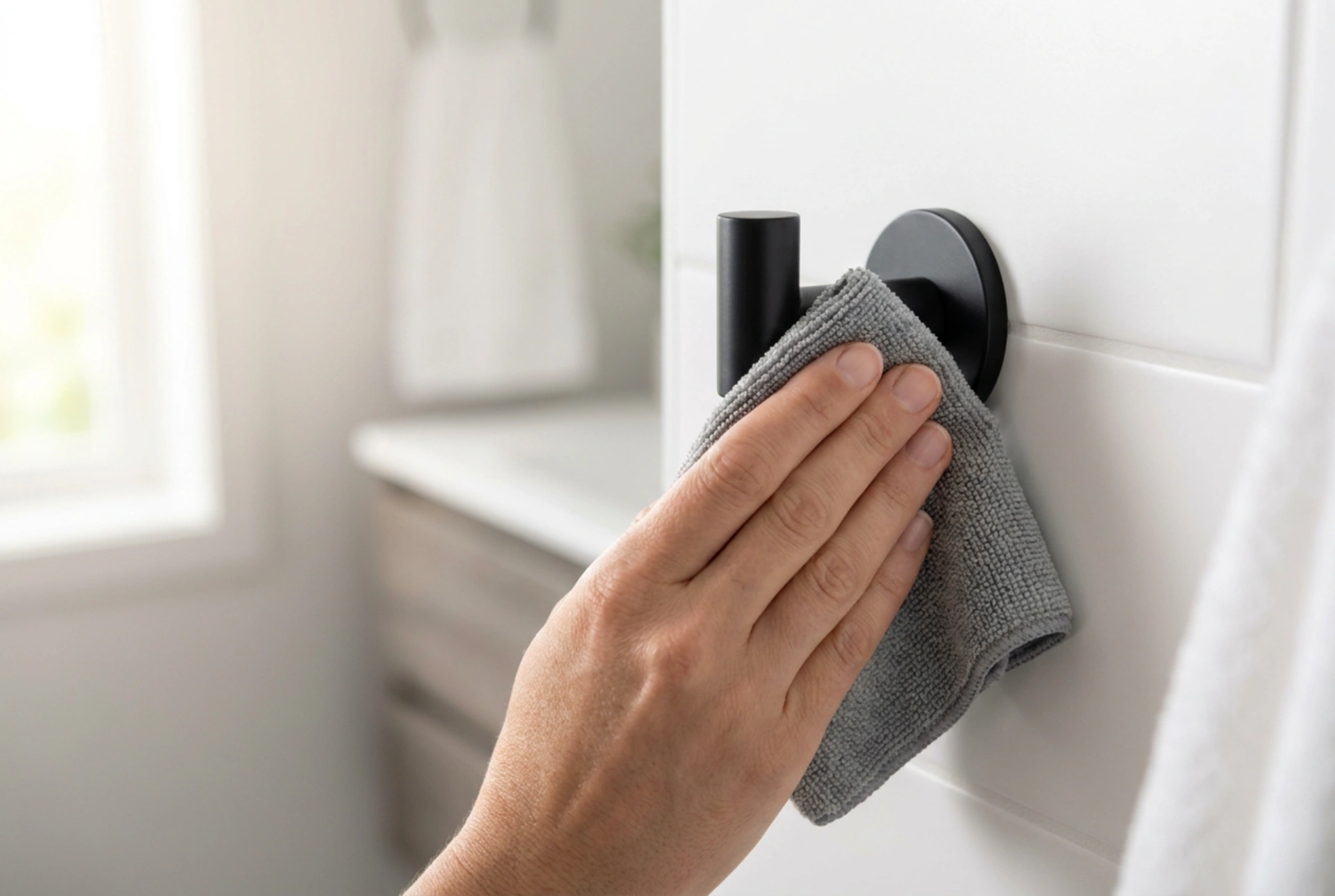


Matte black bathroom fixtures add a sleek, modern touch to any space, but they are notoriously sensitive to limescale, soap residue, and natural skin oils. To preserve their deep, velvety finish without causing permanent fading or unsightly scratches, you must understand the chemistry of their coatings and employ gentle cleaning techniques.
The Science Behind Matte Black Finishes
Most high-quality black towel hooks do not feature standard paint. Instead, manufacturers apply the dark finish using either powder coating or Electroplated/Physical Vapor Deposition (PVD) technology. These methods bond a thin layer of metallic or polymer compound to the brass or stainless steel base. While incredibly durable against physical impacts, these surfaces are highly susceptible to chemical abrasion. Acidic bathroom descalers, chlorine-based bleach, and harsh solvents break down the outer protective seal of the coating. This chemical degradation alters how light reflects off the surface, turning a sophisticated matte black into a dull, patchy grey.
The Safe Chemical Approach: Surfactants and Neutral pH
To dissolve grease, sweat, and soap scum without damaging the finish, you should rely on mild surfactants. Household dishwashing liquid (neutral pH) is ideal. Surfactants work at a molecular level; they possess hydrophobic tails that bind to oils and hydrophilic heads that bond with water, allowing organic grime to wash away easily.
- The Solution: Mix a few drops of neutral liquid soap in warm water (approximately 30–40°C). Warmth reduces the viscosity of oils, making them easier to lift.
- The Technique: Dip a soft microfiber cloth into the soapy solution, wring it out so it is damp but not dripping, and gently wipe the hook. Avoid saturating any internal joints where water could pool and cause internal corrosion.
- The Rinse: Immediately wipe down the surface with a second cloth dampened only with clean, cold water to remove any surfactant residue, which can itself cause dullness.
Handling Hard Water and Limescale Gently
If you live in a hard water area, dissolved calcium and magnesium ions will eventually deposit on the hook as white calcium carbonate. While aggressive acids dissolve limescale quickly, they also etch the matte surface. Instead, use a highly diluted, mild organic acid solution. Mix one part distilled white vinegar (5% acidity) with five parts distilled water. Dampen a cloth with this mixture and press it gently against the limescale spots for no more than two minutes. The weak acetic acid will break the calcium bonds. Rinse thoroughly with fresh water and dry the surface immediately to prevent new minerals from depositing.
The Physical Rules: Microfiber and Dry Buffing
Never use abrasive sponges, scouring pads, or even rough paper towels on matte black hardware. Even tiny mineral dust particles trapped in a rough cloth can act as an abrasive, leaving micro-scratches that permanently ruin the matte texture. Microfiber is essential because its split-fiber structure creates millions of tiny hooks that grab dirt and lock it away from the surface, preventing scratching. After cleaning, always dry-buff the hook with a dry, clean microfiber cloth. Eliminating moisture is the single most effective way to prevent limescale from forming in the first place.
Long-Term Preservation: Creating a Hydrophobic Barrier
To significantly reduce cleaning frequency, you can apply a microscopic protective barrier that repels water (hydrophobic effect). Applying a tiny drop of pure mineral oil or a high-quality natural carnauba wax to a dry microfiber cloth and buffing it onto the hook creates an invisible layer. Water droplets will roll off the hook rather than pooling and drying into mineral spots. Repeat this treatment once every three to six months to keep the matte surface looking pristine and deeply saturated.