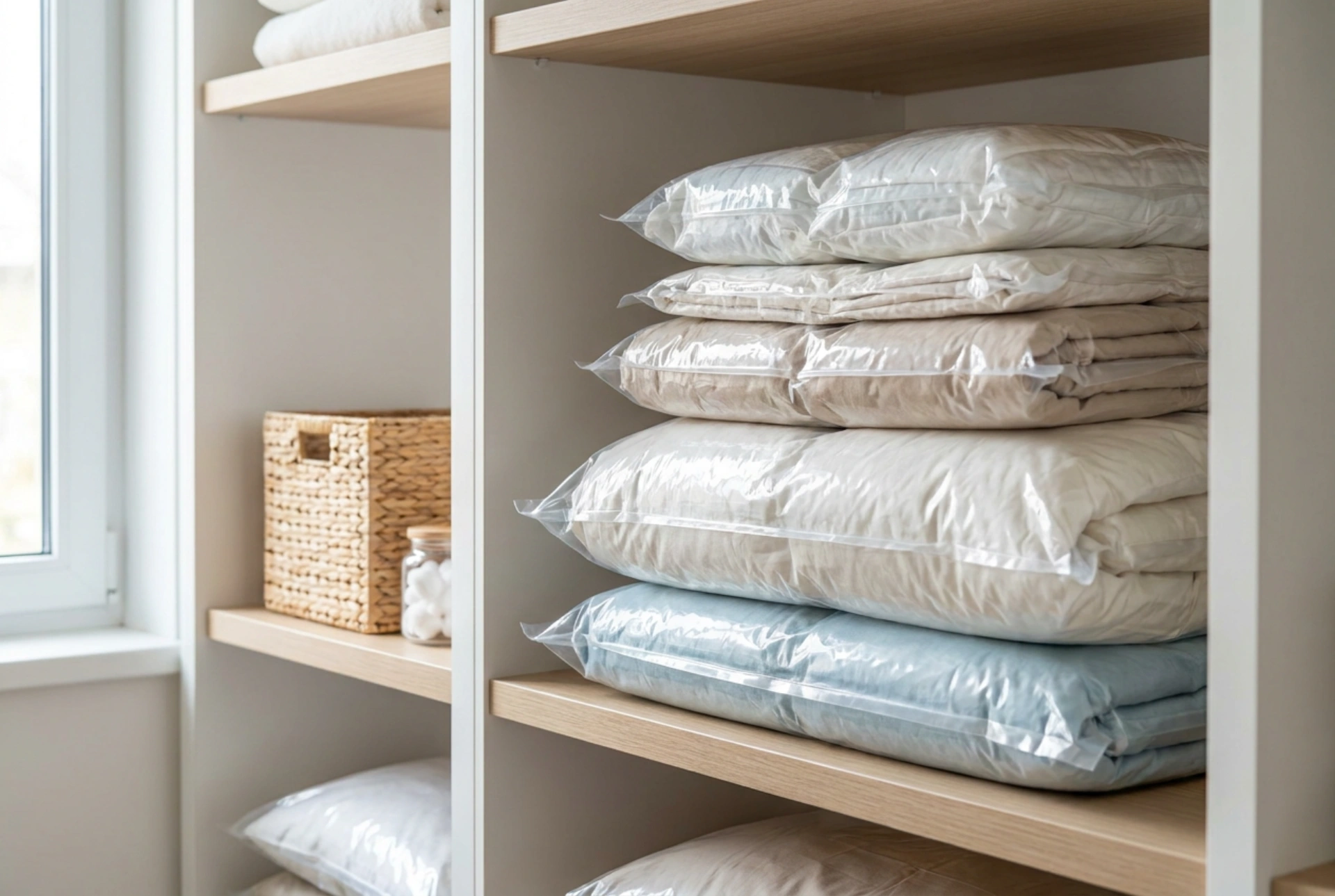


Optimising wardrobe space often comes down to managing the volume of bulky seasonal bedding, pillows, and blankets. Vacuum storage bags offer a highly efficient, science-based solution by removing trapped air to reduce storage volume by up to eighty per cent while protecting textiles from environmental factors.
The Physics of Vacuum Compression
To understand why vacuum storage is so effective, we must look at the structure of household textiles. Fabrics like wool, down, feather, and synthetic polyester fills are highly porous. They are designed to trap large pockets of air, which acts as a thermal insulator to keep us warm. However, this trapped air occupies significant physical space in your wardrobe.
When you apply suction using a standard vacuum cleaner to a sealed storage bag, you create a low-pressure environment inside. The atmospheric pressure outside the bag pushes down evenly on the plastic, forcing the air out of the interstitial spaces between the textile fibres. This mechanical compression reduces the physical volume of the bedding without altering the mass of the material itself. It transforms fluffy, space-consuming duvets into flat, dense packages that can be stacked easily on shelves or under beds.
Preparing Textiles: Dryness and Hygiene
Before sealing any bedding into a vacuum bag, prep work is essential to prevent structural damage and musty odours. Textiles must be thoroughly washed and, most importantly, completely dry. Even a microscopic amount of moisture trapped inside a sealed vacuum bag can lead to the growth of mould, mildew, and anaerobic bacteria over several months of storage.
- Washing: Launder the bedding according to the manufacturer's care label. Avoid fabric softeners on technical synthetic fills as they can leave a chemical residue that degrades over time.
- Drying: Ensure the items are dried completely. If using a tumble dryer, allow the bedding to cool down to room temperature for at least two hours before packing. Warm fibres retain residual moisture that will condense once cooled inside a sealed plastic bag.
- Inspection: Carefully inspect seams and thicker sections of duvets or pillows, as these areas retain moisture the longest.
How to Seal and Compress Correctly
Achieving a reliable, long-lasting vacuum seal requires precise execution. First, fold the bedding neatly to fit the dimensions of the bag, keeping the stack flat and even. Avoid overfilling the bag; leave at least ten centimetres of space between the contents and the zip closure to ensure the seal can close without tension.
Run your fingers along the dual-zip seal several times, applying firm, continuous pressure. Most bags come with a plastic sealing clip to assist with this process; run it back and forth to ensure the interlocking grooves are perfectly aligned. Next, unscrew the valve cap, attach your vacuum hose, and begin suction. Compress the bag until it becomes firm, but do not over-compress natural materials.
While synthetic materials can tolerate maximum compression, natural fillings like down and feathers require caution. Over-compressing down can snap the delicate keratin structures of the feathers, permanently reducing their loft and insulating capability. Compress down items by no more than fifty to sixty per cent of their original volume.
Optimal Storage Conditions and Re-lofting
Once sealed, store the compressed bags on flat surfaces. Avoid contact with sharp wooden splinters, exposed metal hinges, or rough shelf edges that could puncture the plastic membrane and break the vacuum. Keep the bags away from direct sunlight and extreme temperature fluctuations, which can cause the plastic to degrade, turn brittle, or expand.
When it is time to use the bedding again, carefully open the zip seal and let air naturally rush back into the bag. Gently shake the items to encourage air to re-enter the fibre structures. For down and feather duvets, allow them to air out in a warm, dry room for twenty-four hours to fully recover their original loft and thermal efficiency.