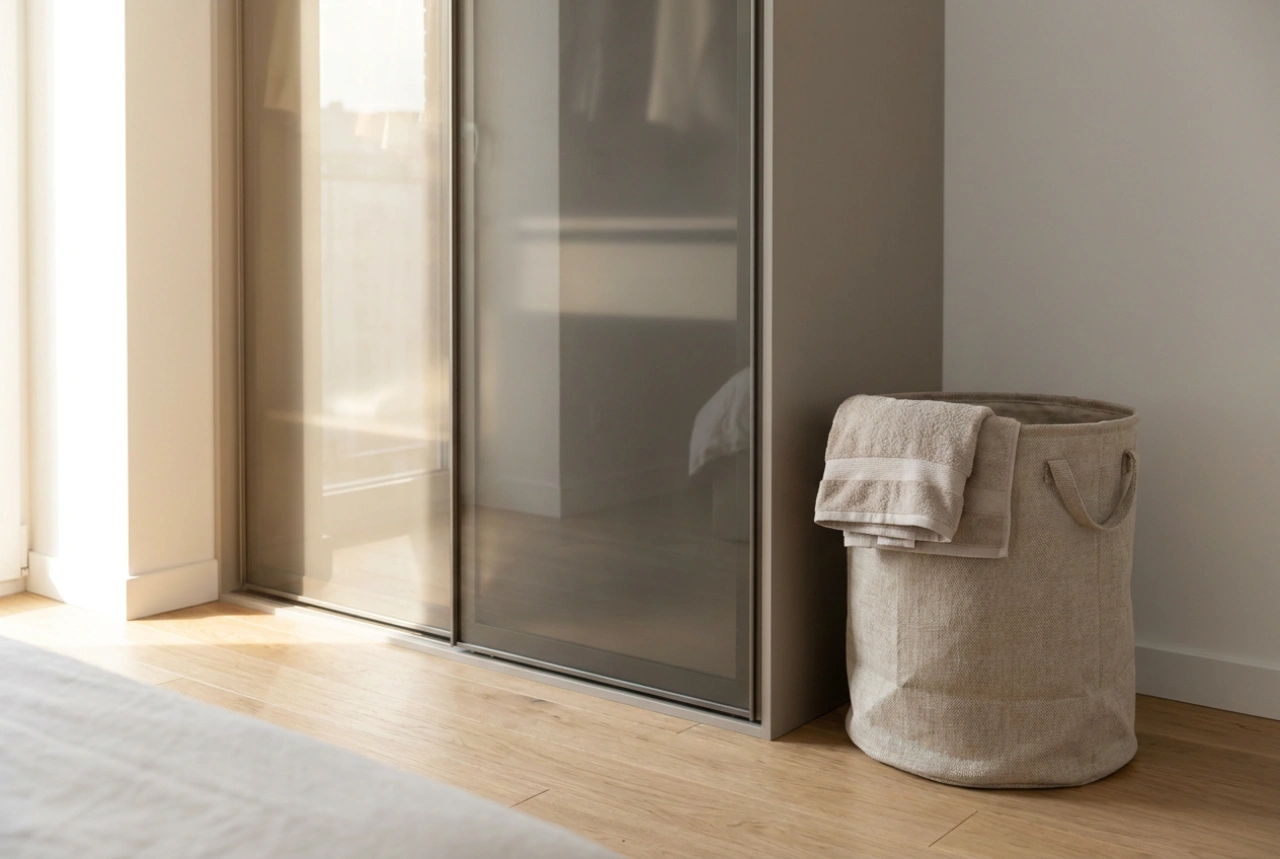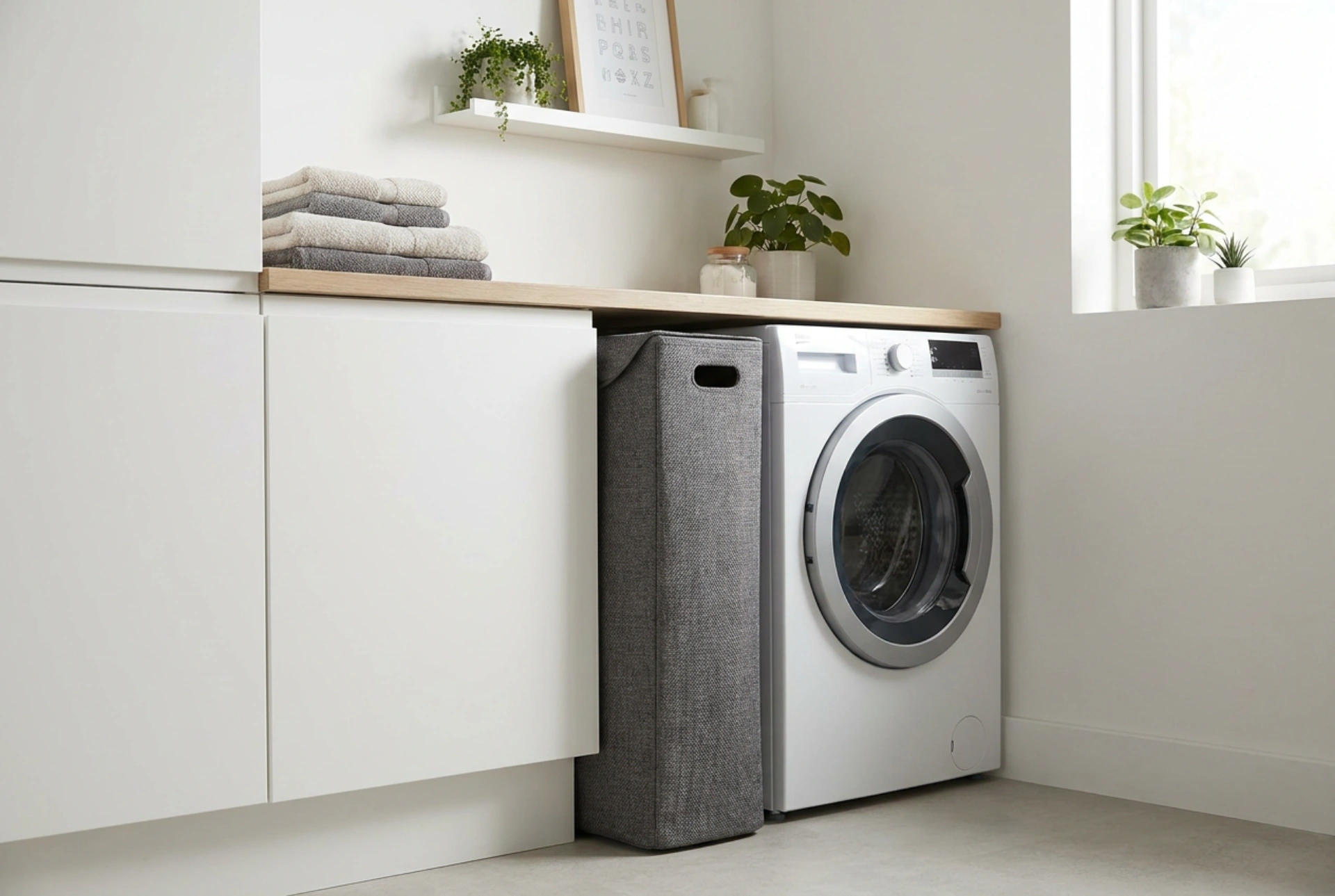


Optimising narrow utility spaces requires a precise understanding of spatial geometry and moisture management. Integrating a slim-profile laundry basket into tight gaps or custom built-in cabinetry solves storage constraints while demanding careful consideration of airflow, material durability, and ergonomics.
The Physics of Ventilation in Confined Storage
In narrow passages and recessed wall niches, natural air circulation is severely restricted. When damp garments—such as towels or gym wear—are deposited into a confined space, they release moisture into the immediate microclimate. Without adequate ventilation, this creates a high-relative-humidity zone, accelerating the growth of fungal spores (mould and mildew) within 24 to 48 hours.
To mitigate this biochemical hazard, slim laundry baskets designed for narrow spaces must employ specific ventilation mechanics. Perforated geometries are critical. Circular or hexagonal perforations across the basket’s vertical surfaces maximise open surface area without sacrificing structural integrity. This allows lateral airflow, encouraging evaporation even when the container is wedged between a washing machine and a drywall. Solid-walled containers should only be used for completely dry textiles or when paired with an active mechanical extraction system within the utility niche.
Material Science: Durability and Polymer Behaviour
The structural demands on a narrow laundry container are unique. Because the basket has a high height-to-width ratio, it is prone to lateral deformation and tipping when loaded unevenly. Selecting the correct material ensures longevity and ease of handling.
- Polypropylene (PP): This thermoplastic polymer offers excellent fatigue resistance. PP baskets can flex repeatedly without cracking, making them ideal for tight squeezes where the basket must bend slightly to clear door frames or cabinet hinges. PP is also chemically inert, resisting detergent residues and acidic sweat.
- High-Density Polyethylene (HDPE): Slightly denser than PP, HDPE provides superior tensile strength and rigidity. An HDPE basket maintains its vertical alignment better when fully loaded, preventing the sides from bowing outward and jamming inside a narrow pull-out cabinet drawer.
- Technical Liners: If utilising a fabric-based slim basket, the material must resist capillary action. Synthetic fibres like solution-dyed polyester with a polyurethane inner coating prevent moisture from migrating from wet clothes to the surrounding wooden cabinetry, protecting your joinery from rot and swelling.
Ergonomics and Movement Kinetics in Narrow Passages
Carrying laundry through confined corridors requires a container that aligns with the body's natural centre of gravity. Traditional wide baskets force the user to hold the load away from the torso, placing high shear stress on the lumbar spine. A slim, flat-sided basket allows the load to be carried close to the hip, aligning the weight directly over the pelvis and reducing muscle fatigue.
When selecting a slim basket for manual transport, handle placement is vital. Handles should be integrated directly into the structural rim rather than attached as secondary components. This integrated design distributes the vertical pulling force evenly across the polymer matrix, preventing localized structural failure. For built-in systems, look for moulded finger grips that allow easy retrieval from a deep recess without requiring wrist hyperextension.
Seamless Integration into Built-In Joinery
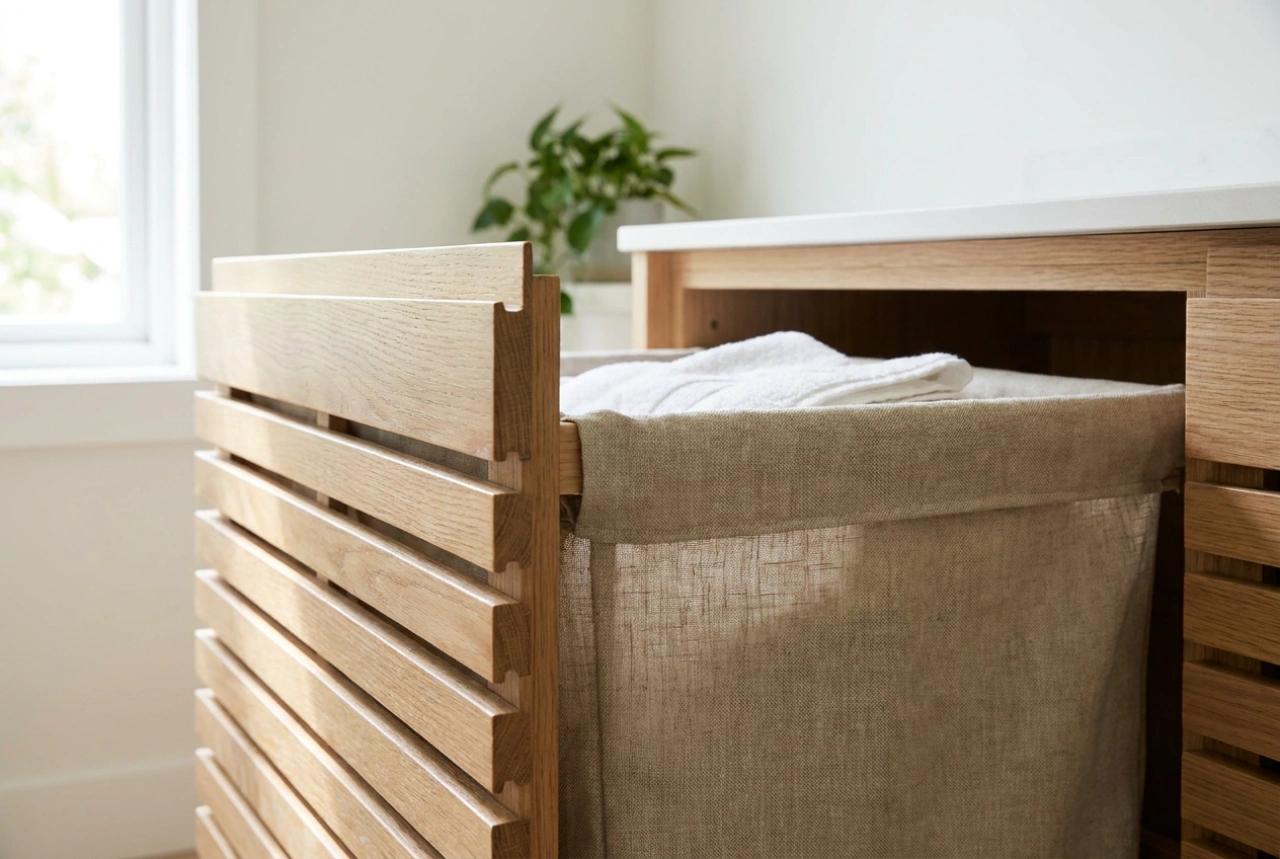
Integrating a slim laundry basket into custom cabinetry requires precise tolerance planning. A common failure point is the lack of physical clearance, leading to friction wear on both the basket and the cabinet interior. A minimum clearance of 15 millimetres on either side of the basket is recommended to allow free movement and air circulation.
For pull-out systems, mounting the basket on full-extension ball-bearing runners ensures smooth kinetic operation. Heavy-duty runners prevent the basket from sagging under a full 10-kilogram load of damp laundry. Additionally, incorporating a moisture-resistant melamine-faced particleboard or compact laminate base within the cabinet drawer protects the wood from accidental spills and condensation drips, ensuring your utility space remains structurally sound for decades.