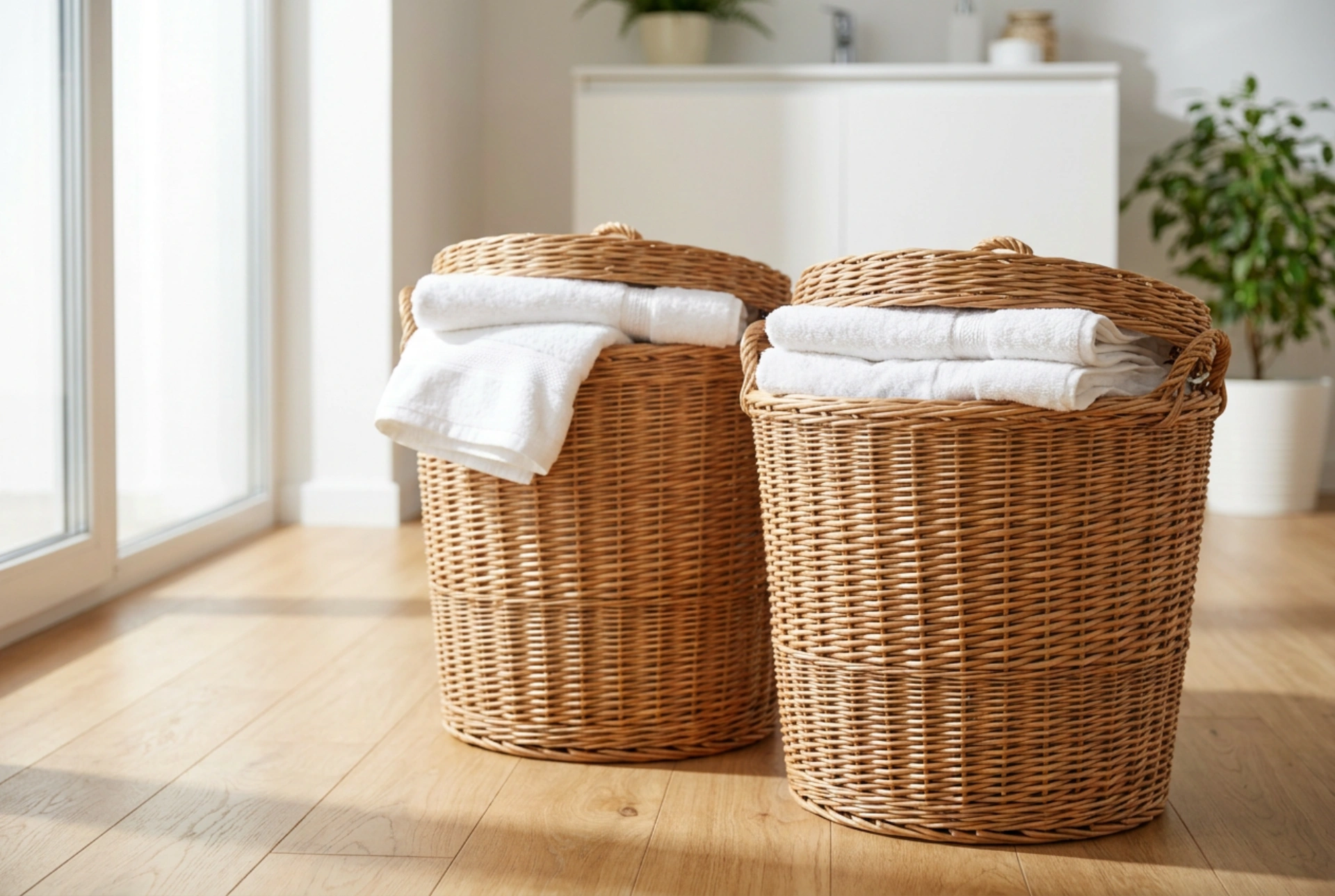


Managing household laundry efficiently relies on understanding how humidity and airflow interact with different fabrics before they even reach the washing machine. Wicker laundry baskets serve as excellent tools for this purpose, combining natural ventilation with organised structural segregation to prevent bacterial growth and fibre degradation.
The Physics of Airflow and Moisture Control
The primary advantage of woven wicker over solid synthetic containers lies in the mechanics of passive ventilation. Wicker, traditionally crafted from willow, rattan, or bamboo, features a porous organic structure woven into an open pattern. This design allows air to circulate freely through the basket, preventing the formation of microclimates with high relative humidity. When damp textiles—such as worn garments or used hand towels—are placed in a sealed or poorly ventilated container, the trapped moisture creates an optimal breeding ground for microbes. Anaerobic bacteria and fungal spores (mildew) thrive in dark, stagnant, and humid environments. These microorganisms feed on organic residues like sweat, sebum, and skin cells left on the fabrics, producing volatile organic compounds that cause sour odours. Furthermore, fungal enzymes can actively degrade natural cellulose fibres like cotton and linen, weakening the fabric structure over time. A wicker structure facilitates continuous evaporation, keeping the relative humidity inside the basket close to that of the ambient room air, which drastically inhibits microbial proliferation.
Designing a Segregation System by Fibre and Temperature
Effective laundry management requires categorising textiles prior to washing to protect fabric integrity and optimise washing machine cycles. Utilising multiple wicker baskets or a single multi-compartment basket allows for immediate sorting based on material science and chemical requirements. Grouping textiles by wash profile reduces the mechanical wear and chemical damage that occurs when mismatched fabrics are washed together:
- Cellulose-based Fibres (Cotton, Linen): Highly hydrophilic and prone to retaining water. These require robust ventilation and are typically washed at higher temperatures (40°C to 60°C) to dissolve heavy oils.
- Protein-based Fibres (Wool, Silk): Extremely sensitive to heat and alkaline environments. These must be segregated to prevent accidental exposure to high-temperature cycles or enzymes found in standard detergents, which break down peptide bonds in protein fibres.
- Synthetic Polymers (Polyester, Nylon, Acrylic): Highly lipophilic, meaning they attract and retain body oils. Synthetic fabrics should be stored separately from natural fibres to prevent cross-contamination of grease and odours, and washed at lower temperatures (30°C to 40°C) to avoid thermoplastic deformation.
By separating these categories into dedicated wicker compartments, you also prevent dye transfer. Wet or damp fabrics in contact with one another can undergo dye sublimation or capillary migration, where loose dye molecules travel along water pathways from dark fabrics to light ones. Dry, segregated storage in breathable baskets completely eliminates this risk before the wash cycle begins.
The Role of Textile Liners in Friction Reduction
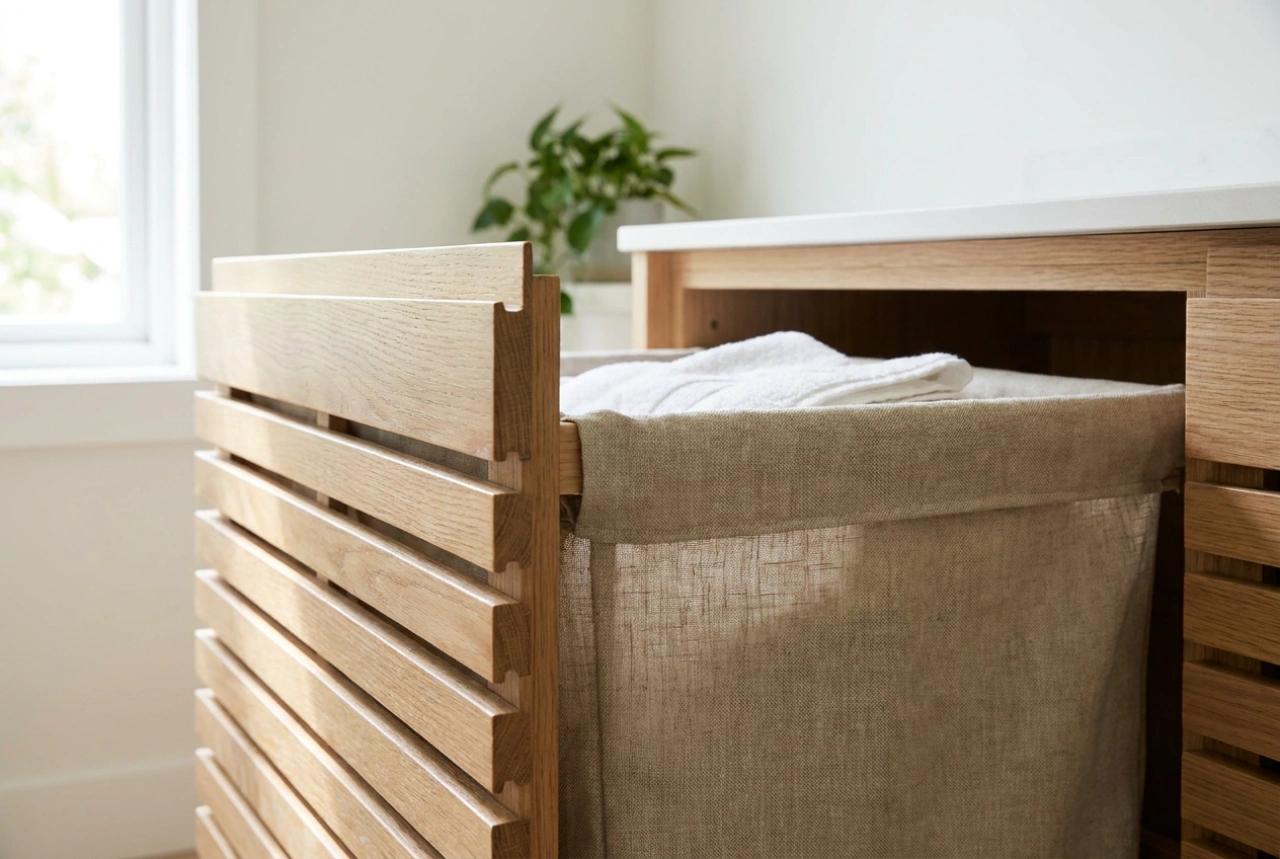
While the external wicker structure provides essential ventilation, the raw, fibrous texture of woven wood or reed can present a physical hazard to delicate textiles. Rough edges can catch fine threads, causing snags, pilling, or structural tears in woven wool, lace, or silk. To mitigate this mechanical friction, wicker baskets should always be paired with a removable fabric liner. The ideal material for a liner is a tightly woven, unbleached cotton or linen. This lining acts as a physical buffer, absorbing the initial kinetic impact of sliding garments while remaining highly breathable. To maintain hygiene, these liners must be treated as part of the laundry cycle. Every few weeks, the liner should be removed and washed at 60°C with an oxygen-based bleaching agent to eliminate any accumulated fungal spores, dust mites, or bacterial residues, ensuring a sterile environment for subsequent laundry batches.
Optimal Placement and Microclimate Management
To maximise the physical properties of wicker baskets, their placement within the home must be strategic. Bathrooms are often the default location for laundry storage, yet they frequently experience spikes in humidity and temperature. If a wicker basket is placed directly next to a shower stream without adequate ventilation, the organic wicker fibres themselves can absorb excess environmental moisture, leading to mould growth on both the basket and the stored clothes. Baskets should ideally be positioned in well-ventilated areas, such as hallways, utility rooms, or dressing areas, where air current speed is higher. Additionally, wet textiles—such as bath towels or sweaty athletic wear—should never be placed directly into a laundry basket. They must first be air-dried on a drying rack or rail to remove bulk water before storage, preventing the hydrolytic degradation of surrounding dry textiles.