

Managing laundry in a studio apartment requires a strategic approach to physical space, air circulation, and textile hygiene. Selecting a compact laundry basket and establishing a daily routine prevents visual clutter while addressing the microclimatic challenges of storing soiled garments in confined living areas.
The Microclimate of Soiled Laundry in Small Spaces
When soiled textiles are consolidated into a confined container, they create a microclimate characterised by high relative humidity and organic particulate matter. Human sebum, skin cells, and sweat (comprising water, lipids, and proteins) remain trapped within the weave of the fabric. In a closed, non-breathable plastic basket, this dark and humid environment becomes an ideal breeding ground for bacteria and fungi, notably Staphylococcus epidermidis and various mould species.
These microorganisms metabolise the lipids and proteins on the fibres, releasing volatile organic compounds (VOCs) such as isovaleric acid and butyric acid, which produce sour, stale odours. In a small studio apartment, these airborne compounds quickly disperse throughout the entire living space due to the lack of physical partitions. Therefore, controlling laundry clutter is not merely an aesthetic choice, but a chemical and biological necessity for maintaining indoor air quality.
Material Science: Choosing the Right Basket for Airflow
To mitigate the chemical breakdown of organic matter on clothing, the design and material of your laundry basket must facilitate continuous air exchange. When selecting a container for a small space, prioritize materials that allow moisture to escape through evaporation rather than trapping it against the fabrics.
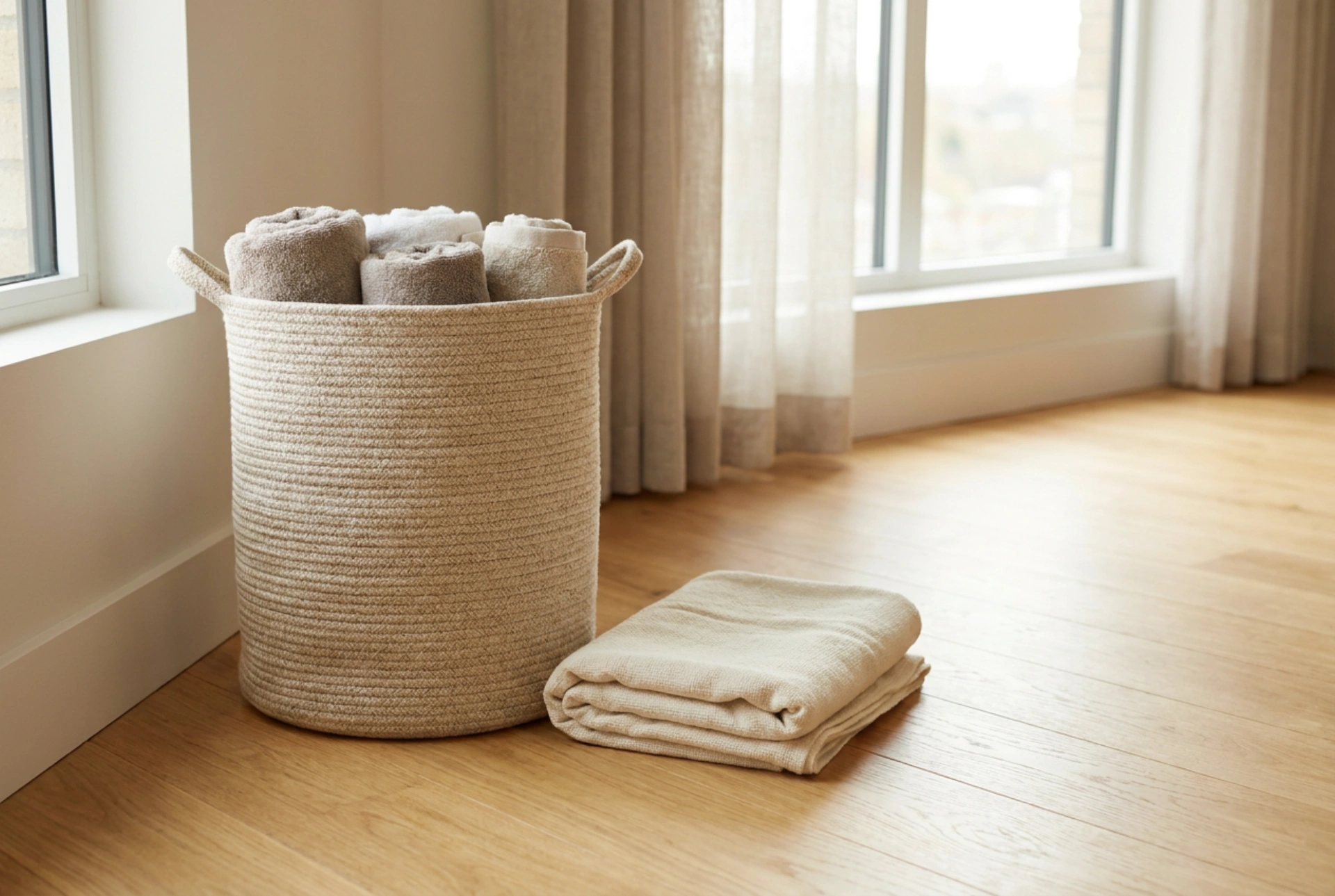
- Woven Natural Fibres: Rattan, willow, and seagrass offer natural gaps in their structure, promoting passive ventilation. The capillary action of these natural materials also helps absorb minor ambient moisture without degrading.
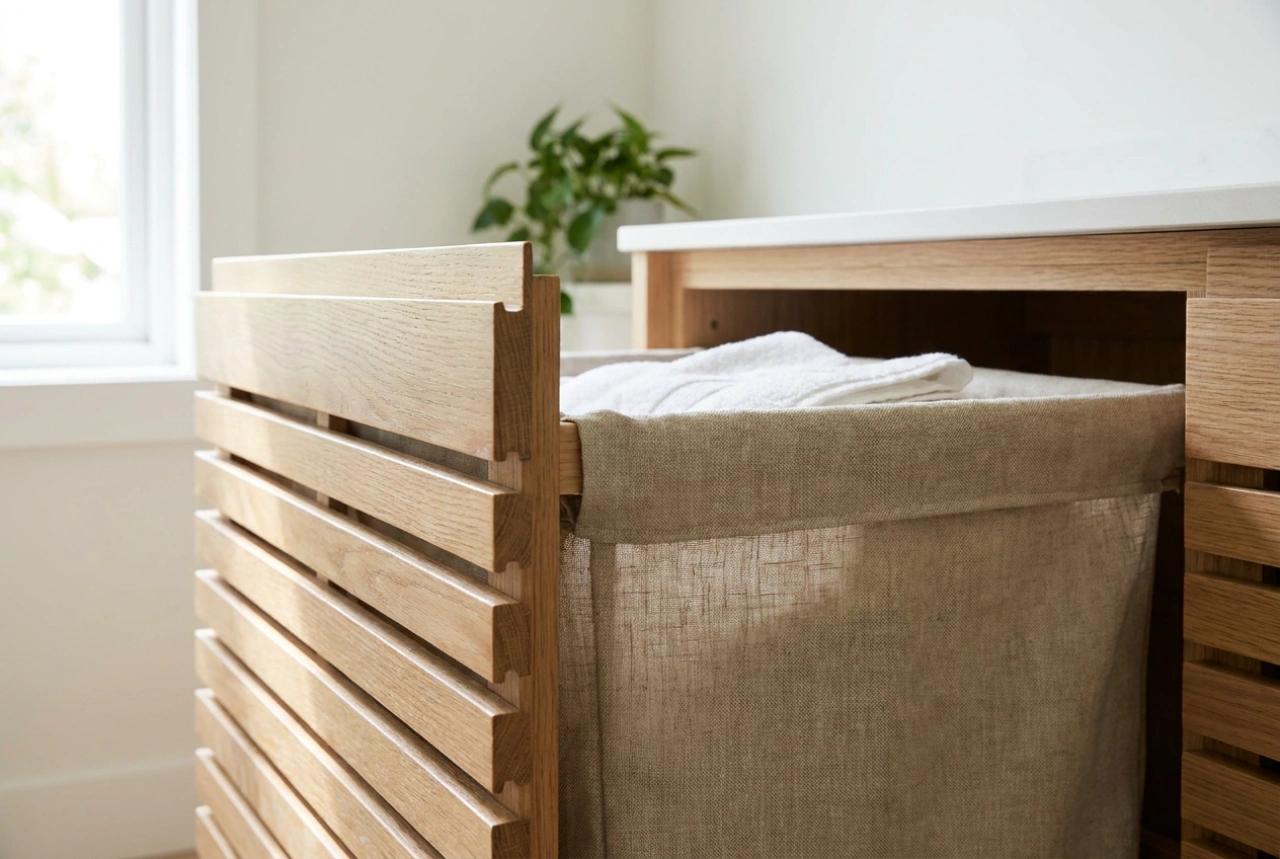
- Heavyweight Canvas or Linen: High-density cotton canvas or linen bags are highly breathable and machine-washable. This is crucial because the basket liner itself can accumulate bacterial spores and sebum over time, requiring periodic high-temperature sanitation (at least 60°C).
- Perforated Lightweight Metals: Aluminium or stainless-steel baskets with engineered perforations offer durability and are completely non-porous, meaning they do not absorb odours or moisture themselves and are easily sanitised with simple surfactants.
The Physics of the Small-Load Strategy
A common mistake in studio living is waiting for a large laundry volume to accumulate. A small basket acts as a physical regulator, enforcing a high-frequency, low-volume washing cycle. This approach has significant physical advantages for textile care and spatial management.
When garments remain compressed at the bottom of a large basket for weeks, the weight of the overlying clothing subjects the lower layers to mechanical pressure. Combined with ambient moisture, this pressure sets deep creases into the fibres, bending the polymer chains (such as cellulose in cotton or keratin in wool) and making them highly resistant to flattening. Frequent washing of smaller loads prevents this structural deformation, rendering ironing unnecessary in most cases.
Furthermore, drying small loads inside a studio apartment prevents the indoor relative humidity from spiking. Hanging a large volume of wet laundry indoors releases litres of water vapour into the air, which can condense on cold walls and windows, leading to structural mould. Drying smaller, frequent loads allows the apartment's ventilation system to easily process the moisture load, maintaining a balanced indoor dew point.
Active Odour Prevention and Pre-Sorting Techniques
To maintain absolute control over the laundry area, implement a strict sorting and drying protocol before garments enter the basket. Never place damp textiles, such as bath towels, dishcloths, or rain-soaked garments, directly into a small laundry container. Doing so immediately raises the internal relative humidity to near-saturation levels, triggering rapid mould spore germination within 24 to 48 hours. Hang damp items over a rail until completely dry before storing them in the basket.
To neutralise odours naturally without synthetic masking agents, place a small sachet of sodium bicarbonate (bicarbonate of soda) at the base of the basket. Sodium bicarbonate is an amphoteric substance, meaning it chemically reacts with both highly acidic and highly alkaline odour molecules, converting them into non-volatile, odourless salts. This simple chemical barrier ensures your small-space laundry solution remains completely odour-free between wash cycles.