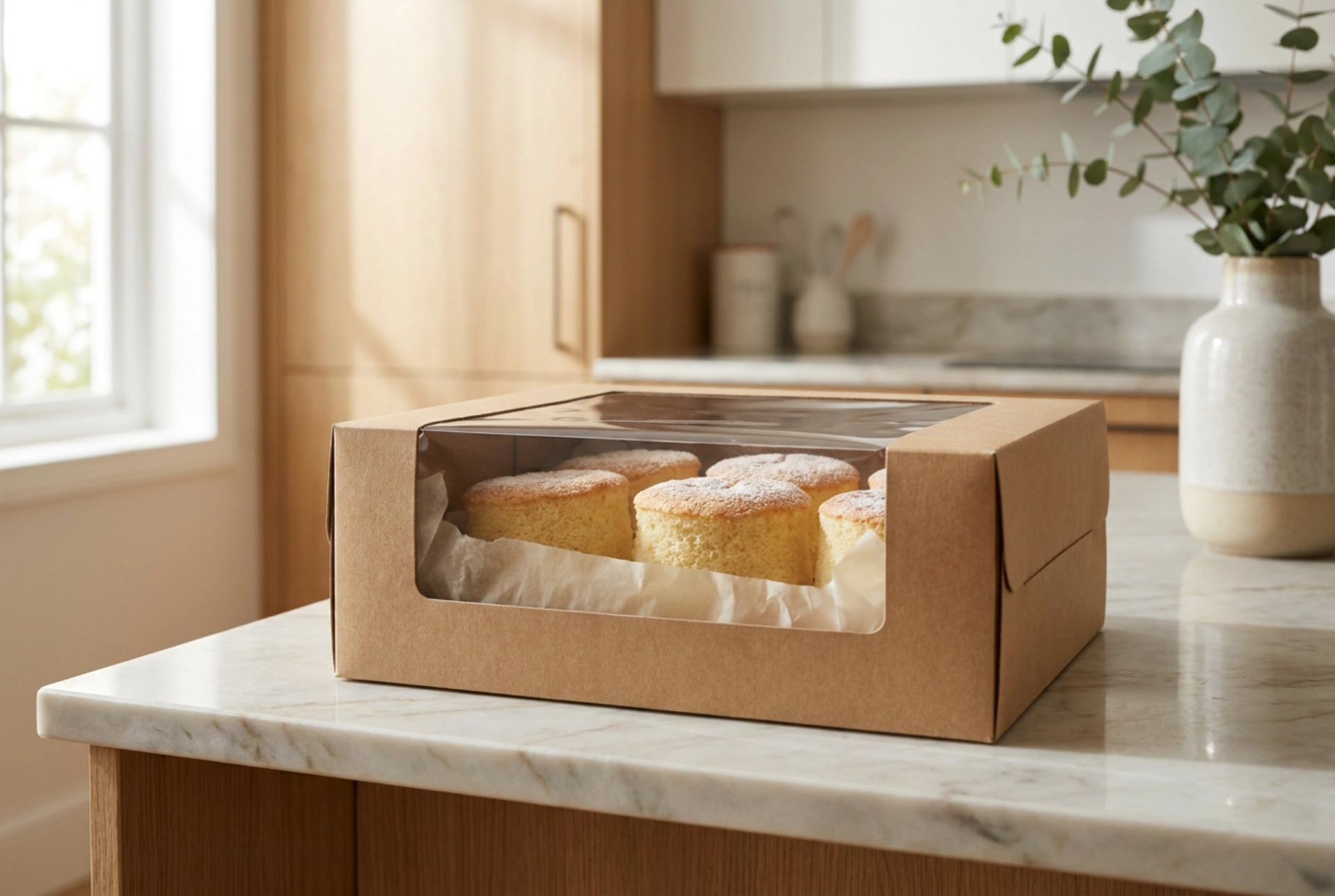


Cardboard bakery boxes with clear windows are excellent for presenting baked goods, but their porous structure can quickly rob cakes of essential moisture. Understanding the material science behind moisture transfer allows you to maintain the perfect crumb texture while utilising these convenient containers.
Why Cardboard Causes Cakes to Dry Out
Uncoated cardboard is made of compressed cellulose fibres, which are highly hygroscopic. This means they naturally attract and absorb water molecules from the surrounding environment. When you place a moist cake directly onto a cardboard base, a vapor pressure gradient is established. The dry fibres of the box draw moisture out of the cake and into the paper matrix until an equilibrium is reached. This process, known as moisture migration, rapidly stales the outer layers of your cake, turning a tender sponge into a dry, crumbly texture within hours.
The Window Effect: Light and Microclimates
The clear plastic window of a presentation box is typically made of polyethylene terephthalate (PET) or cellulose acetate. While it blocks direct airflow, it introduces another physical challenge: light transmission. If the box is placed in direct sunlight or under warm kitchen lights, the air inside heats up through a micro-greenhouse effect. This temperature increase causes moisture from the cake to evaporate and condense on the cold inner surface of the plastic window. The condensed water is then lost to the cake's structure, often dripping back down unevenly and causing soggy spots on the icing while the sponge underneath remains parched.
Creating Effective Moisture Barriers
To prevent moisture migration, you must disrupt the direct contact between the cake and the cardboard. Simple techniques can create a reliable barrier:
- Greaseproof Parchment Paper: Lining the bottom and sides of the box with high-density, silicone-coated parchment paper stops the cardboard from siphoning oils and water from the cake base.
- Food-Grade Acetate Strips: Placing acetate collars around the exposed sponge edges of sliced cakes blocks lateral evaporation. This is particularly effective for layered cakes with exposed sponge sections.
- Silicone Mats: A reusable, thin silicone baking mat placed at the bottom of the box serves as an impermeable barrier that completely isolates the cake from the absorbent cardboard floor.
Temperature and Placement Strategies
Controlling the ambient environment around your window box is critical for preserving cake texture. Keep the box in a cool, dark pantry away from heat sources like ovens, dishwashers, or direct sunlight. If the cake contains perishable fillings like fresh cream or custard and must be refrigerated, place the window box inside a larger, airtight plastic container first. Refrigerators are notoriously dry environments with low relative humidity; the raw cardboard box will rapidly lose its moisture to the fridge air, accelerating the drying of the cake inside. The outer plastic shield preserves the micro-humidity of the box.
Steps for Short and Long-Term Storage
For storage under 24 hours, wrapping the cake lightly in food-grade plastic wrap before placing it in the box is the most reliable method. Ensure the wrap lies flat against any cut surfaces to prevent air pockets. For decorated cakes where plastic wrap would damage the frosting, place a small, damp food-safe sponge or a small cup of water in a corner of the box (isolated from the cake) to raise the relative humidity inside the container, preventing the dry cardboard from drawing moisture from the frosting.