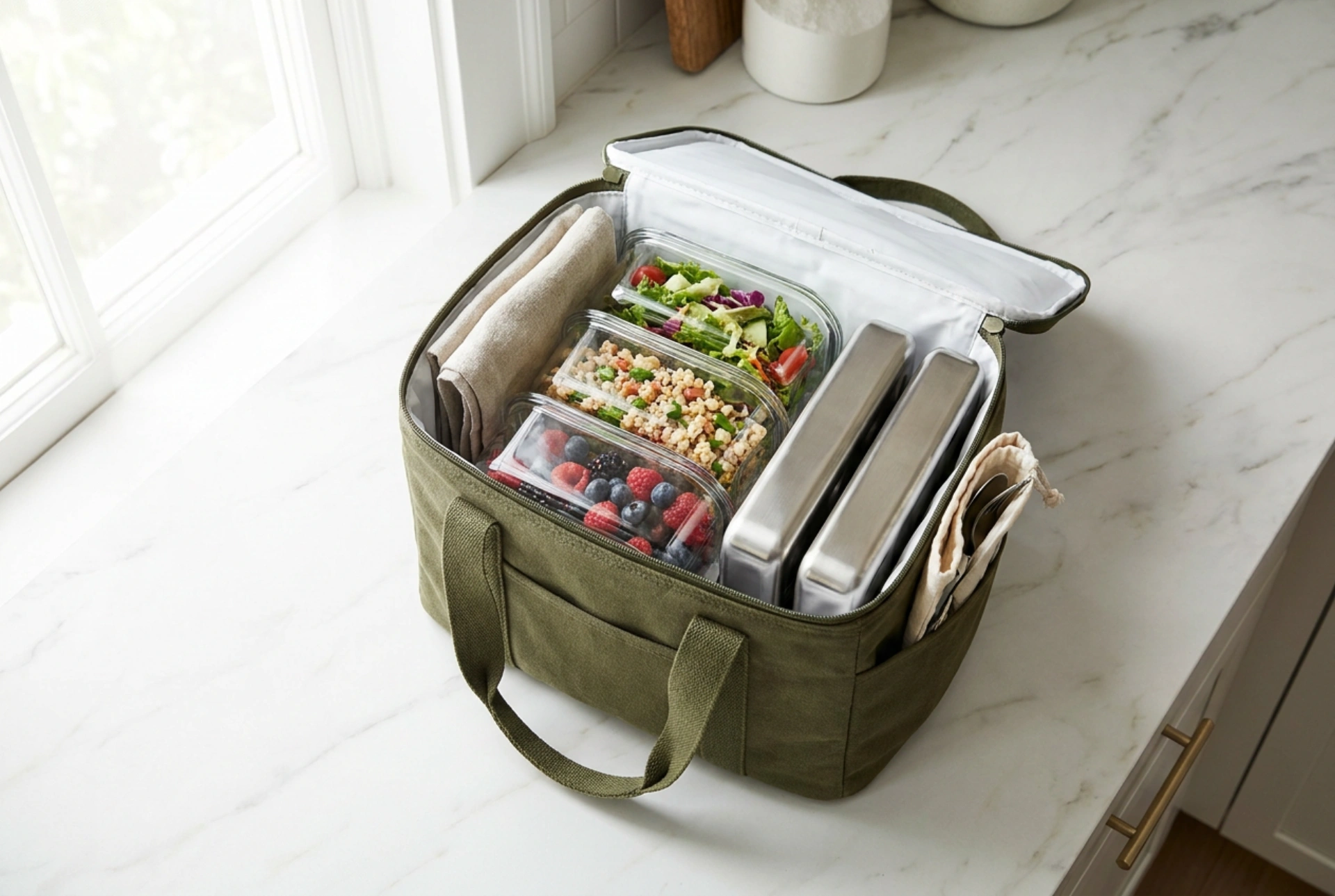


Managing the internal microclimate of a thermal lunch bag requires a basic understanding of thermodynamics to prevent bacterial growth and maintain food structure. Implementing a systematic packing order and leveraging physical phase-change principles will keep your meals fresh, cold, and secure for hours.
The Physics of Thermal Insulation in Portable Bags
Thermal lunch bags do not actually generate cold; instead, they function as passive thermal barriers that slow down the rate of heat transfer. Heat transfer occurs via three primary mechanisms: conduction, convection, and radiation. High-quality thermal bags combat these forces using a multi-layered material composition. The innermost layer typically consists of a reflective polymer foil, which reflects radiant heat away from the cold core. Beneath this reflective skin lies a dense layer of closed-cell polyethylene foam. This foam is packed with microscopic, trapped air pockets that act as poor conductors, drastically reducing conductive heat transfer from the warm external environment into the bag's interior.
However, the efficiency of this barrier is highly dependent on how the bag is managed. Opening the bag exposes the cold interior to ambient air, initiating rapid convective currents that equalise the internal and external temperatures. To maintain a stable microclimate, minimize the frequency and duration of openings, and ensure that zippers—which are common thermal bridges where heat leaks in—are kept tightly sealed.
Phase-Change Materials and Pre-Cooling Techniques
To actively absorb heat within the insulated environment, you must utilise phase-change materials, commonly known as ice packs or gel packs. These elements exploit the latent heat of fusion: the energy required to transition a substance from a solid to a liquid state. As the ice pack melts, it absorbs a massive amount of thermal energy from its surroundings while remaining at a constant temperature of 0°C (32°F) until the transition is complete.
For maximum thermal efficiency, follow these preparation steps:
- Pre-chill the bag: Before packing, place the empty thermal bag in the refrigerator for 20–30 minutes. This cools the internal lining and insulation, ensuring they do not transfer their residual ambient heat to your cold food containers.
- Deep-freeze the coolant: Freeze gel packs for at least 12 hours at a temperature of -18°C or lower. A fully solid gel pack absorbs significantly more energy during phase transition than a partially slushy one.
- Select dense containers: Use borosilicate glass or thick-walled polypropylene containers. Glass has a higher thermal mass than thin plastic, meaning it retains cold temperatures for a longer duration once chilled.
The Packing Hierarchy: Exploiting Gravity and Convection
Organising the interior of your thermal bag is not just about space efficiency; it is about managing gravity-driven thermal currents. Because cold air is denser than warm air, it naturally sinks, creating a downward convective flow. Consequently, placing your ice packs at the bottom of the bag is a common error that leaves the upper sections vulnerable to rising temperatures.
To pack optimally, construct a thermal sandwich using this specific order of operations:
- Base layer: Place heavy, flat, pre-chilled containers (such as glass meal prep dishes) at the very bottom of the bag. This provides a stable physical foundation and concentrates thermal mass at the base.
- Middle layer: Place delicate items, such as fresh produce or dairy products, directly on top of the base containers. These items should be wrapped or boxed to prevent physical bruising and direct contact with intense cold.
- Top layer: Position your frozen gel packs directly on top of the food. As the gel packs absorb heat from the rising air, the chilled air they produce will cascade downward, cooling the entire contents of the bag.
Moisture Management and Sanitation Chemistry
As warm, humid ambient air contacts the cold surfaces inside your bag, condensation inevitably forms. This moisture can compromise paper packaging, degrade food textures, and create a breeding ground for bacteria and mold. To control humidity, wrap condensation-prone items in clean cotton kitchen towels, which absorb excess liquid water via capillary action.
To maintain hygiene, clean the interior lining after every use to eliminate organic residues and neutralise acidic odours. Avoid harsh chlorine-based bleaches, which can degrade the reflective metallic lining. Instead, prepare a mild sanitising spray using a solution of warm water and sodium bicarbonate (baking soda). Spray the interior liberally, scrub gently with a soft microfibre cloth to avoid scratching the foil, and wipe dry with a clean towel. Leave the bag fully open in a well-ventilated space to air-dry completely before storing, preventing anaerobic bacterial growth.