

Efficient kitchen organisation relies on systematic storage, particularly when managing flexible plastic zipper bags. Proper labelling and arrangement prevent food waste, optimise thermal efficiency in freezers and fridges, and streamline daily meal preparation.
The Material Science of Ink Adhesion on Polyethylene
Most food-grade zipper bags are manufactured from low-density polyethylene (LDPE), a polymer valued for its flexibility, moisture barrier properties, and tensile strength. However, LDPE has a low surface energy, which makes liquid adhesion difficult. Water-based inks will bead up and easily wipe away because they cannot wet the non-polar plastic surface. To create a permanent bond, use solvent-based markers containing industrial alcohol or quick-drying organic solvents. These solvents temporarily disrupt the surface tension of the polyethylene, allowing the pigment to bind securely.
For maximum longevity, wipe the labelling area with a drop of isopropyl alcohol to remove any manufacturing oils or moisture before writing. Always write on the bag while it is completely flat and empty; attempting to label a filled, cold, or irregular surface leads to uneven ink distribution and subsequent smudging.
The Chemistry of Food Decay: What to Record on the Label
Labelling is not merely about identification; it is a critical tool for food safety and inventory rotation. When food is frozen or refrigerated, enzymatic and chemical degradation continues, albeit at a slower rate. A comprehensive label must include three critical metrics: the exact contents, the date of preservation, and the specific quantity or portion size.
Indicating the portion size prevents unnecessary thawing of large masses, which compromises food safety by allowing localised bacterial multiplication during the temperature transition. Additionally, noting whether the food is raw, par-boiled, or fully cooked prevents cross-contamination during subsequent preparation phases.
Physics of Drawer Optimisation: Filing vs. Stacking
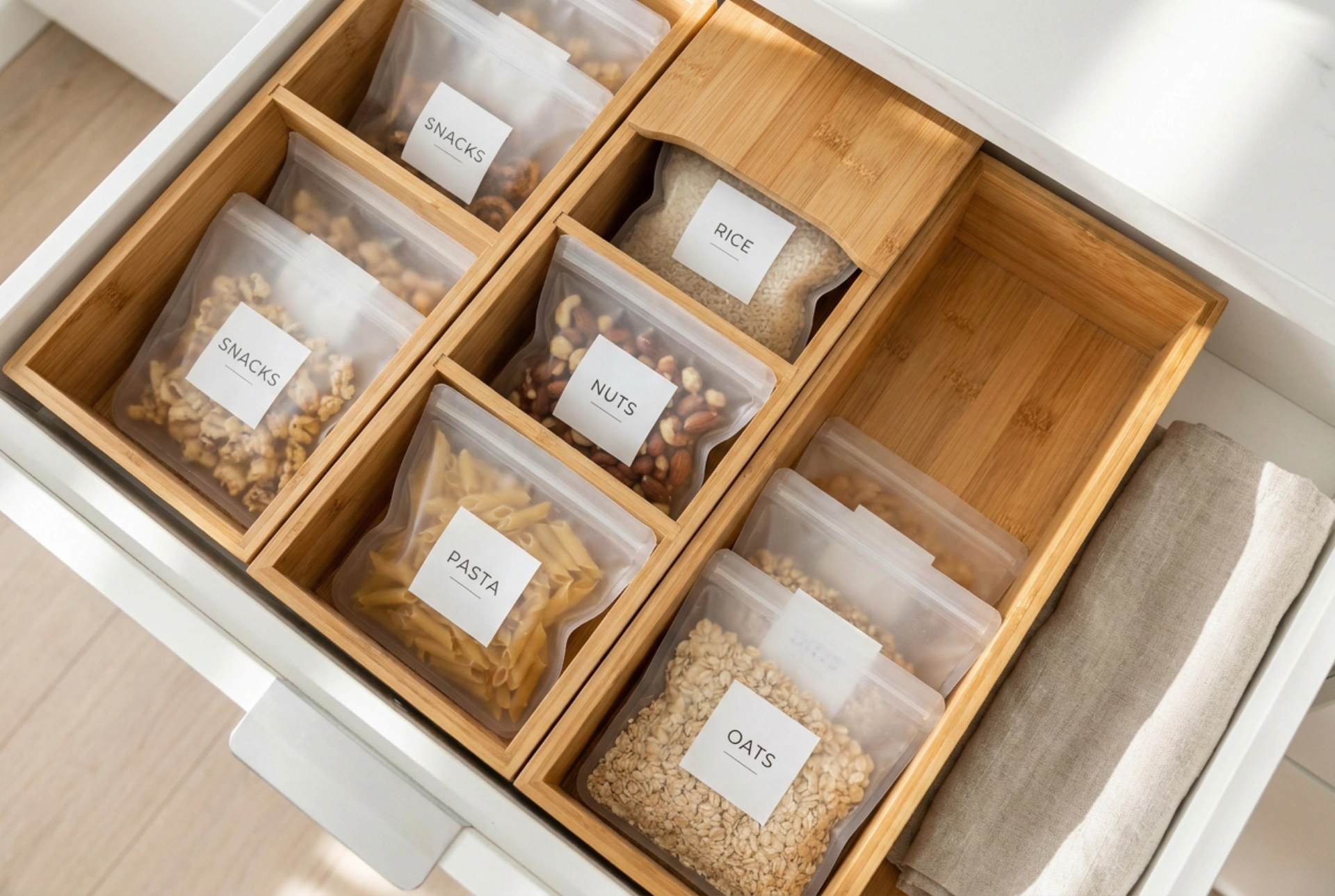
Stacking zipper bags horizontally in a drawer creates a high-friction pile where items at the bottom are compressed, obscured, and forgotten. Over-compression can stress the zipper seals, leading to micro-tears or seal failure, exposing food to air and accelerating freezer burn, which is the sublimation of ice crystals into the air. Instead, employ a vertical filing system, akin to documents in a filing cabinet. This method relies on gravity to keep bags upright while ensuring every label remains visible.
To maintain this structure when bags are removed, install adjustable tension dividers or modular bins. Grouping bags by food category (such as proteins, vegetables, and prepared meals) minimises the time the drawer remains open, reducing thermal fluctuation inside the appliance.
Managing Frozen Bags and Preventing Structural Damage
When liquid-heavy foods like soups or stews are stored in zipper bags, freeze them flat on a flat tray first. Once frozen solid into rigid, uniform planks, transfer them to the vertical drawer system. This physical transition changes the food from a fluid state to a stable geometric solid, preventing the bags from settling into irregular, unstackable shapes that waste volume.
Ensure the seals are completely clear of food debris before closing; organic matter trapped in the zipper tracks prevents a hermetic seal, allowing moisture to escape and oxygen to enter, causing rapid oxidation of fats and vitamins.
Quick Implementation Checklist
- Use solvent-based markers: Avoid water-based inks to prevent smudging on polyethylene.
- Label before filling: Write on flat, dry bags to ensure clear, readable text.
- Store vertically: File bags upright like folders to maximise visibility and prevent compression damage.
- Freeze flat first: Solidify liquids on a flat surface before vertical storage to maintain uniform shapes.
- Clean the seal: Remove all food residues from the zipper track before sealing to maintain airtight integrity.