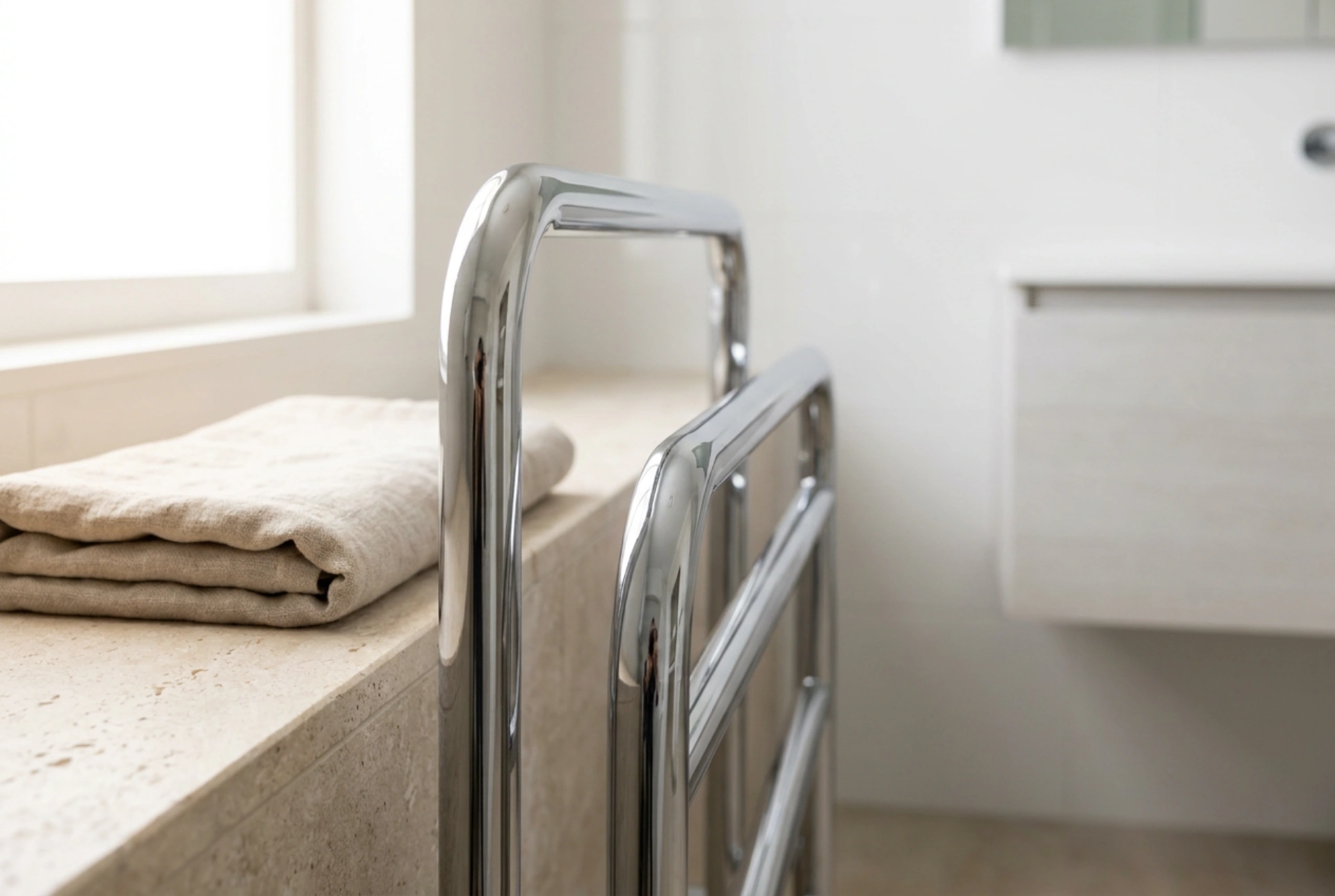


Maintaining the mirror-like shine of a chrome towel rail requires understanding how moisture interacts with electroplated surfaces. Preventing dullness and limescale build-up after a hot bath or shower relies on immediate, correct drying techniques rather than aggressive chemical scrubbing.
Why Water Spots Form on Chrome Surfaces
When you take a hot bath or shower, steam condenses on the cold metal surface of the chrome towel rail. Tap water contains dissolved minerals, primarily calcium and magnesium ions. As the droplets of condensation evaporate due to ambient air movement or heat from the rail itself, the pure water molecules escape into the air as vapour. However, the dissolved minerals cannot evaporate; they remain behind, bonding to the smooth chrome finish. Over time, these mineral deposits crystallise into hard limescale (calcium carbonate), which is difficult to remove without acidic solutions that can risk dulling the metal finish.
The Physics of Microfibre and Friction
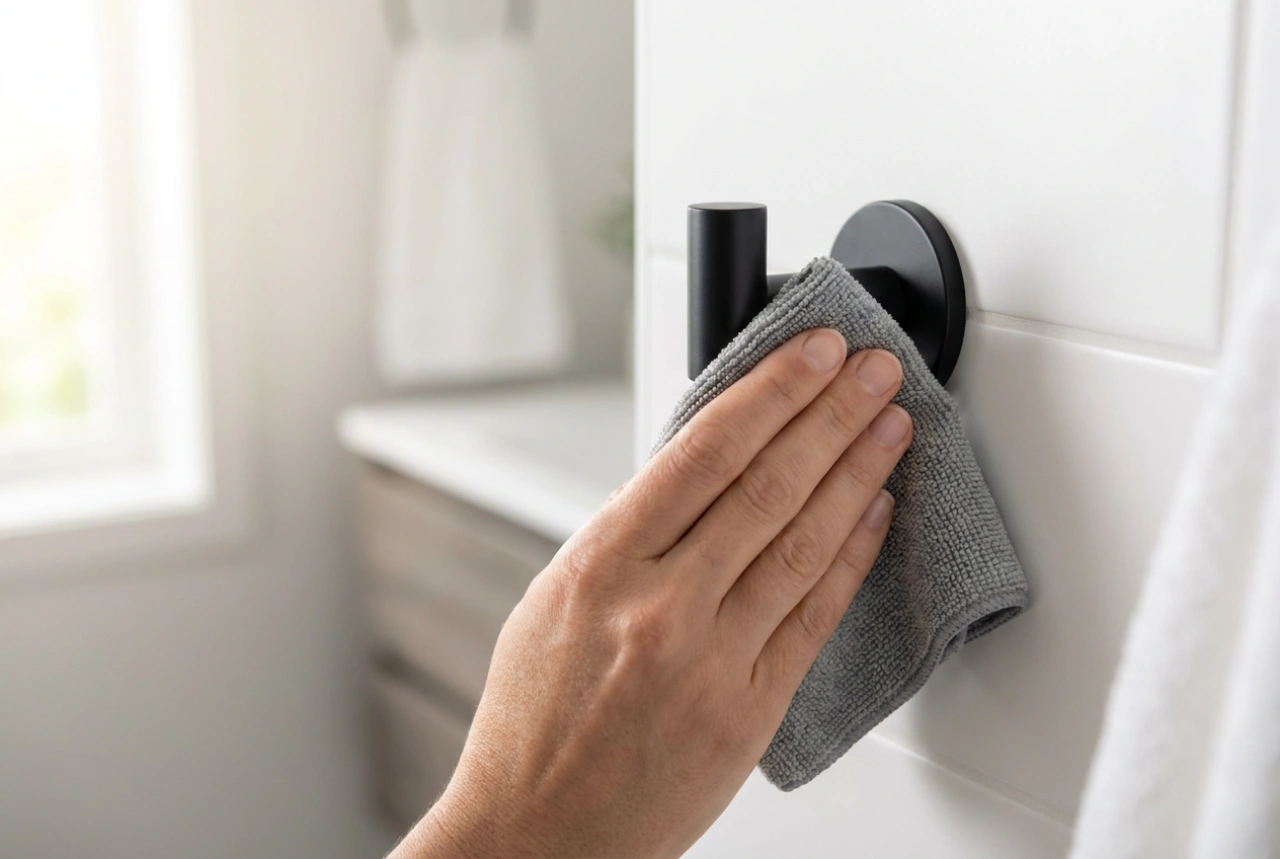
To prevent these deposits, the surface must be dried before the water evaporates. The choice of wiping material is critical. Chrome plating is incredibly hard but thin, meaning abrasive materials can create microscopic scratches that scatter light and ruin the reflective finish. Standard paper towels often contain stiff cellulose fibres that can scratch polished finishes over time, while rough cotton towels can leave lint. The optimal tool is a high-density, split-fibre microfibre cloth. Microfibre functions through capillary action; its star-shaped polyester and polyamide fibres create millions of tiny pockets that physically trap moisture, dirt, and oil rather than just pushing them across the surface. This allows for complete drying with minimal friction.
Step-by-Step Post-Bath Wiping Routine
Implementing a quick daily routine preserves the chrome without the need for intensive cleaning. First, ensure the towel rail is turned off or cooling if it is a heated model, as high heat can dry droplets faster than you can wipe them. Second, take a clean, dry microfibre cloth and fold it into quarters to maximise the usable surface area. Starting from the top horizontal rail, wipe in smooth, linear motions rather than circular patterns, which helps prevent visible streaking. Pay special attention to the underside of the rails and the joints, where gravity pulls water droplets to accumulate. Once the bulk of the moisture is absorbed, flip the cloth to a completely dry side and perform a quick buffing pass to eliminate any remaining moisture film before it can dry naturally.
Addressing Mild Mineral Buildup Safely
If light water marks have already formed, avoid using chlorine-based bleach or heavy abrasive powders, which can cause chemical pitting and peel the chromium layer from its nickel base. Instead, utilise a mild, diluted solution of citric acid or white vinegar (acetic acid). Wet a microfibre cloth with this weak acidic solution, drape it over the affected area for one to two minutes to chemically dissolve the calcium carbonate, and then wipe it clean. Crucially, always neutralise the acid by rinsing the area with a damp cloth of pure water, and then dry it thoroughly. This prevents any residual acid from slowly etching the metal over time.