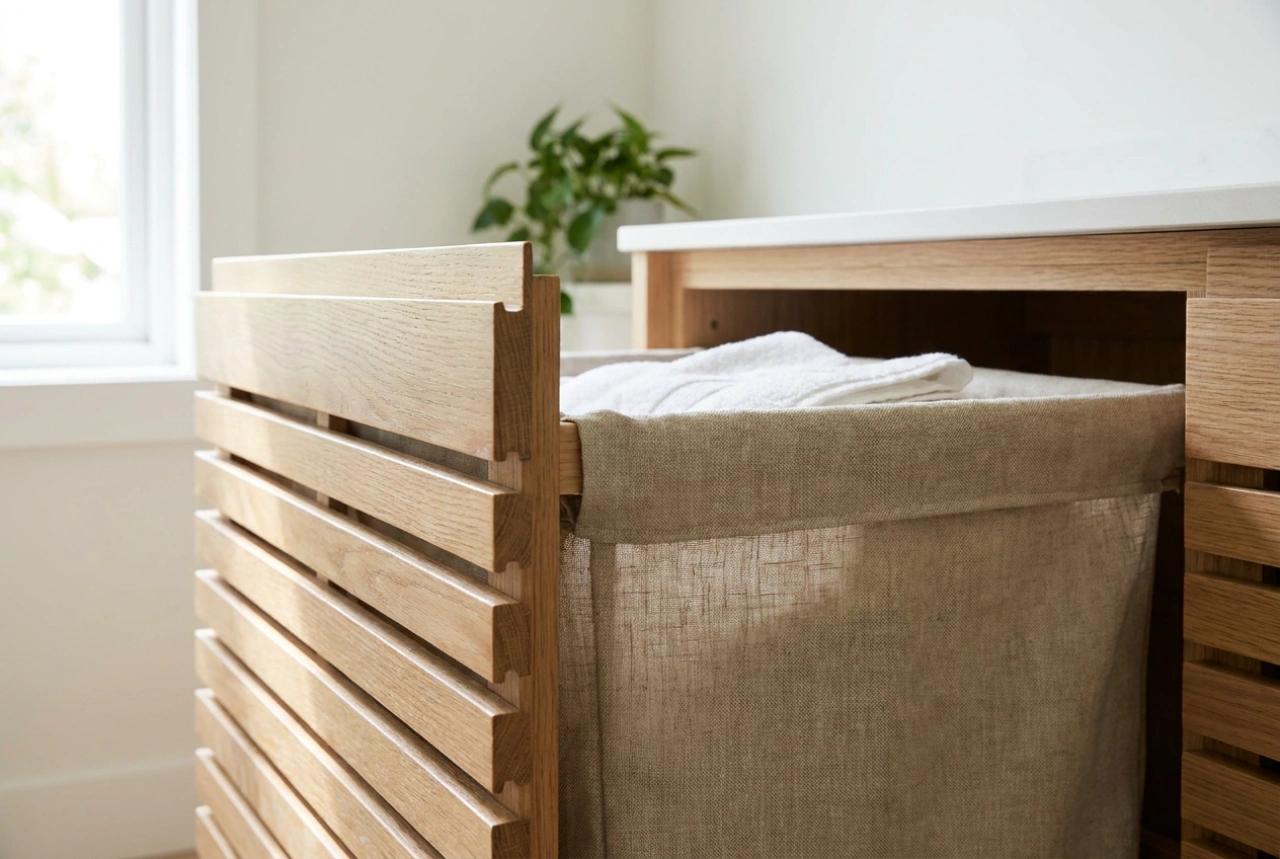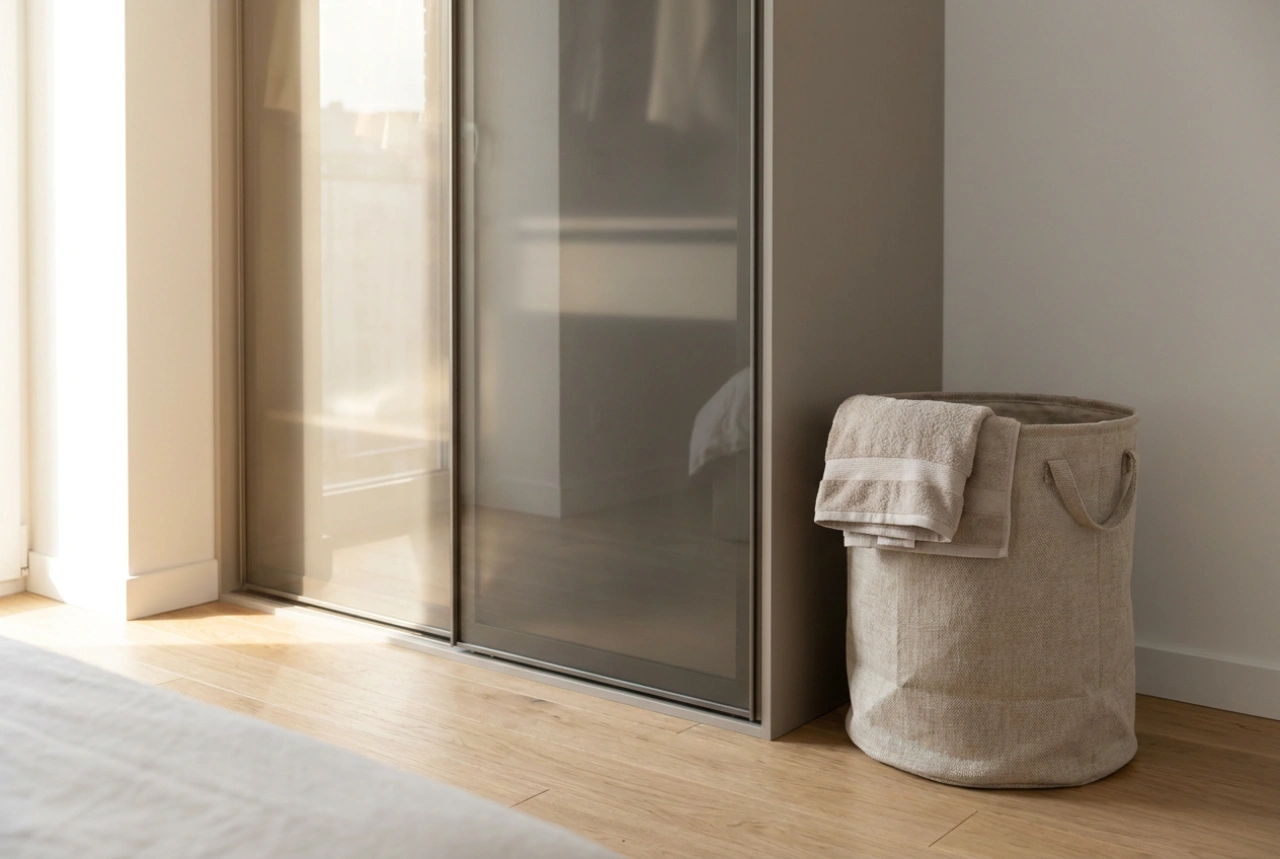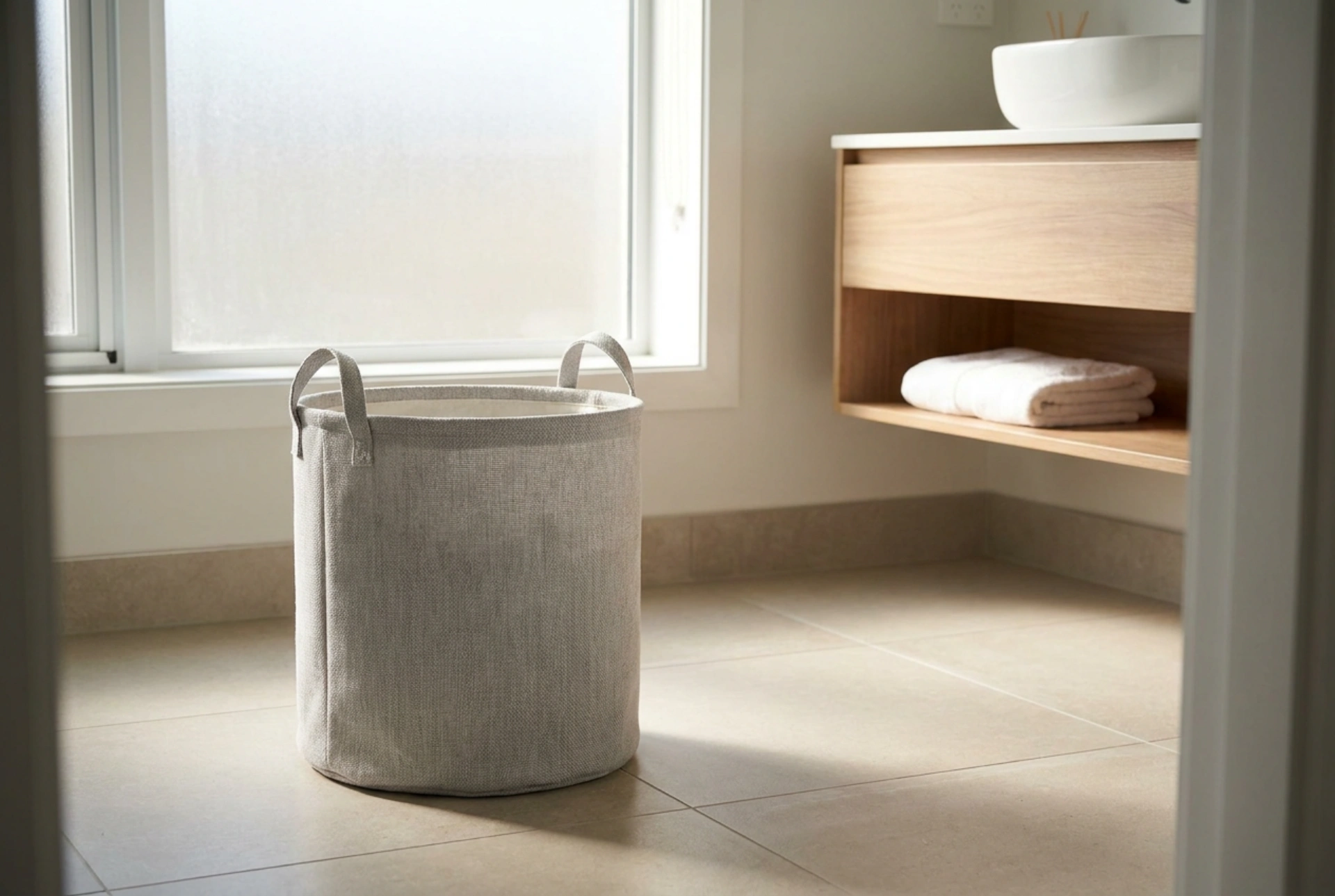


Selecting a laundry basket that serves its functional purpose without disrupting the visual flow of your bathroom requires a careful balance of material selection, colour temperature, and placement physics. A grey receptacle offers the perfect neutral base, provided you select the right texture and tone to harmonise with your existing surfaces.
Understanding Visual Weight and Colour Chemistry
In interior design, visual weight refers to how much an object attracts the human eye. High-contrast objects draw immediate attention, whereas neutral tones with low chromatic intensity, such as grey, reflect light evenly across the visible spectrum. A matte finish is crucial in this context; glossy surfaces reflect sharp pinpoint highlights that draw attention, whereas textured or matte surfaces diffuse light, making the object recede into the background. When choosing a shade, coordinate with your room's undertones: select a cool charcoal grey if your tiles have blue or green undertones, or a warm greige to complement beige, wood, or natural stone. This alignment ensures the basket acts as a shadow or extension of the wall rather than a standalone obstacle.
Material Science: Moisture Management and Airflow
High humidity makes bathrooms exceptionally challenging environments for storing soiled textiles. Woven synthetic polymers, such as high-density polypropylene, or treated natural canvas with a water-resistant interior coating are ideal. Untreated natural wood or wicker absorbs atmospheric moisture, which leads to structural degradation and fungal spore proliferation, commonly known as mould. A woven structure is not merely an aesthetic choice; it facilitates continuous passive air circulation. This airflow prevents anaerobic bacteria from digesting sweat and sebum on soiled textiles, a metabolic process that produces volatile organic compounds and unpleasant musty odours. Ensuring your grey basket has an open weave or a breathable inner liner is vital for maintaining a fresh microclimate.
Strategic Positioning and Spatial Harmony
To prevent your laundry storage from dominating the room, utilise architectural lines and negative space. Placing the basket in a corner or beneath an open floating vanity aligns it with the room's structural grid, reducing its silhouette. Avoid placing it directly next to high-contrast focal points like a freestanding bathtub or a brightly lit mirror, as this draws the eye to the utility zone of the room. Opting for a tall, slender rectangular basket rather than a wide, round one utilises vertical space, maintaining the floor's open surface area and creating the illusion of a larger, more organized sanctuary. Aligning the flat edges of the basket parallel to the wall tiles reinforces the clean, geometric lines of modern architectural design.
Optimising Hygiene and Odour Prevention
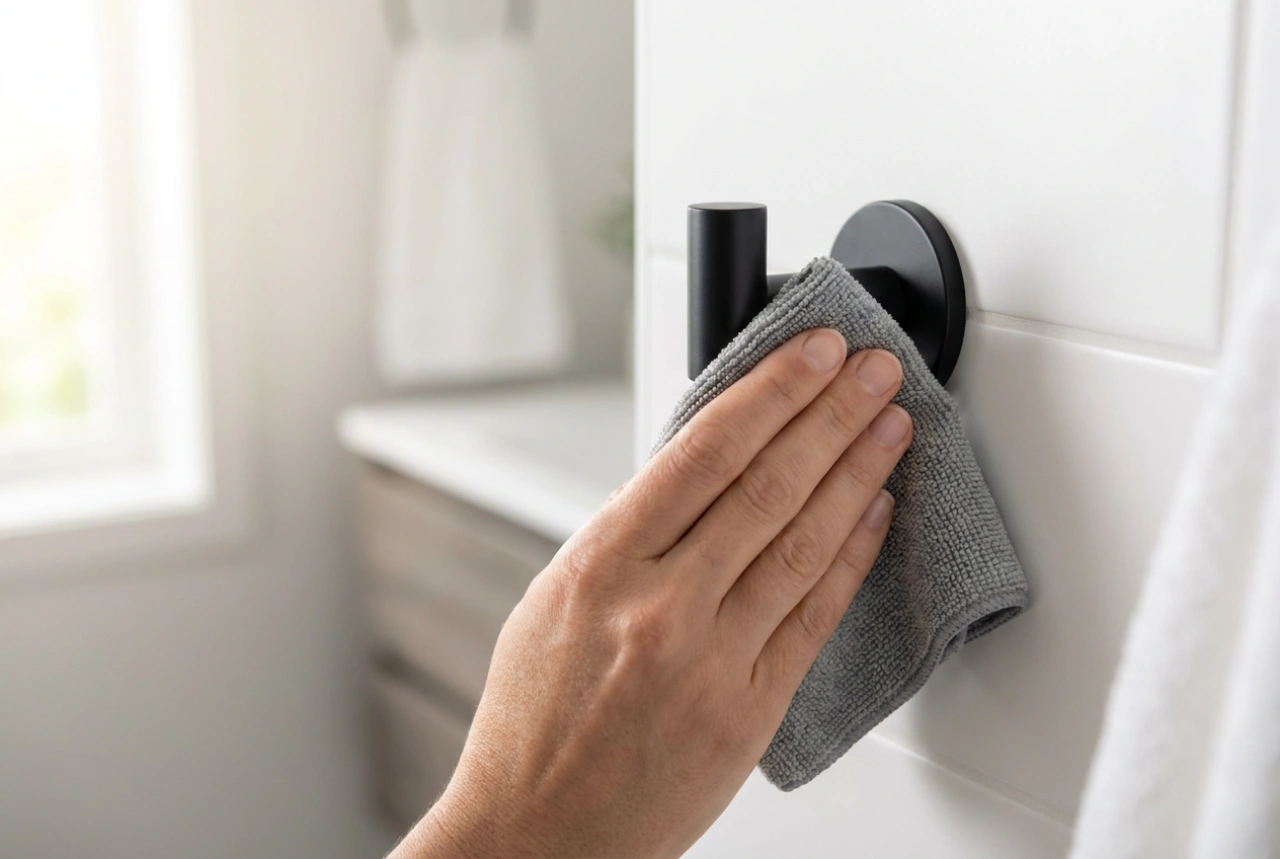
Keeping your laundry storage unobtrusive also means managing invisible factors like odour. Fabric liners should be removable and washed weekly at sixty degrees Celsius with oxygen bleach to denature odoriferous proteins and eliminate bacterial build-up. For synthetic wicker or solid plastic baskets, a regular wipe-down with a diluted solution of sodium bicarbonate or a mild citric acid spray will neutralise alkaline and acidic odours without damaging the polymer chains. Avoid using strong synthetic perfumes or aerosol air fresheners, which merely mask odours and can degrade the plastic over time. Instead, rely on natural chemistry and regular maintenance to keep your bathroom environment fresh and serene.