

Packing a cooler bag for a hot day at the beach is not just about fitting containers inside; it is an exercise in applied thermodynamics designed to prevent foodborne pathogens from multiplying. By understanding how heat transfers through conduction, convection, and radiation, you can keep your food safe and perfectly chilled for hours.
The Thermodynamics of Cooler Insulation
Cooler bags rely on insulation to slow down the transfer of heat from the warm outside air to the cold interior. Most insulated bags feature a double-walled construction filled with dense foam. This foam contains millions of tiny, trapped air pockets which are poor conductors of heat, effectively impeding conduction. However, if you pack a warm cooler bag with cold food, the ambient heat stored within the bag's inner lining will immediately transfer to your food. To prevent this, pre-chill your cooler bag. Placing ice packs or even frozen water bottles inside the bag for thirty minutes before packing lowers the starting temperature of the insulation materials, preserving the lifespan of your primary ice supply.
The Physics of Packing: Cold Air Descends
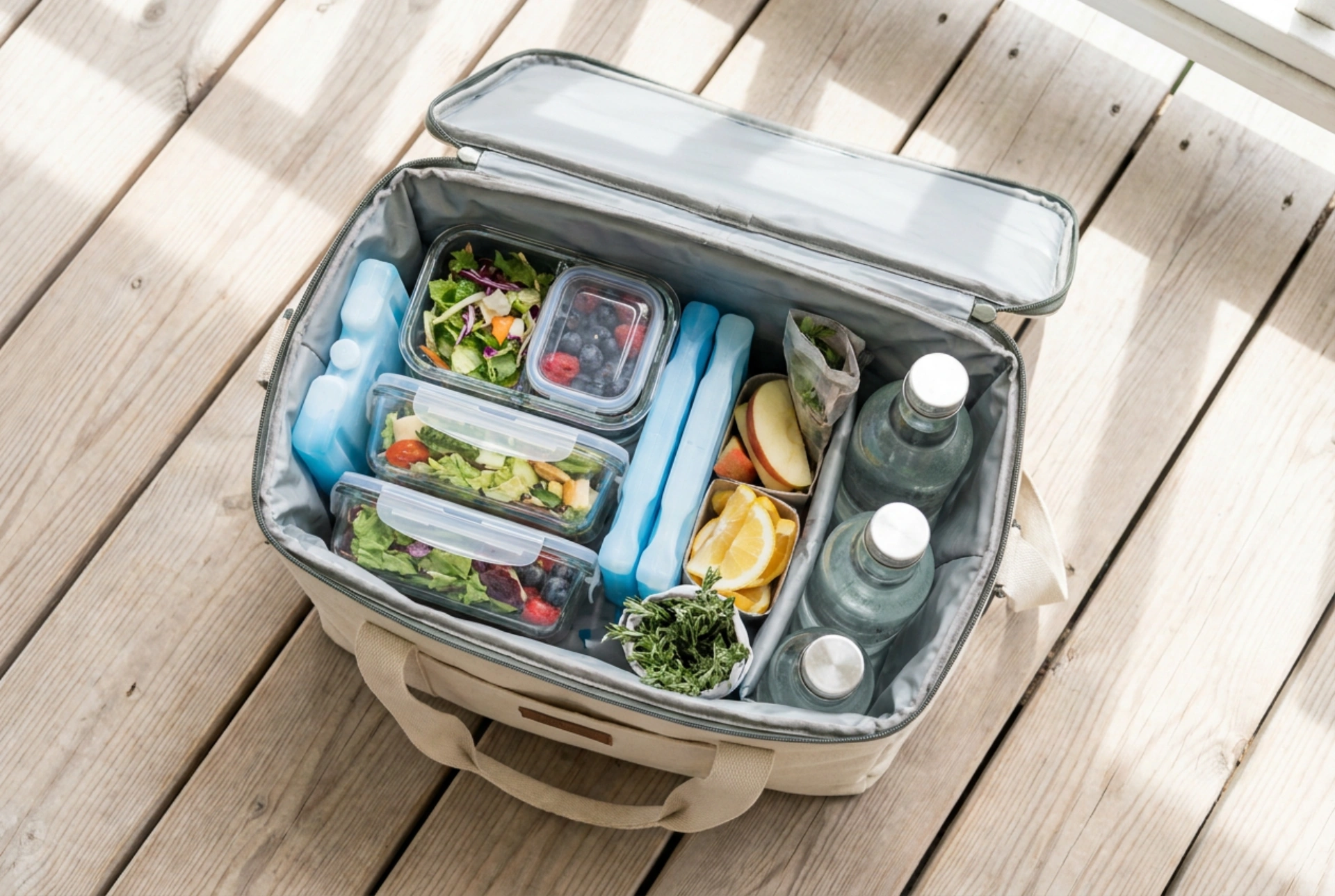
Air circulation inside a cooler bag obeys the laws of convection. Warm air is less dense and rises, while cold air is denser and sinks. Therefore, the placement of your cooling agents is critical. Placing ice packs solely at the bottom of the bag means only the bottom layer of food stays truly cold, while the air above it gradually warms up. For optimal thermal efficiency, distribute cooling elements throughout, but place the heaviest concentration of ice or gel packs on top of the food. As the air around the top ice packs cools, it becomes dense and flows downward, creating a continuous convective cooling loop that maintains a uniform temperature throughout the container.
Maximising Thermal Mass and Eliminating Air Pockets
Air has a low specific heat capacity, meaning it warms up very quickly. Solid objects, particularly those with high water content, have a high specific heat capacity and retain their temperature much longer. When packing, your goal is to eliminate empty air pockets which act as thermal leaks. Fill any remaining voids with clean towels, crumpled parchment paper, or extra frozen water bottles. A tightly packed cooler has a higher collective thermal mass, making it far more resistant to temperature fluctuations when the bag is opened. Additionally, maintain a strict ratio of two parts cooling agent to one part food. This ensures there is enough thermal cooling capacity to absorb the heat that inevitably penetrates the bag.
Preventing Cross-Contamination and Moisture Damage
As ice melts, it transitions from a solid to a liquid, absorbing a significant amount of latent heat in the process. While this phase change is excellent for cooling, the resulting meltwater poses a high risk of cross-contamination. Pathogens can easily travel through water and breach poorly sealed containers. To prevent this, store all food in rigid, airtight containers. Glass or thick food-grade plastic containers with silicone gaskets are ideal because they resist physical compression and remain completely watertight. Keep raw items or perishable dairy strictly separated from ready-to-eat fruits and vegetables, and wrap any dry items in beeswax wraps or waterproof silicone pouches to preserve their texture.
The Golden Rules of Beach Cooler Maintenance
Every time you open the cooler, warm air rushes in, displacing the heavy cold air and accelerating the melting process. To minimise this, separate your items into two bags if possible: one for frequently accessed drinks and another for perishable meals. Keep the bag shaded under a parasol or towel at all times, as direct solar radiation can raise the exterior temperature of the bag by tens of degrees, overwhelming the insulation. Finally, never drain the melted ice water until you are ready to pack up; cold water conducts heat away from containers much faster than warm air can, helping to preserve the low temperature of the remaining items.