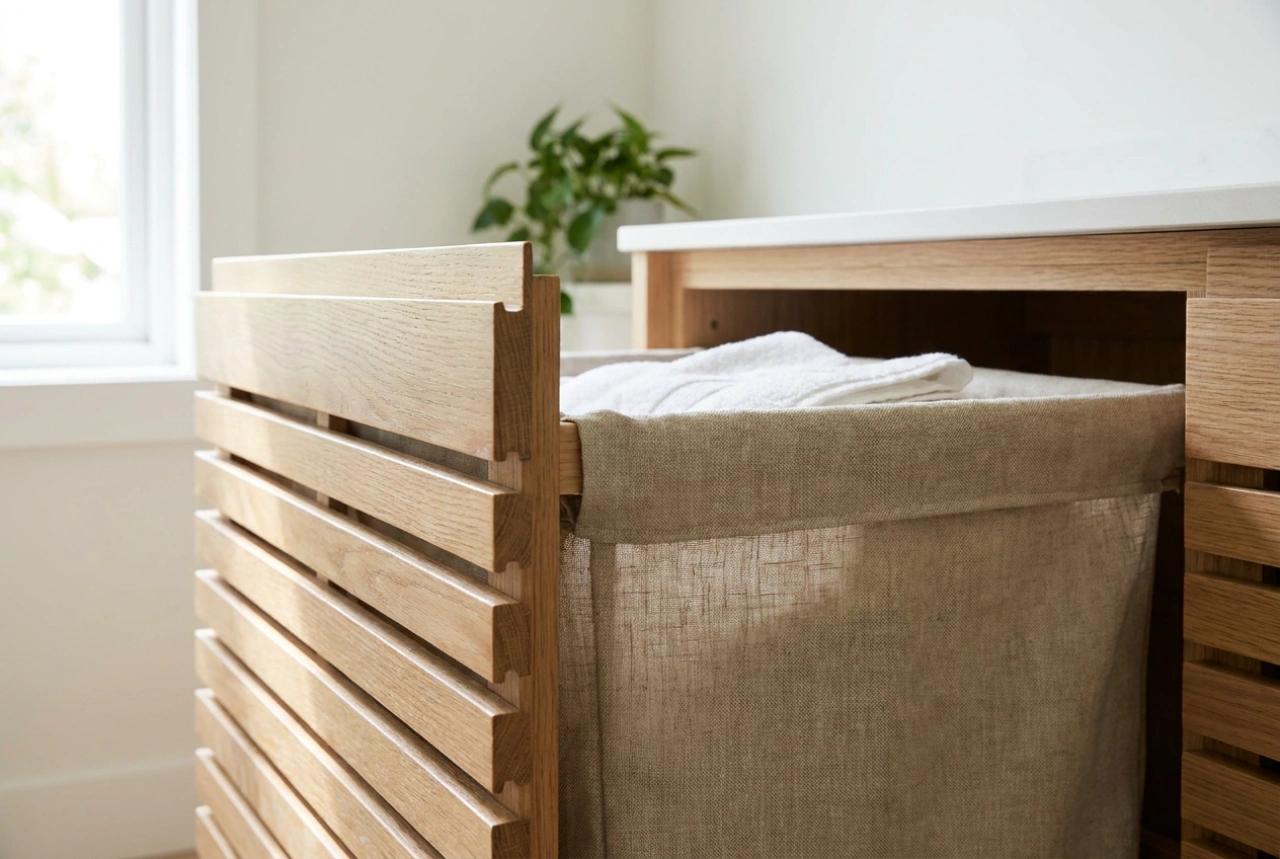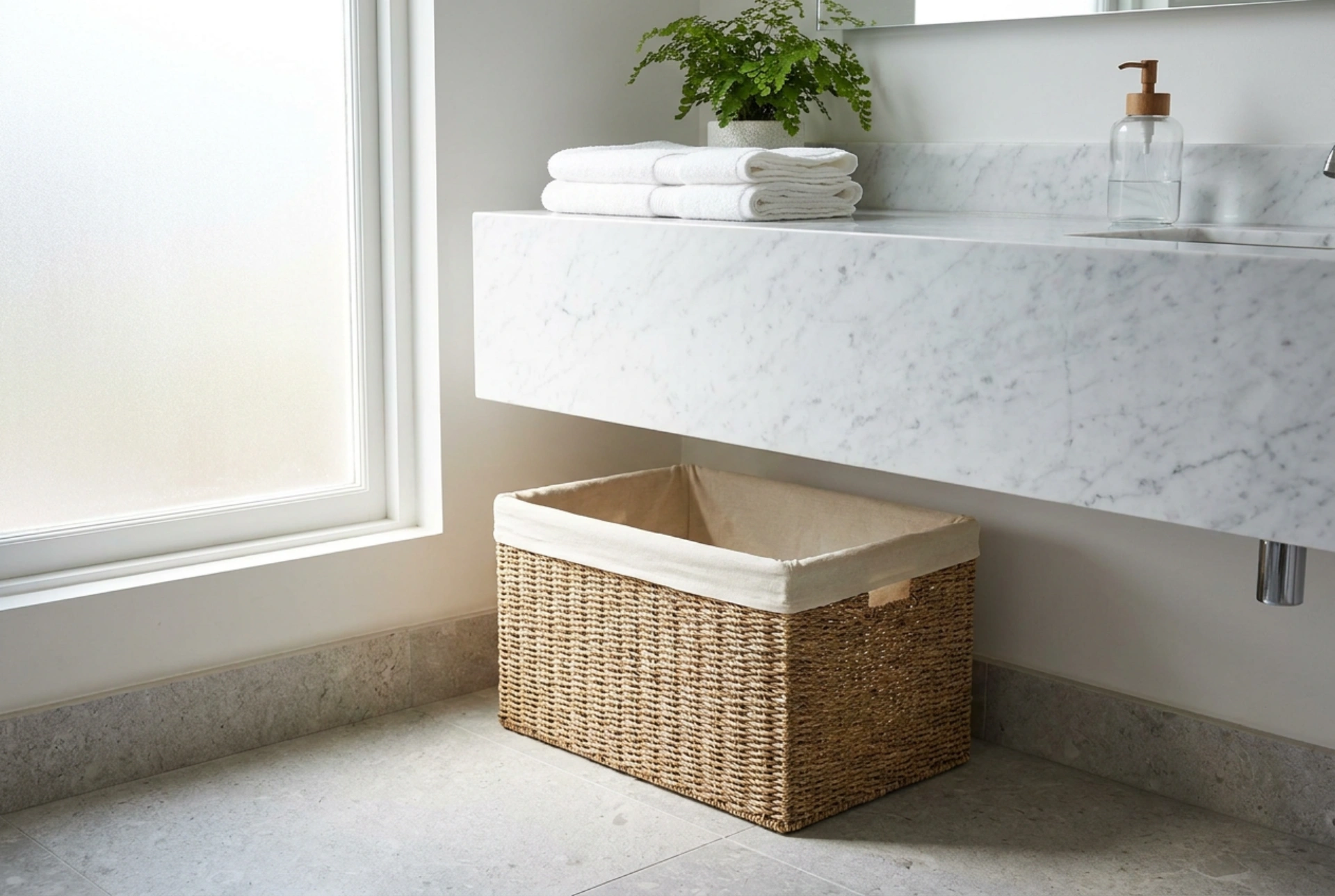


Utilising the dead space beneath a bathroom vanity or utility countertop for laundry storage requires a careful balance of dimensional ergonomics and microclimate control. When positioning a low-profile laundry basket in these enclosed areas, understanding material physics and airflow is essential to prevent mildew formation and ensure effortless physical access.
Ergonomic Height Limits and Accessibility Kinetics
Standard bathroom vanities and utility room countertops typically stand at a finished height of 850 mm to 900 mm. Accounting for plumbing traps, sink basins, and structural supports, the clearance height for under-counter storage is often reduced to between 400 mm and 600 mm. Selecting or constructing a laundry receptacle for this space requires analysing the reach envelope. A low-profile basket must be easily extractable without requiring deep spinal flexion. Sliding tracks, heavy-duty ball-bearing runners, or high-density polyethylene (HDPE) caster wheels attached to the base of the basket reduce the coefficient of friction, allowing the container to glide out with minimal force. If a caster system is used, a clearance of at least 50 mm above the basket rim is necessary to prevent hand scraping against the underside of the countertop during extraction.
Microclimate Control and Material Science in Enclosed Spaces
The space beneath a countertop, particularly in bathrooms, is prone to elevated relative humidity and restricted air movement. Placing damp clothing or towels into an enclosed, unventilated container initiates the rapid proliferation of mould spores within 24 to 48 hours. Therefore, the material composition of the basket is critical. Solid plastic bins should be avoided unless they feature extensive perforation patterns to facilitate convective airflow. Natural materials like woven willow, rattan, or bamboo offer excellent passive ventilation but must be treated with a moisture-resistant polyurethane coating to prevent the organic fibres from absorbing ambient water vapour. For maximum hygiene, a synthetic polymer weave mimicking natural wicker is highly effective, as it is non-porous, hydrophobic, and can be chemically sanitised without structural degradation.
Optimising Fabric Liners and Fabric Care Chemistry
A removable fabric liner is vital for protecting delicate garments from snagging on the basket's outer framework. However, the liner itself can become a vector for bacterial growth if not properly selected. Cotton-polyester blends are ideal due to their low moisture retention and high tensile strength. These liners must be laundered regularly at temperatures of at least 60 degrees Celsius to denature fungal proteins and eliminate odour-producing bacteria. When designing the liner attachment, hook-and-loop fasteners or elasticated hems are preferred over rigid ties, ensuring rapid removal and replacement during weekly cleaning cycles. Additionally, incorporating a dual-compartment low basket allows for immediate sorting of darks and lights, reducing the handling time and preventing dye transfer issues prior to washing.
Structural Integration and Floor Protection
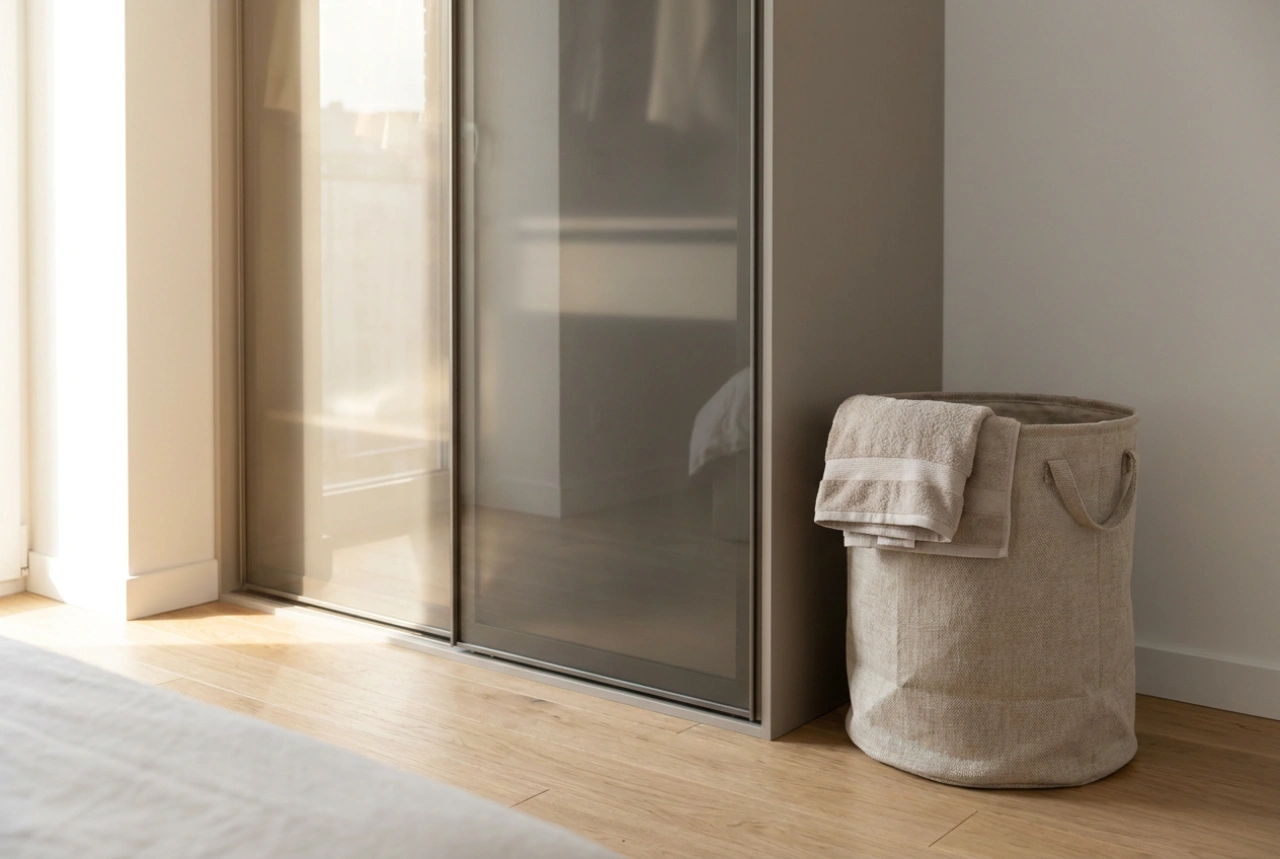
When implementing a low-profile laundry solution, the interface between the basket and the flooring material must be managed to prevent mechanical wear. Hardwood, laminate, and luxury vinyl tile floors are susceptible to scratching from repeated sliding motions. Equipping the underside of a non-wheeled basket with industrial-grade felt pads or Teflon glides minimises surface wear. If the basket is integrated directly into a pull-out cabinet drawer carcass, use soft-close runners rated for at least 30 kg to accommodate the weight of wet textiles. This mechanical dampening prevents structural stress on the cabinet joints and ensures smooth, quiet operation over thousands of cycles.