

Once roasted, coffee beans enter a delicate phase where exposure to environmental factors rapidly degrades their complex flavor compounds. Choosing the correct storage container is not about aesthetics, but about controlling the physical and chemical reactions that compromise bean integrity.
The Chemistry of Coffee Staling: Oxygen and Moisture
The moment coffee roasting completes, a countdown begins. Roasted coffee beans are highly porous structures rich in volatile organic compounds (VOCs) and lipids. When exposed to oxygen, these lipids undergo lipid oxidation, leading to rancidity and a flat, stale flavor profile. Oxygen effectively strips away the delicate aromatic esters that define the coffee's origin characteristics.
Moisture is another critical catalyst. Coffee beans are hygroscopic, meaning they readily absorb water vapor from the surrounding atmosphere. Elevated humidity levels accelerate hydrolytic reactions, breaking down organic compounds and encouraging microscopic mold growth in extreme cases. Maintaining a relative humidity below 50% within the storage environment is essential to preserve the structural and chemical stability of the roasted beans.
The Degassing Phase and One-Way Valve Physics
During the roasting process, thermal decomposition of carbohydrates generates a significant volume of carbon dioxide (CO2) inside the cellular structure of the bean. For several weeks post-roasting, the beans continuously release this gas, a process known as degassing. CO2 acts as a natural protective barrier, displacing oxygen from the spaces between the beans.
An airtight container without a pressure release mechanism can experience pressure buildup. Conversely, a standard container opened frequently introduces fresh oxygen. The optimal solution relies on a one-way degassing valve. This mechanism allows the escaping CO2 to vent from the container under positive pressure while preventing external oxygen from entering. Understanding this gas exchange is fundamental to selecting a container that preserves coffee freshness over weeks rather than days.
Material Science: Stainless Steel, Ceramic, and Glass
The physical properties of the container material directly impact the rate of degradation. Light, heat, and structural permeability must all be carefully managed.
- Stainless Steel (Food-Grade): Highly recommended due to its complete opacity and thermal mass. It blocks all ultraviolet (UV) radiation, which otherwise catalyzes photo-oxidation reactions. Food-grade stainless steel is also non-reactive and does not absorb oils.
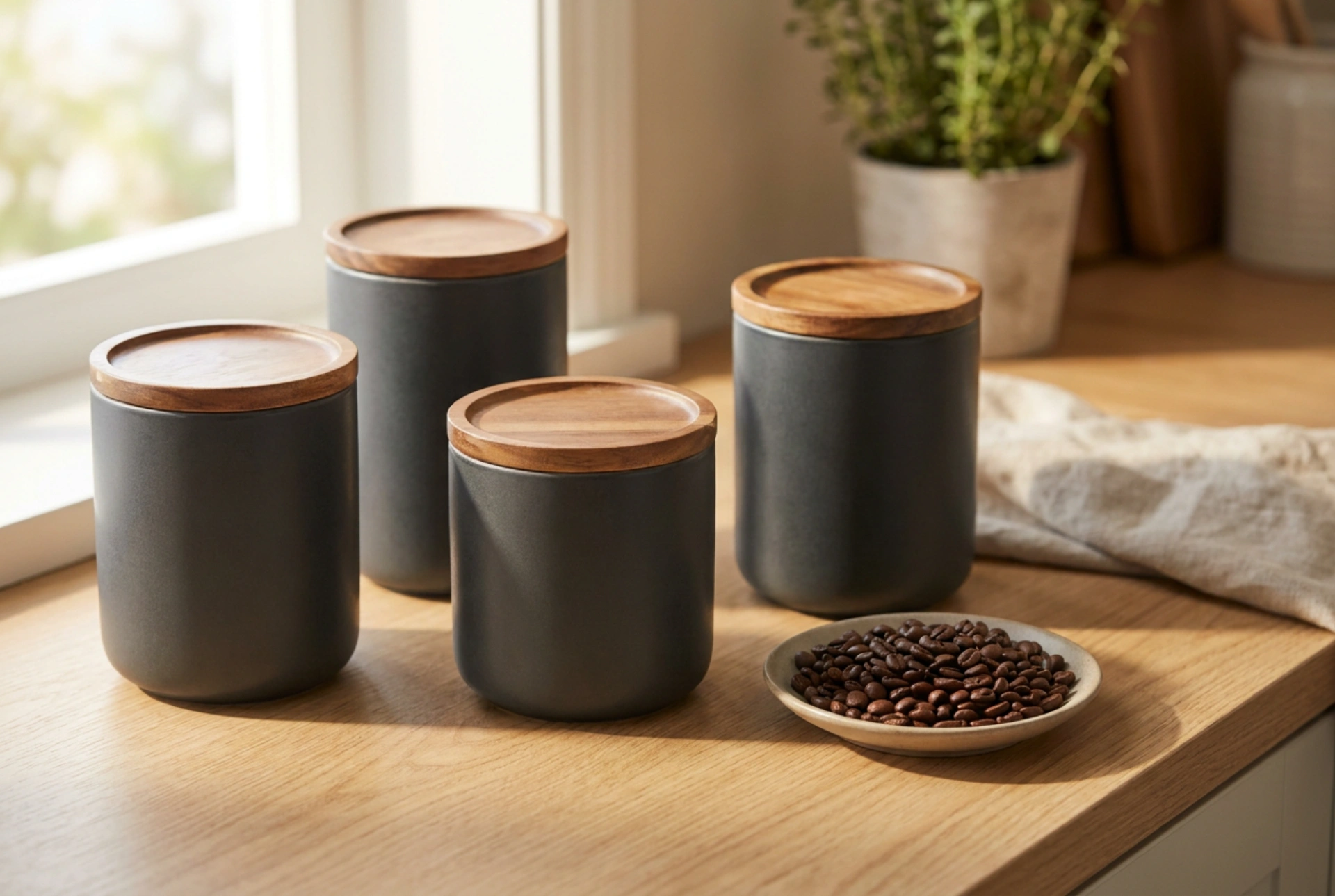
- Ceramic: Offers excellent thermal insulation, protecting the beans from minor ambient temperature fluctuations. Ceramic containers must feature a high-quality glaze to seal the porous clay surface and prevent the absorption of stale coffee oils.
- Glass: While completely non-reactive and easy to clean, clear glass allows UV light to penetrate, rapidly breaking down lipids. If glass is used, it must be amber or ultra-dark, and kept in a dark cupboard.
The Impact of Headspace and Air Displacement
Even in an airtight container, the air trapped inside with the coffee—known as headspace—contains oxygen. If a small volume of beans is kept in a large container, the ratio of oxygen to coffee is high, accelerating oxidation. To counteract this, modern preservation techniques utilize vacuum-seal systems or active displacement lids. These lids slide down inside the canister, physically resting on top of the beans to expel the excess air pocket, minimizing the oxygen volume in contact with the coffee surface.
Practical Guidelines for Longevity
To maximize the lifespan of roasted coffee beans, implement a systematic storage routine based on materials science:
- Store containers in a cool, dark place, away from heat sources like ovens, refrigerators, or direct sunlight to maintain temperature stability.
- Avoid storing coffee in the freezer unless using vacuum-sealed, single-dose portions, as temperature fluctuations upon opening cause immediate condensation on the frozen beans.
- Choose canisters with silicone gaskets to ensure a true hermetic seal, and clean the container regularly to remove residual oils that can oxidize and spoil fresh batches.