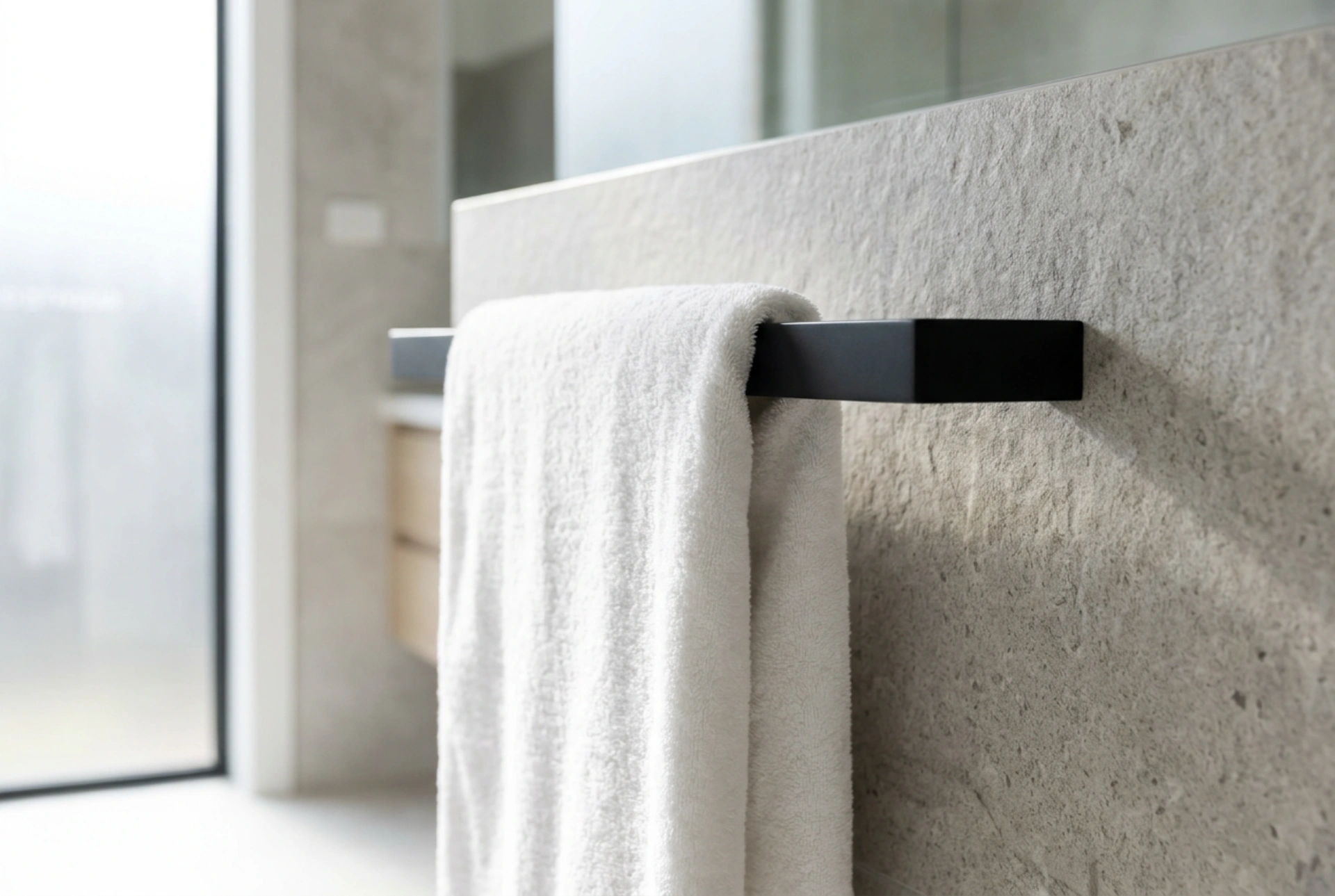


Selecting a bathroom towel rail requires a careful look at how material science and thermodynamics operate in high-humidity environments. Choosing the wrong material or mounting method can lead to rapid oxidation, structural failure, or damp towels that harbor bacterial growth.
The Thermodynamics of Drying Towels
To dry a wet towel efficiently, the water trapped within the cotton fibres must transition from a liquid to a vapour. This process of evaporation is driven by temperature differentials and airflow. When a towel is bunched up on a simple peg or hook, the surface area exposed to the air is minimised. This creates a stagnant microclimate of high relative humidity directly around the fabric, severely slowing down evaporation.
A multi-bar ladder rail solves this by spreading the fabric across flat surfaces, maximising the surface area exposed to the ambient room air. The physical spacing between the bars allows warm air to rise through the textile layers via natural convection. As warm, dry air rises, it draws away the boundary layer of saturated air clinging to the towel, accelerating the drying cycle and preventing the sour musty smell caused by anaerobic bacterial metabolic processes.
Material Science: Defeating Corrosion in Damp Environments
Bathrooms regularly reach relative humidity levels exceeding 80%, creating an ideal environment for electrochemical oxidation (rusting). Understanding the atomic composition of towel rail materials is key to long-term durability:
- Stainless Steel (Grade 304 and 316): These alloys contain a high percentage of chromium. When exposed to oxygen, chromium forms an invisible, microscopic layer of chromium oxide on the surface. This passive layer is self-healing and blocks oxygen from reacting with the underlying iron. Grade 316 contains molybdenum, offering superior resistance against chloride-induced pitting.
- Solid Brass: An alloy of copper and zinc, brass contains no iron, making it completely immune to red rust. It develops a natural patina over time unless sealed, and possesses inherent antimicrobial properties that can help reduce pathogen transfer.
- Anodised Aluminium: Through an electrochemical process, the natural oxide layer of aluminium is thickened. This creates an extremely hard, corrosion-resistant finish that does not chip or peel like painted mild steel.
- Powder-Coated Mild Steel: While cost-effective, mild steel relies entirely on a physical barrier to prevent rust. If this coating is scratched or chipped, water penetrates to the iron below, leading to sub-film corrosion that bubbles the paint and structurally degrades the rail.
Preventing Galvanic Corrosion and Protecting the Moisture Barrier
When installing a towel rail, you must consider galvanic corrosion. This electrochemical process occurs when two dissimilar metals come into electrical contact in the presence of condensation or humid air. The less noble metal will corrode at an accelerated rate. Always use mounting hardware made of the same metal family as the bracket, or ensure they are isolated with non-conductive polymer washers.
Furthermore, drilling into tiled bathroom walls risks puncturing the sub-tile waterproofing layer, often called the tanking membrane. To preserve the integrity of this barrier, fill the drilled pilot hole with a neutral-cure silicone sealant before inserting the wall plug. This prevents capillary action from drawing moisture through the screw hole into the plasterboard or timber studwork behind, which would otherwise lead to structural rot and hidden mould growth.
Strategic Placement for Maximum Air Circulation
The physical location of your towel rail determines its drying efficiency. Positioning a rail directly behind a door or in a tight, unventilated alcove restricts the mechanical movement of air. For optimal performance, place the rail on a wall opposite the bathroom's extraction fan or near a heat source.
This setup encourages a continuous convective loop: warm, dry air enters the room, absorbs moisture from the towel, and is pulled out of the space by the extraction fan. Keeping the rail at least 10 to 15 centimetres away from adjacent walls or fixtures also ensures that air can circulate freely around all sides of the hanging fabric.
Maintaining the Material Integrity over Time
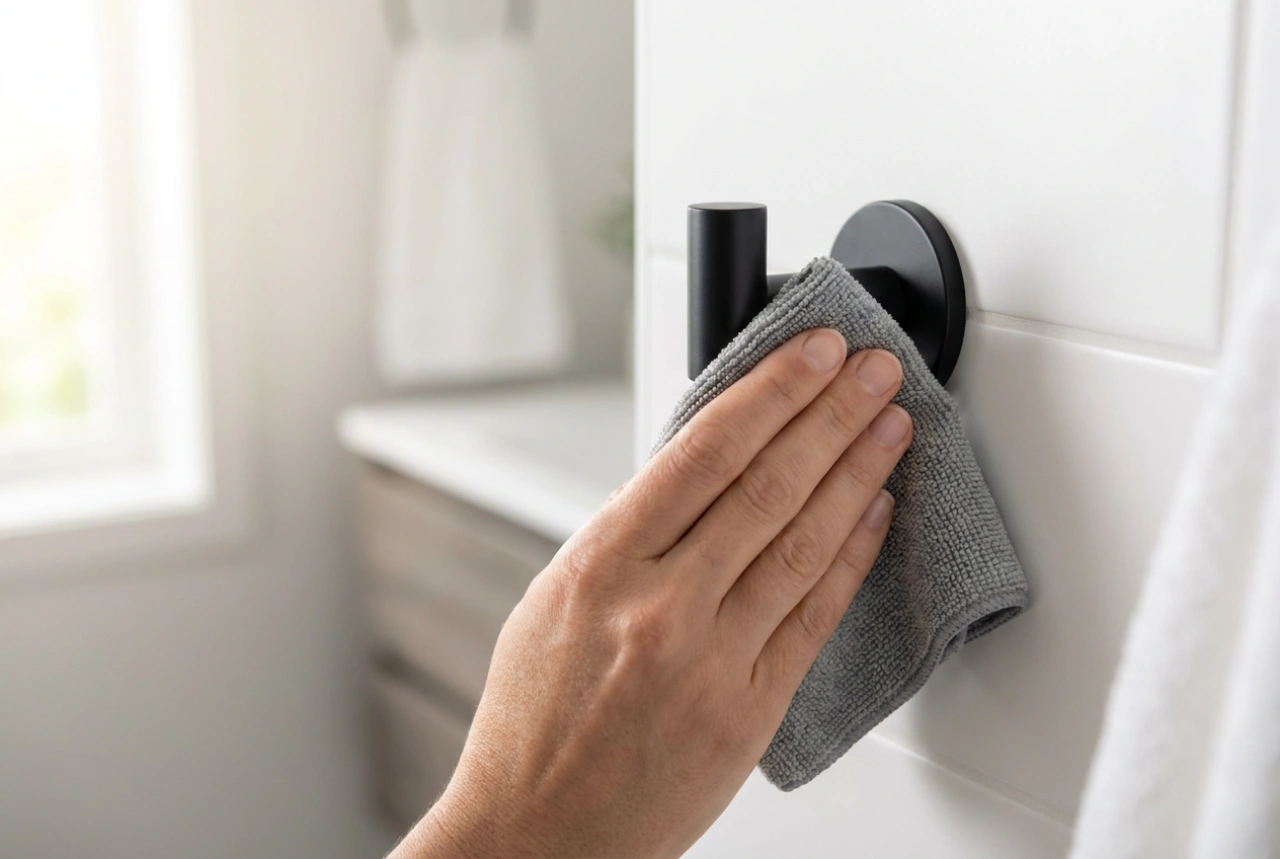
Even high-quality materials require proper maintenance to preserve their passive protective layers. Avoid using abrasive scouring pads or highly acidic cleaners on anodised or plated finishes, as these mechanical and chemical actions can strip away the protective oxide barrier. Instead, clean the rails regularly with a mild, pH-neutral soap solution and a microfibre cloth to remove salt deposits from sweat and soap residue, which can otherwise initiate pitting corrosion.