

Positioning a kitchen towel rail involves balancing spatial ergonomics, material durability, and the thermodynamic principles of moisture evaporation. Placing these fixtures strategically between the washing and cooking zones ensures rapid hand drying, efficient spill management, and hygienic air circulation.
Thermodynamics of Evaporation: Why Placement Matters
To understand where to locate a kitchen towel rail, one must consider how water evaporates from textile fibres. A wet towel dries through the mass transfer of water vapour into the surrounding air. This process is highly dependent on local relative humidity and boundary layer airflow. When a towel is hung near a sink, it resides in a microclimate of elevated humidity. This slows down the rate of evaporation because the air surrounding the fabric is already saturated with water molecules.
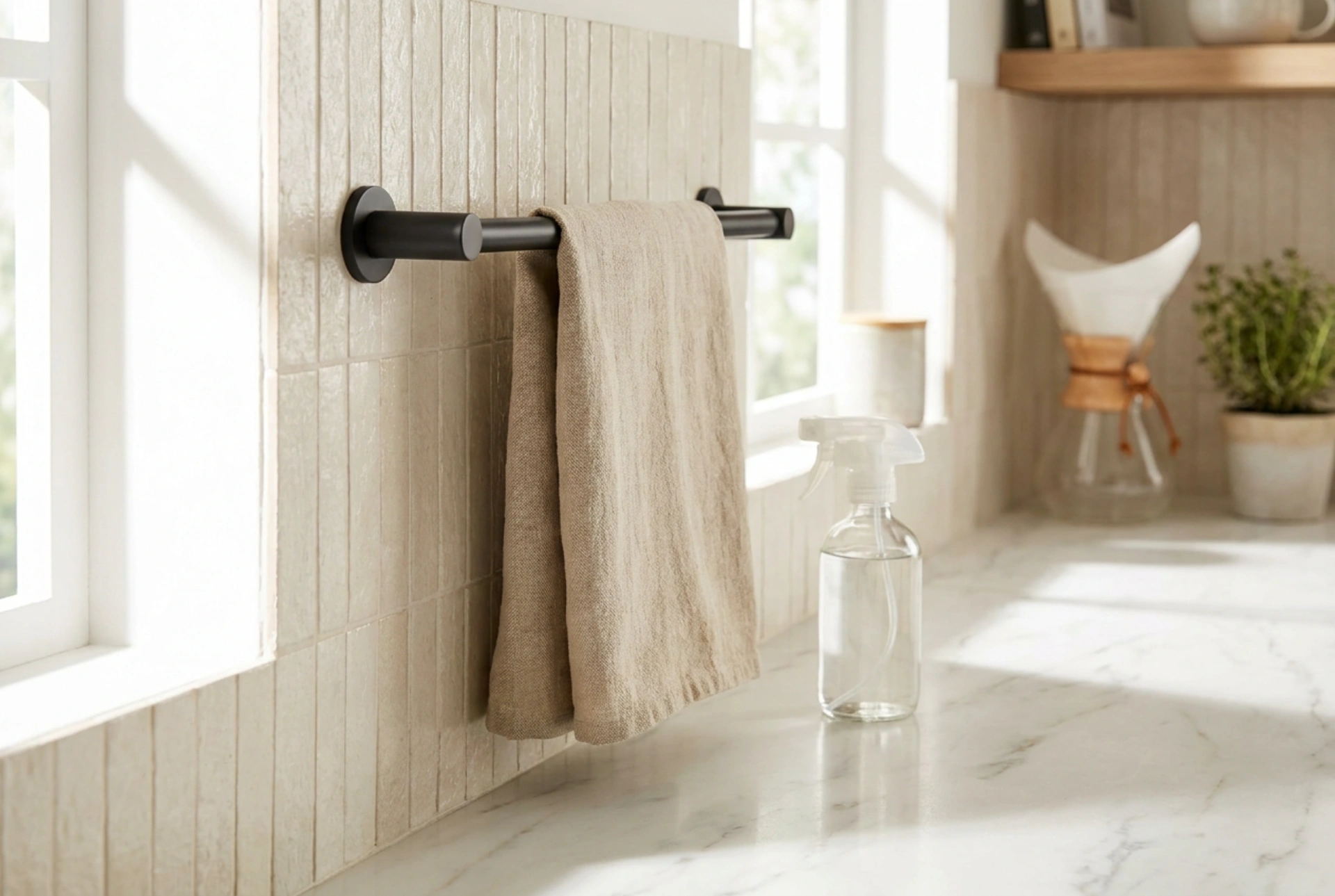
To counter this, the towel rail must be mounted in a position that maximises ambient airflow. Hanging a towel flat on a horizontal bar exposes a larger surface area to the air currents, accelerating evaporation. Conversely, bunching a towel on a single hook traps moisture within the folds, creating an anaerobic environment where bacteria and mould flourish. Therefore, a wide, linear rail is superior to a hook for maintaining hygiene in the washing zone.
Material Science of Kitchen Rails: Resisting Corrosion
The kitchen environment is highly demanding, exposing hardware to water, organic acids, fats, and cleaning agents. Choosing the right material for a towel rail is essential to prevent oxidation and structural failure. Grade 304 stainless steel is the standard for high-moisture zones. It contains chromium, which reacts with oxygen to form an invisible, self-healing chromium oxide passivation layer that blocks rust propagation.
Anodised aluminium and matte powder-coated steel are also excellent alternatives. Anodisation thickens the natural oxide layer on aluminium, making it highly resistant to wear and chemical attack. Powder coating electrostatically applies a dry thermoplastic or thermoset polymer, which is then cured under heat to form a hard, non-porous barrier. This prevents moisture from reaching the underlying metal, ensuring long-term durability even when in constant contact with wet fabrics.
Zoning: The Washing vs. The Cooking Area
A functional kitchen requires distinct wet and dry towel zones to prevent cross-contamination and optimise physical movement. In the washing zone, the rail should be positioned within arm's reach of the sink, typically 40 to 60 centimetres from the basin edge. This prevents water from dripping onto floor surfaces during transit. However, it must be far enough from the splash zone to avoid direct water contact, which would saturate the towel and halt the drying cycle.
In the cooking zone, the towel serves a different purpose: managing dry heat, gripping warm handles, and wiping minor spills. Here, the rail should be located away from direct steam and grease particles emitted by the hob. Airborne grease acts as a hydrophobic binder, coating towel fibres and reducing their capillary action (absorbency). Mounting the rail on the side of a cabinet or an adjacent wall, away from the rising thermal plume of the cooktop, protects the fabric from airborne contaminants while keeping it accessible.
Installation Mechanics and Load Testing
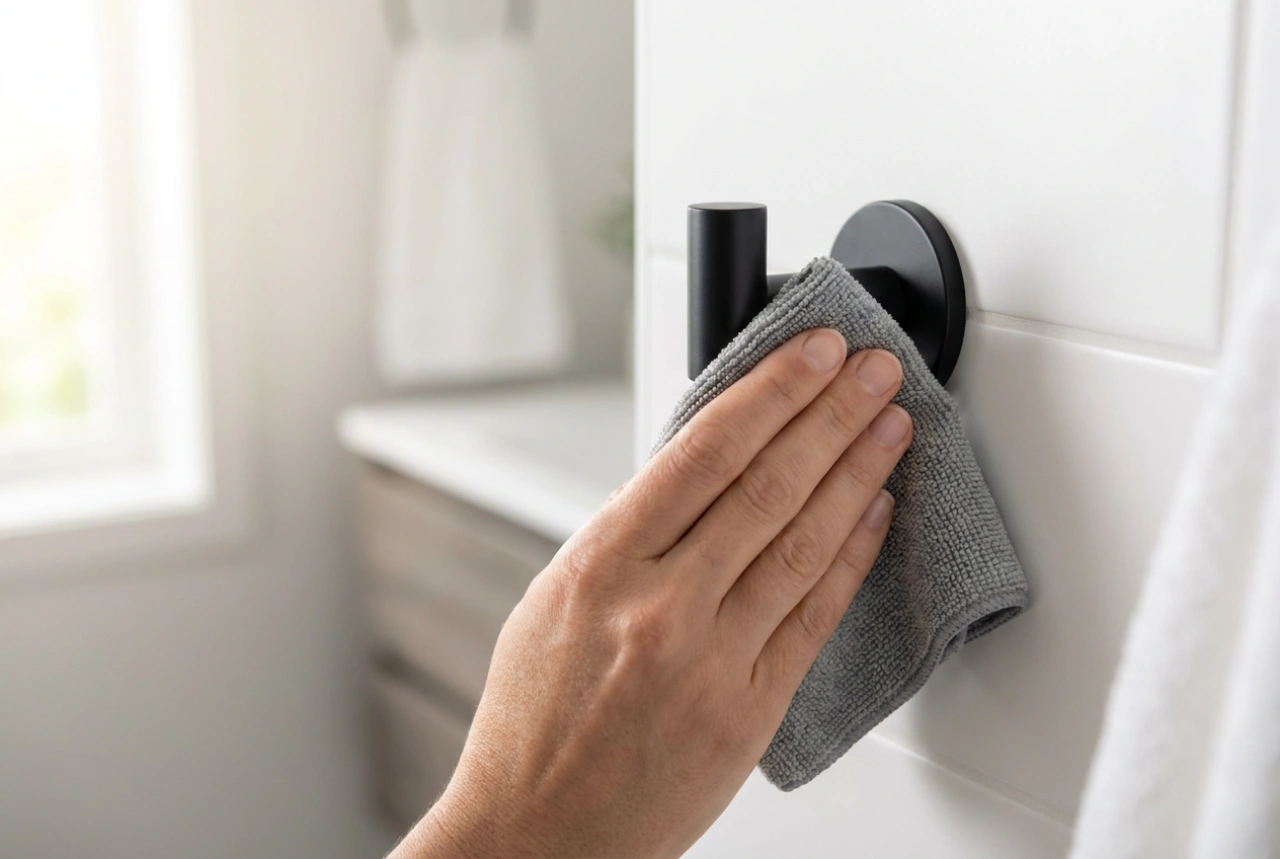
Installing a towel rail requires careful consideration of the mounting surface. Tiled backsplashes are common in wet zones but present a risk of cracking if drilled incorrectly. Using diamond-tipped drill bits at low rotational speeds with water cooling prevents thermal stress from shattering ceramic or porcelain tiles. For rental properties or delicate surfaces, high-performance modified silane (MS) polymer adhesives offer a non-destructive alternative, providing strong shear strength without drilling.
A wet linen or cotton towel can weigh up to three times its dry weight. This dynamic load places continuous downward shear stress and outward tension on the mounting brackets. Ensure that wall plugs or hollow-wall anchors are rated for at least five kilograms of static load to prevent the rail from sagging or pulling away from the substrate over time.