

Optimising the placement of laundry baskets is more than an aesthetic choice; it directly influences fabric longevity, reduces manual sorting time, and prevents the bacterial degradation of soiled textiles.
The Science of Sorting: Why Proximity Matters
Every time garments are mixed indiscriminately in a single, deep receptacle, the risk of fabric damage increases. Placing multi-compartment sorting baskets directly in dressing areas or bathrooms eliminates the need for secondary handling before washing. This structural placement relies on the principle of sorting at the point of disposal, which prevents delicate silks and wools from rubbing against heavy, abrasive denim, brassiere hooks, or zip fasteners—a major cause of mechanical pilling and fibre breakage.
Furthermore, isolating heavily soiled items or damp towels immediately prevents dye transfer and cross-contamination. When wet fabrics lie against dry, light-coloured textiles, capillary action can draw dissolved dyes from one fibre to another, even at room temperature. By positioning a dedicated three-tier or multi-sectional basket system in your primary dressing zone, you categorise laundry by temperature requirements (such as 30°C for synthetics and 60°C for cotton sheets) and colour profile at the exact moment of stripping, reducing the friction and physical handling of dirty fibres.
Managing Microclimates: Moisture, Airflow, and Fibre Integrity
Soiled textiles carry residual sweat, sebum, and environmental moisture. If a laundry basket is placed in a humid bathroom without proper ventilation, or positioned directly on a cold tiled floor, it creates a stagnant microclimate. Warm, moist air trapped within tightly packed fabrics accelerates the growth of anaerobic bacteria and fungi, such as mold and mildew. These microorganisms feed on organic matter, weakening cellulose fibres in cotton and linen, leading to permanent structural deterioration and stubborn musty odours that require harsh, fibre-degrading chemical treatments to remove.
To mitigate this risk, laundry baskets should be positioned in dry, well-ventilated areas, away from direct sources of steam or standing water. Raising the basket off the floor—either by selecting a model with integrated legs or placing it on a low shelf—promotes continuous air circulation through bottom vents. In high-humidity environments, choose open-weave wicker or perforated polymer containers rather than solid, non-breathable bags, and position them near internal walls where temperature fluctuations are minimal, preventing condensation from forming inside the container.
Ergonomics of the Wash Cycle: Minimising Kinetic Effort
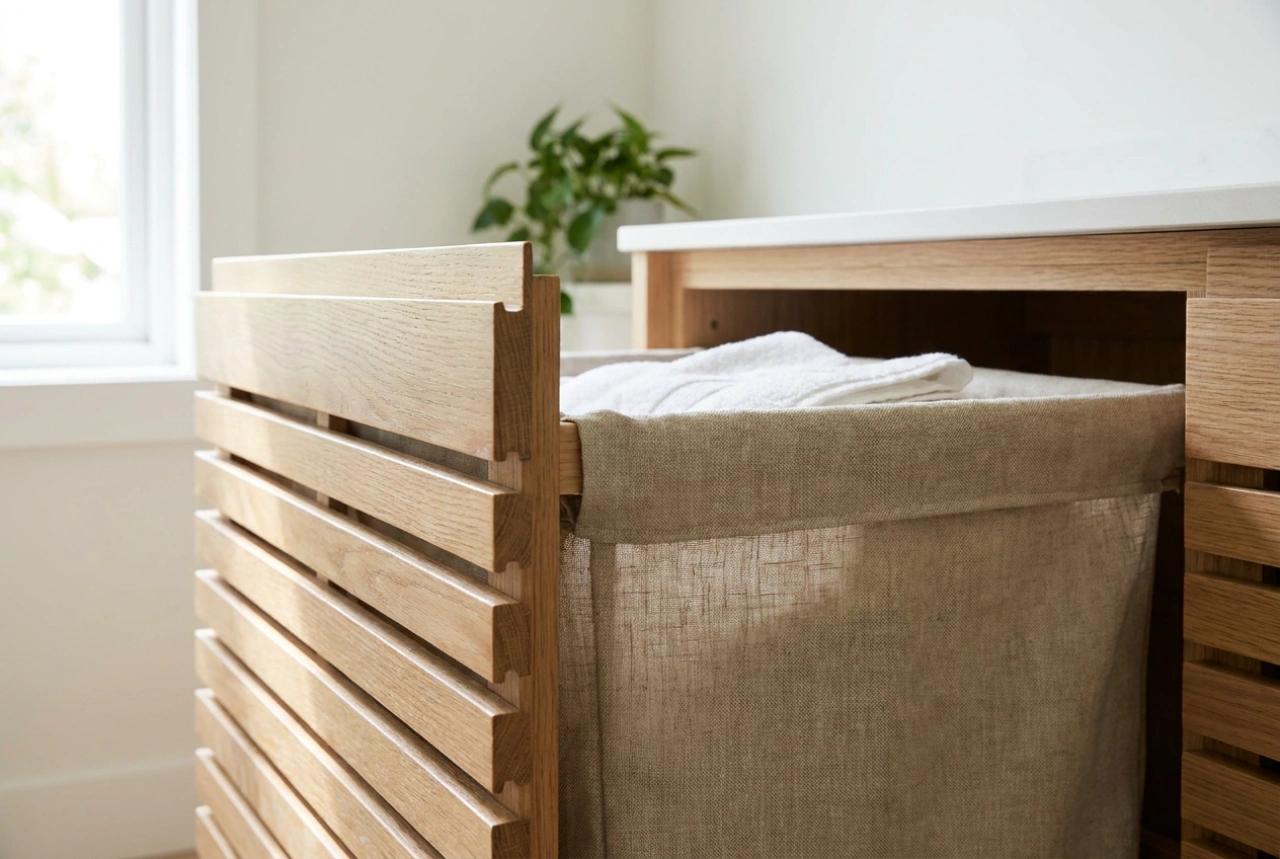
The physical path from the point of accumulation to the washing machine should require minimal physical strain and mechanical transport. In a dedicated utility room, the primary laundry basket is best positioned immediately adjacent to the washing machine door, ideally elevated to waist height. This placement minimises the physical bending required to transfer heavy, damp items, protecting the lower back and reducing the likelihood of dropping clean-sorted laundry onto a dusty floor.
If space permits, incorporate a folding or sorting table directly above the basket storage area. This allows you to slide baskets underneath when not in use, preserving valuable floor space while maintaining a clear, logical workflow: drop-off, sort, pre-treat, and load. By arranging your laundry zone to follow this natural, linear progression, you reduce the time fabrics spend sitting in compacted heaps, which can cause deep-set creases that require intense thermal energy (hot ironing) to smooth out later.
Optimising Multi-Level Homes and Daily Workflows
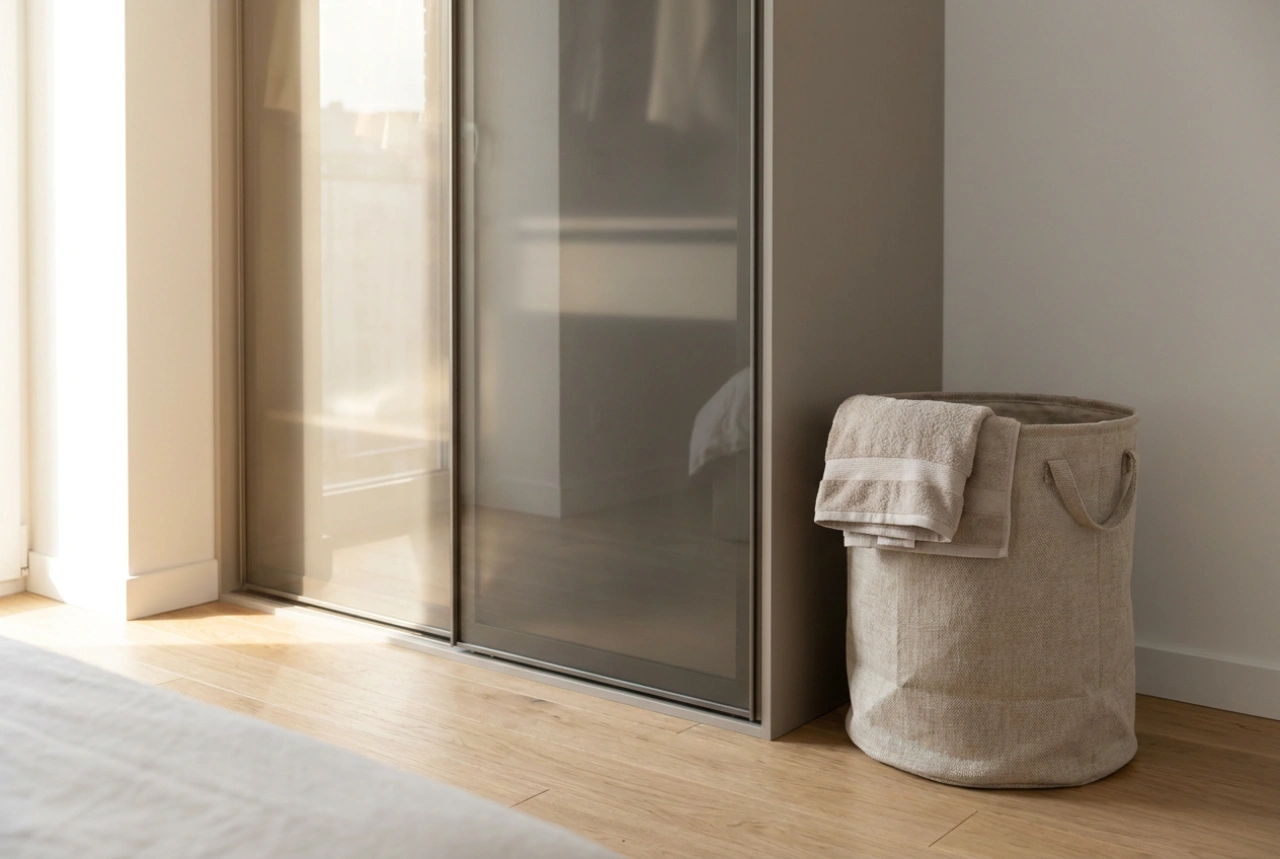
For homes spanning multiple floors, relying on a single central laundry receptacle often leads to fabric accumulation in temporary, unventilated piles in bedrooms or hallways. Instead, employ a decentralised system with small, lightweight auxiliary baskets in each bedroom, and a primary consolidation station in the utility room. Ensure these auxiliary baskets are easy to transport, utilising lightweight, ergonomic designs that fit comfortably against the hip to reduce physical strain during transit. This systematic movement ensures that fabrics are processed in smaller, more manageable batches, preventing the bottom layers of laundry from being compressed under heavy loads, which can permanently set oily stains into the weave of synthetic fibres.