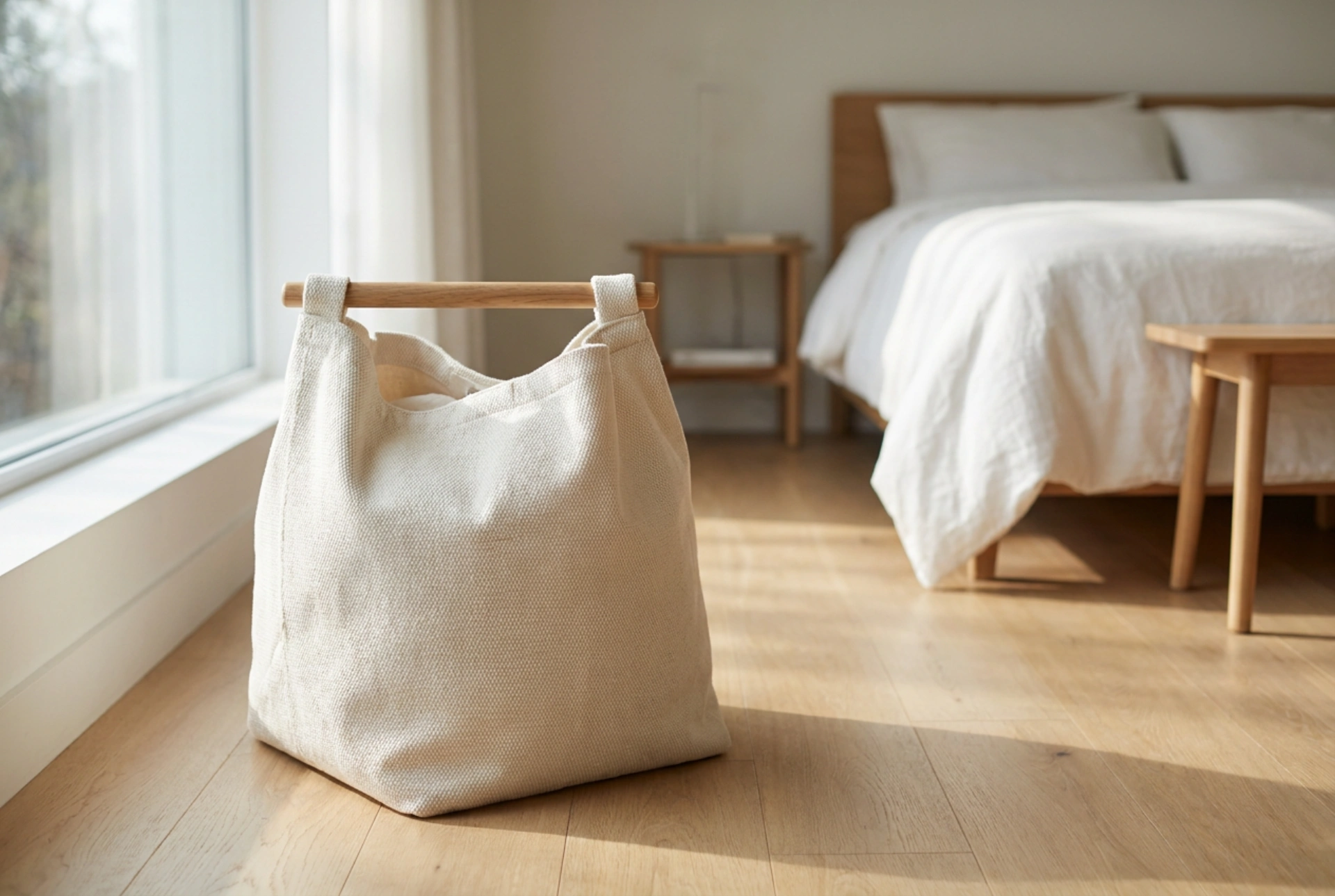


Selecting a laundry basket requires balancing interior aesthetics with material physics to prevent moisture buildup and fabric degradation. The right container does not merely hide soiled garments; it actively manages airflow and hygiene before the washing cycle begins.
The Physics of Airflow: Preventing Mildew and Odours
When damp towels, sweaty activewear, or humid garments are thrown into a sealed, non-breathable container, they create a high-humidity microclimate. This environment is ideal for the rapid proliferation of mould spores, such as Aspergillus, and anaerobic bacteria. These micro-organisms feed on skin flakes and sweat residues, releasing volatile organic compounds that manifest as sour, persistent odours.
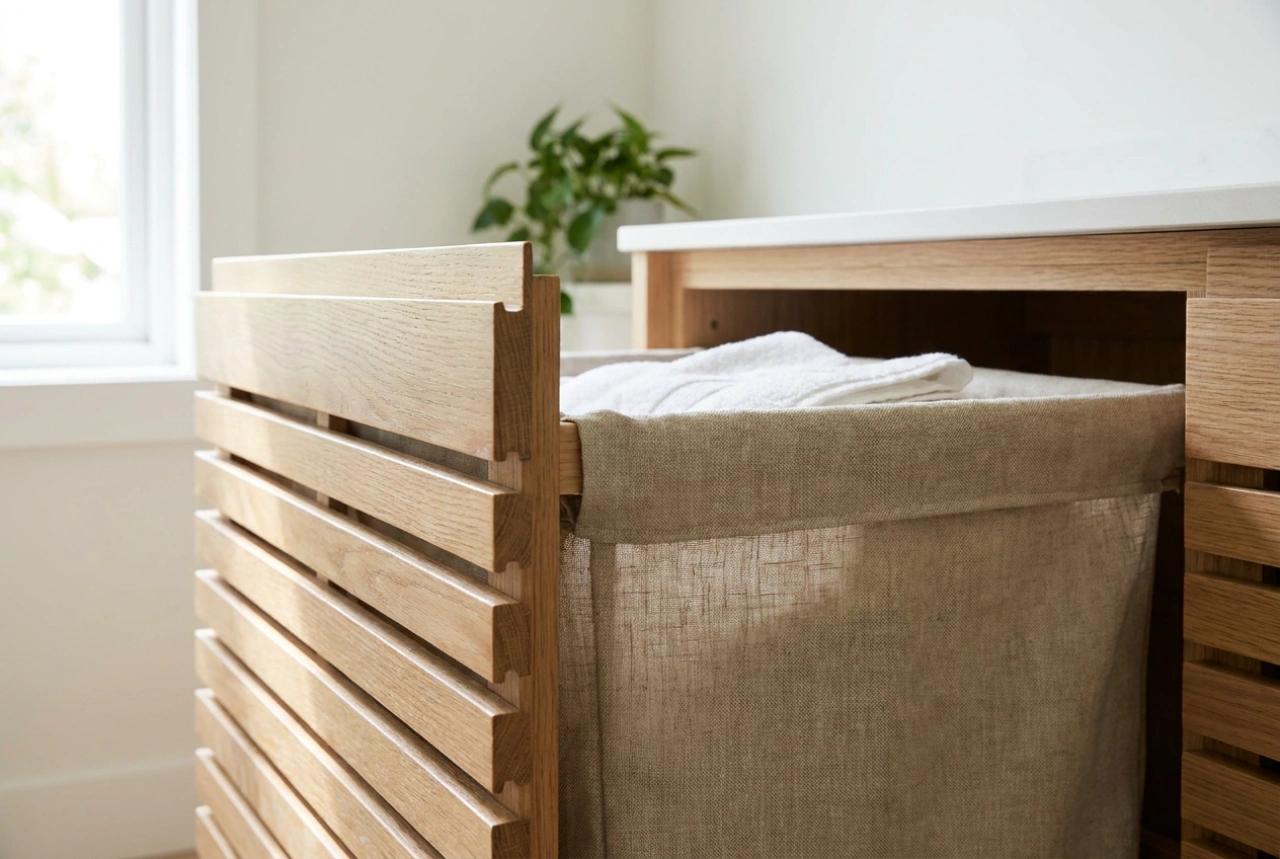
To prevent this, a laundry basket must facilitate constant passive ventilation. Woven structures, whether made of natural fibres or perforated polymers, allow air to circulate freely. This circulation encourages the evaporation of ambient moisture, keeping the internal relative humidity below the 60% threshold required for fungal germination. When selecting a basket, the density of the weave must be evaluated: wider weaves offer superior airflow but require an internal lining to prevent delicate fabrics from catching.
Material Science: Natural Fibres versus Synthetics
The choice of material dictates both the durability and the sanitary profile of your laundry storage. Natural materials like cotton, linen, seagrass, and bamboo offer excellent breathability and a softer aesthetic that blends with modern interiors. However, raw organic fibres can absorb moisture and organic compounds over time, potentially becoming breeding grounds for bacteria if not properly maintained.
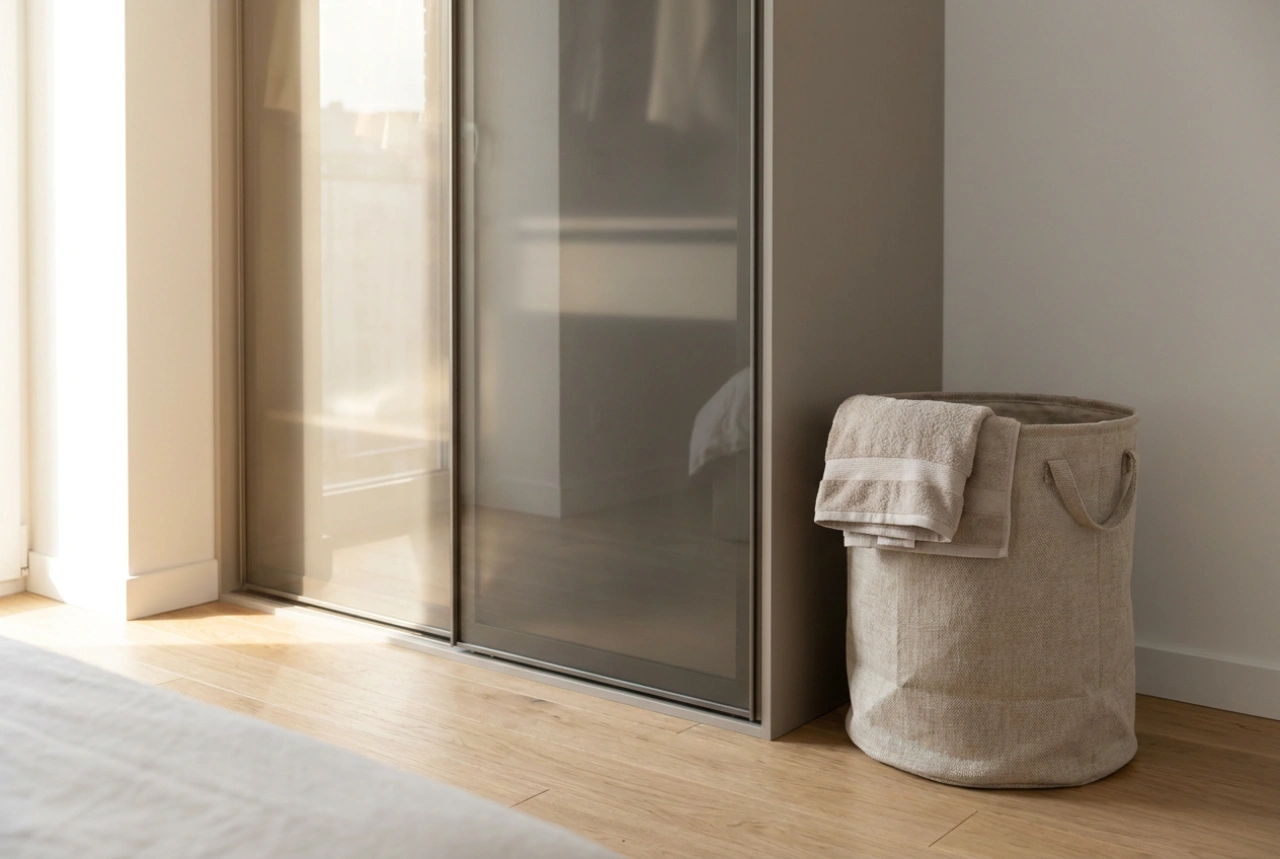
- Woven Cotton and Linen: Highly breathable, flexible, and often machine-washable. Baskets made of thick cotton rope can be laundered directly, restoring hygiene completely.
- Seagrass and Bamboo: Rigid and aesthetically pleasing, but susceptible to surface mould if placed in high-humidity zones like poorly ventilated bathrooms. They require a protective lining.
- Synthetic Polymers: Non-porous and highly durable. While they do not absorb moisture, they require engineered perforations to match the breathability of natural fibres. Their primary advantage is the ease of chemical disinfection.
Ergonomics, Weight Distribution, and Sorting Dynamics
An average weekly load of household laundry weighs between five and eight kilograms. Carrying this dead weight between bedrooms, bathrooms, and the washing machine puts mechanical stress on the musculoskeletal system. A well-designed basket must feature ergonomic handle placement aligned with the body's natural center of gravity.
Rigid, narrow handles cut into the palms, concentrating pressure on the ulnar nerve. Broad, integrated wooden or heavy textile handles distribute this weight across a larger surface area, reducing physical fatigue. Furthermore, incorporating a multi-compartment sorting system directly into your basket design minimises the physical strain of bending and sorting garments on the floor, streamlining the laundry workflow and protecting the lower back.
Maintenance and Sanitisation Protocols
A laundry basket accumulates a hidden layer of organic debris, dust mites, and bacteria with every use. To maintain a hygienic home, a regular cleaning protocol is essential. For baskets with removable cotton liners, the liner should be washed at a minimum of 60 degrees Celsius every two weeks to denature proteins and eliminate bacterial colonies.
For rigid wicker or bamboo baskets, a monthly vacuuming with a brush attachment removes loose dust and skin cells. This should be followed by a light misting with a diluted isopropyl alcohol solution or a natural surfactant to sanitise the surface without saturating the fibres. Synthetic baskets can be wiped down with a mild oxygen bleach solution to neutralise odours and lift organic stains, ensuring the container remains as clean as the freshly washed clothes that will eventually replace the soiled ones.