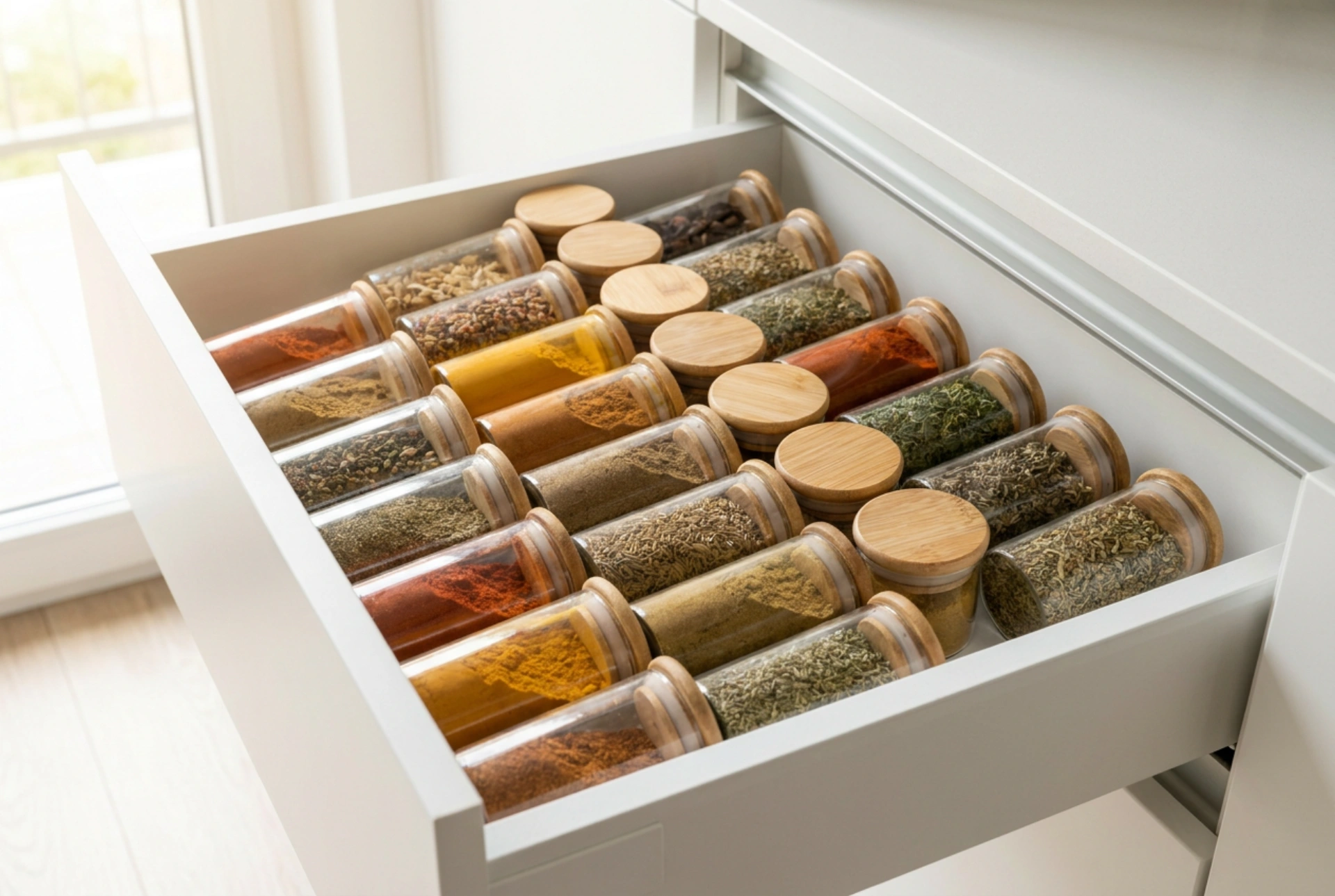


Proper spice storage is not just about visual order; it directly preserves the volatile essential oils that give spices their culinary value. Switching to uniform glass containers with airtight seals prevents chemical degradation and simplifies daily kitchen workflows.
The Science of Spice Degradation
Spices owe their distinctive aromas and flavours to volatile organic compounds, such as piperine in black pepper, cinnamaldehyde in cinnamon, and eugenol in cloves. These compounds are highly sensitive to environmental factors: oxygen, moisture, light, and heat. When exposed to air, oxidation occurs, breaking down these complex molecules into tasteless or bitter byproducts. Moisture is another critical adversary; it causes clumping in ground spices and facilitates the growth of microscopic moulds. By understanding these chemical reactions, it becomes clear that the original paper or soft plastic pouches in which spices are sold are insufficient for long-term preservation once opened.
Material Matters: Why Glass Wins
When selecting modern spice containers, the chemical properties of the storage material are paramount. Plastics are polymers that can be porous at a microscopic level. Over time, volatile essential oils can migrate into the plastic, staining the container and cross-contaminating other spices. Furthermore, plastic can release synthetic chemical compounds when exposed to acidic spices. Glass, on the other hand, is an amorphous solid made primarily of silica. It is completely inert, non-porous, and impermeable to gases and liquids. This ensures that the chemical integrity of the spice remains entirely isolated. For the lid, a combination of sustainable wood, such as bamboo, or stainless steel fitted with a food-grade silicone gasket provides the ideal mechanical seal. The silicone gasket deforms under slight pressure to fill microscopic gaps, creating a true airtight barrier that blocks oxygen and ambient humidity.
The Impact of Light and Heat
Photo-oxidation is a process where light energy catalyzes the breakdown of organic molecules. Ground spices have a high surface-area-to-volume ratio, making them incredibly vulnerable to light-induced fading and flavor loss. Storing spices in clear glass jars on a sunny countertop accelerates this degradation. The optimal solution is to house clear glass containers inside a dark drawer or deep pantry cabinet. This setup allows you to easily view the contents from above or the side when accessed, while maintaining a dark, stable environment when closed. Additionally, containers must be kept away from major heat sources like ovens, hobs, and dishwashers, as thermal energy increases the kinetic energy of volatile molecules, causing them to evaporate more rapidly.
How to Safely Transfer and Organize Spices
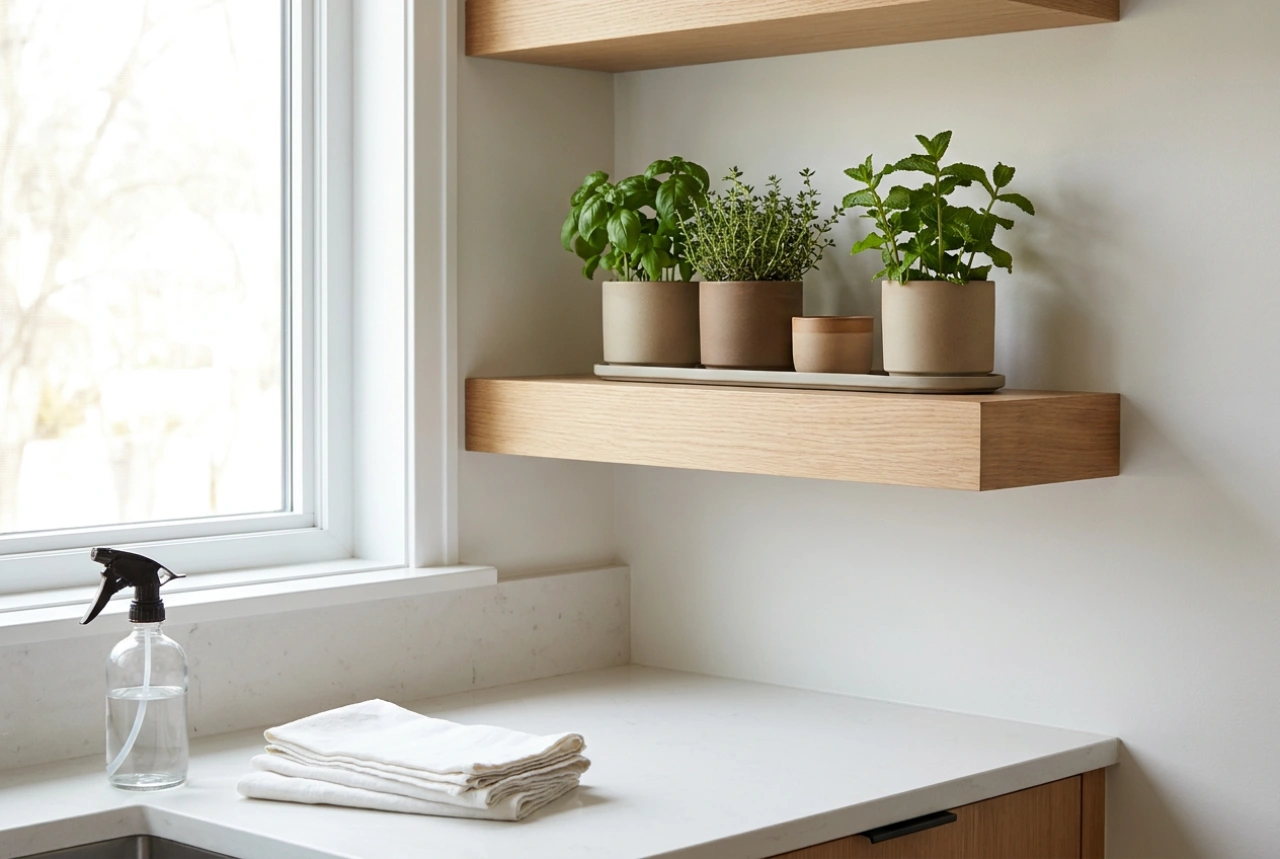
Transitioning to a modern spice system requires a clean, methodical process to prevent contamination. First, wash all glass jars in hot water with a mild, scent-free detergent to remove any industrial residues. Ensure they are completely dry; even a single micro-droplet of water can cause dry powders to clump and spoil. Allow the jars to air-dry upside down on a clean linen cloth for several hours. When transferring spices, use a clean, dry stainless steel funnel. Avoid transferring spices directly over a steaming pot, as rising water vapour will enter both the jar and the spice source. Arrange the jars systematically—either alphabetically or by frequency of use—using a flat, stepped drawer insert or a non-slip liner to prevent the jars from shifting when the drawer is opened and closed.