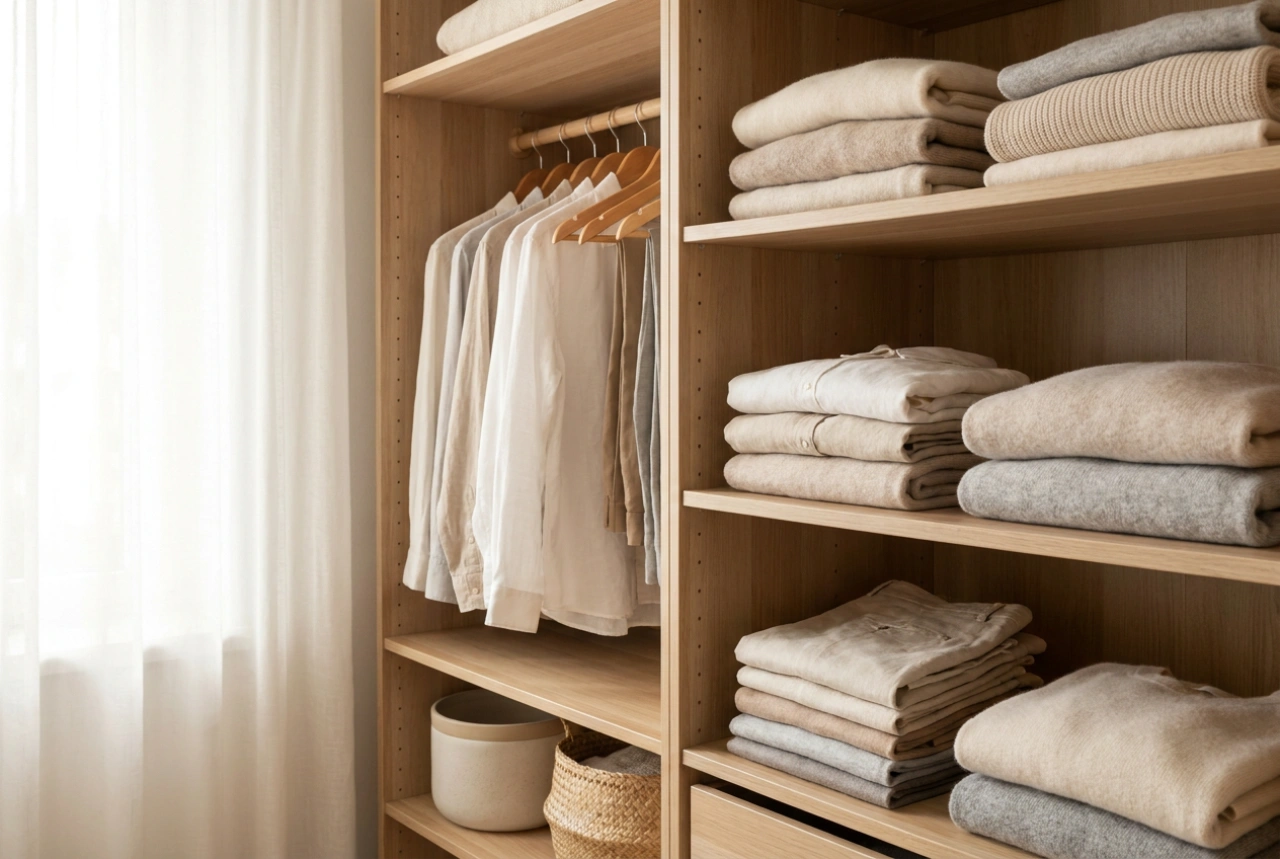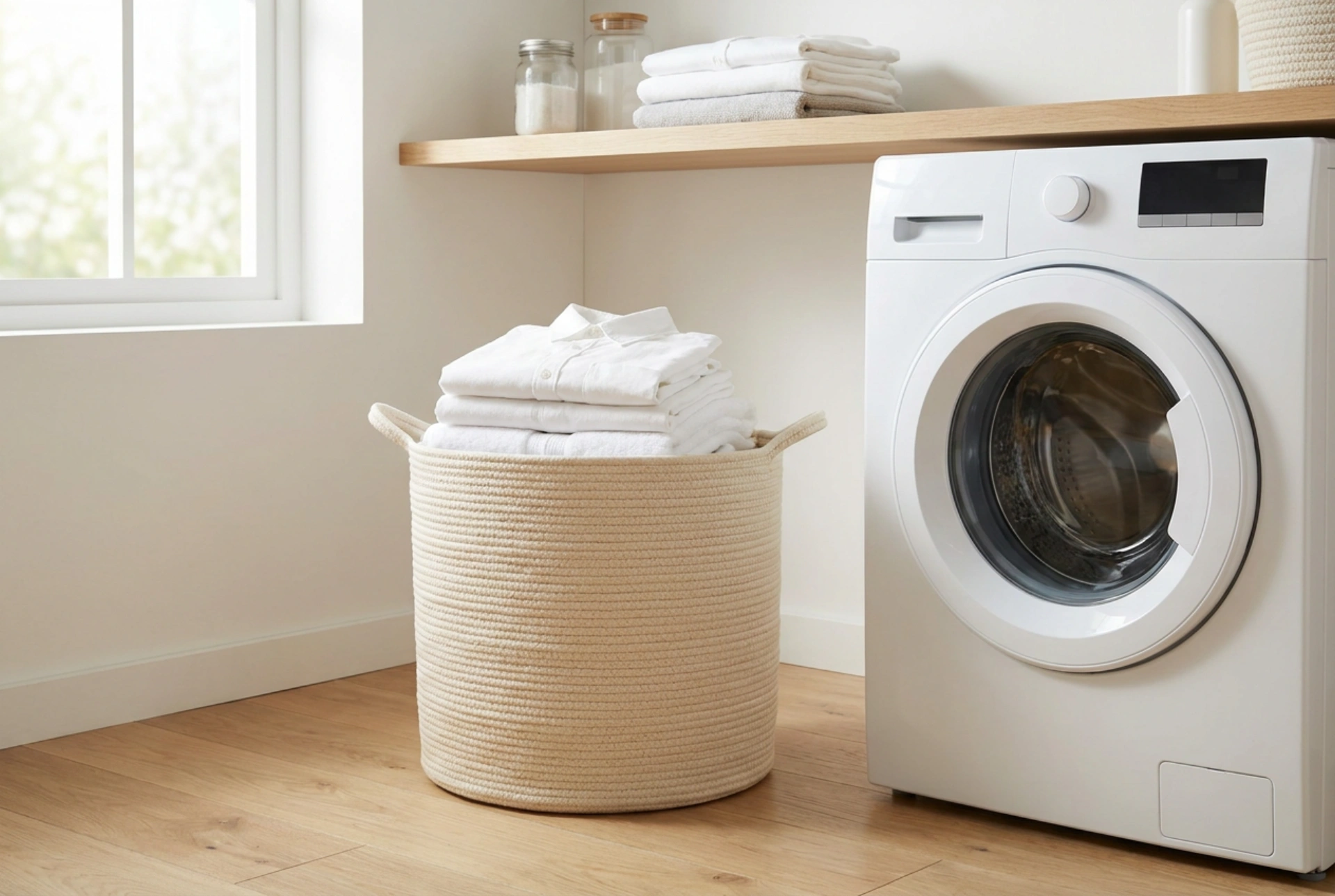


Managing laundry efficiently relies on immediate sorting rather than piling garments in a single large bin where moisture, friction, and dye transfer can degrade fabrics. Integrating small laundry baskets into your daily routine streamlines the washing process by isolating clothes according to fibre type, colour, and soil level right at the point of disposal.
The Physics of Pile Pressure: Reducing Fabric Abrasion
In a standard, deep laundry hamper, garments at the bottom endure significant physical compression. When heavy fabrics, such as denim or canvas, rest on top of delicate knits, silks, or lightweight synthetics, the resulting mechanical pressure binds the fibres together. Over several days, this pressure, combined with natural movement when adding more items, creates friction that weakens delicate threads and causes pilling.
Using smaller baskets prevents this heavy accumulation. By limiting the volume of each container, you reduce the physical load on the garments at the bottom. This preserves the structural integrity of natural fibres like wool and cotton, ensuring that they do not stretch out of shape or suffer premature wear before they even reach the washing machine drum.
Preventing Microbial Growth and Dye Bleeding
Soiled garments naturally carry organic moisture from perspiration and environmental exposure. When compressed in a large, unventilated hamper, this moisture is trapped, creating a microclimate with high relative humidity and warm temperatures. This environment accelerates the growth of anaerobic bacteria and mildew, which break down sweat compounds into volatile organic acids, leading to stubborn odours that are difficult to wash out without high heat.
Furthermore, dampness facilitates dye bleeding. Water-soluble dyes used in many cotton garments can migrate across fibres when pressed closely together under damp conditions. Small laundry baskets promote rapid sorting, allowing you to isolate wet items (like gym wear or damp towels) immediately. This segregation prevents dye transfer and ensures that damp fabrics dry quickly due to better air exposure, halting bacterial replication.
A Systemic Approach to Daily Sorting
An efficient daily sorting protocol relies on establishing a series of small, dedicated baskets placed close to where clothes are removed. Instead of a single mass sort before washing, categorise your laundry instantly using these steps:
- The Dark and Coloured Basket: For indigo denim, dark cottons, and synthetic activewear. Keeping these separate prevents lint from light-coloured items from adhering to dark surfaces.
- The Light and White Basket: For whites, creams, and pale pastels. Immediate separation ensures these fibres are never in contact with migrating pigments from dark fabrics.
- The Delicate and Wool Basket: For protein fibres (silk, wool) and fine synthetics. These items require low-temperature cycles and gentle mechanical action, so isolating them prevents accidental washing at high temperatures.
This systematic distribution eliminates the need to tip a giant, unsorted pile onto the floor before a wash, which can reintroduce household dust and pet dander to otherwise clean-smelling fabrics.
Choosing the Right Materials for Optimal Airflow
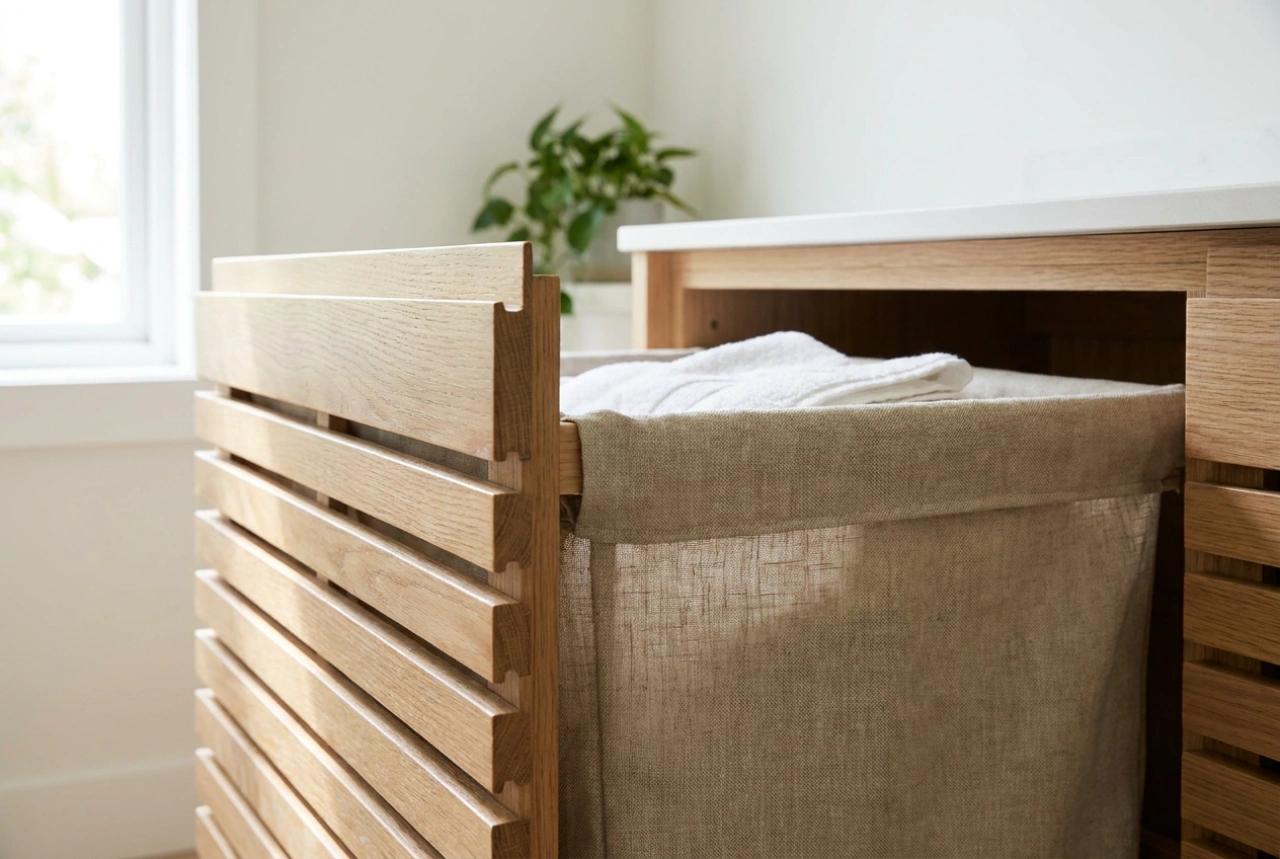
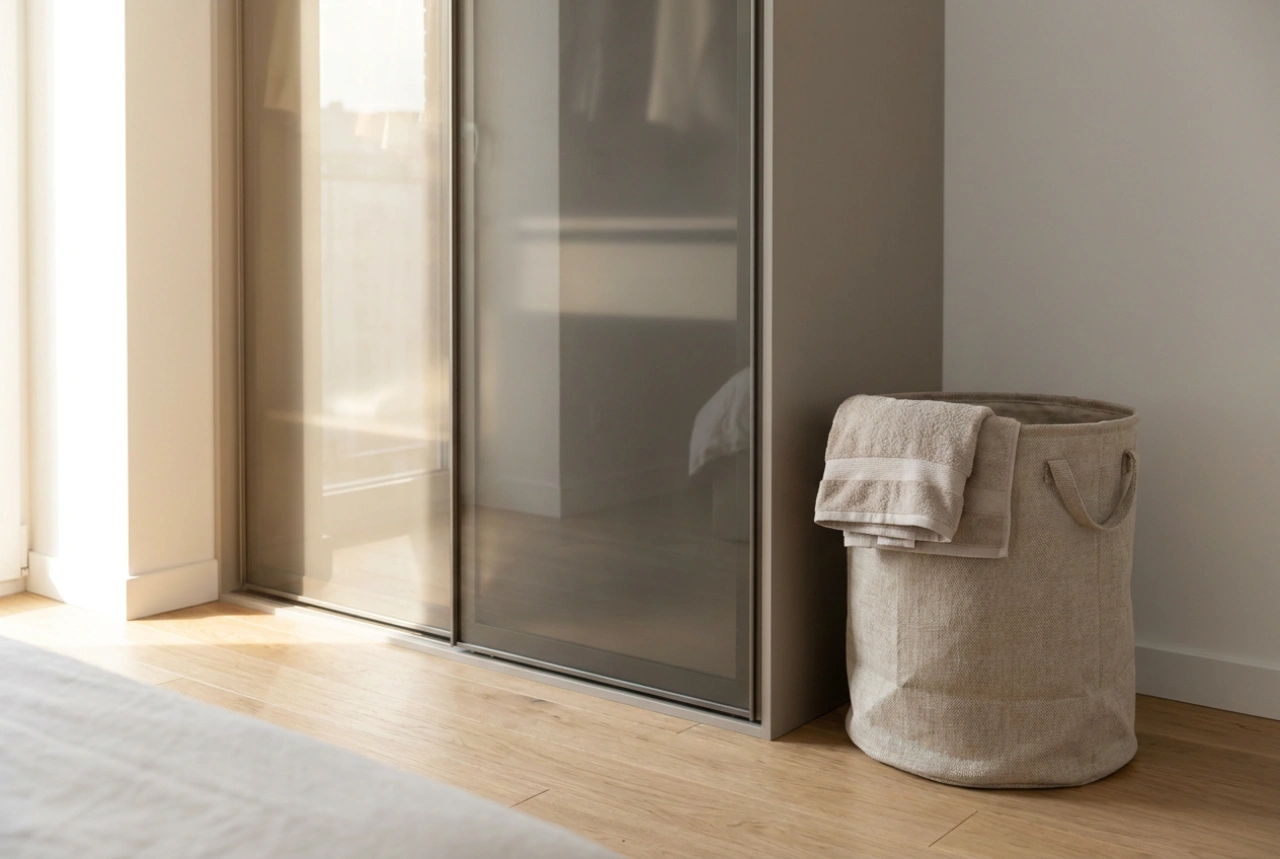
The material of your small sorting basket plays a functional role in preserving your clothing. Solid plastic containers trap air and moisture, accelerating the degradation of damp fibres. Conversely, baskets constructed from woven natural fibres, such as cotton cord, rattan, or seagrass, feature natural micro-gaps that allow continuous airflow. This passive ventilation evaporates surface moisture and lowers the temperature inside the basket, inhibiting microbial activity. If you prefer synthetic materials, select baskets with open-mesh patterns or perforations that mimic the breathability of natural fibres.