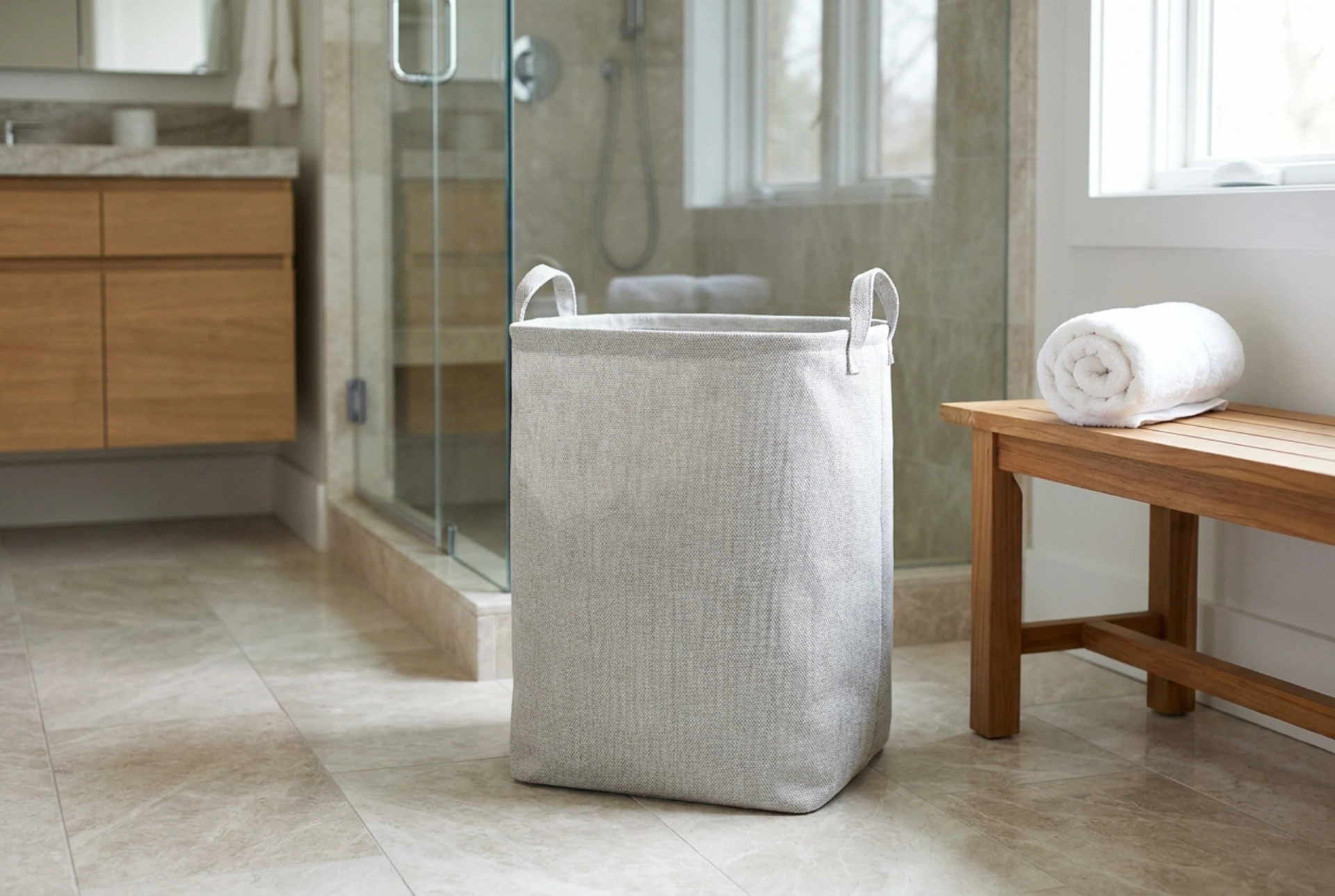


Bathrooms are inherently high-humidity environments where fluctuating temperatures and airborne moisture pose a constant challenge to household storage. Selecting a laundry hamper that resists moisture absorption while surviving daily mechanical wear is essential to prevent structural rot, unpleasant odours, and mould proliferation in your textiles.
The Science of Humidity: Why Material Chemistry Matters
The primary challenge in a bathroom is relative humidity. When warm, moisture-laden air from showers cools, it reaches its dew point and condenses on cooler surfaces. Traditional organic materials like untreated wicker, seagrass, or cotton canvas are highly hygroscopic. They readily absorb this ambient moisture, creating an ideal breeding ground for fungal spores such as mould and mildew, which degrade both the basket and the clothing inside.
To counteract this, modern bathroom storage relies on hydrophobic materials. Synthetic polymers, specifically polypropylene (PP) and high-density polyethylene (HDPE), do not absorb water molecules. Woven synthetic rattan mimics the aesthetic of natural fibres but offers complete resistance to water absorption and rot. For metallic options, aluminium and powder-coated stainless steel are ideal; the powder coating acts as a physical barrier that prevents oxygen and water from reaching the underlying metal, eliminating the risk of oxidation and rust.
Airflow Dynamics and Odour Mitigation
Stagnant, damp air combined with soiled textiles accelerates the metabolic activity of bacteria, particularly species that feed on sweat and skin cells. This anaerobic process produces volatile organic compounds, resulting in sour, musty odours. To prevent this microclimate from forming inside your laundry basket, physical ventilation is critical.
Look for baskets featuring perforated walls, open-weave patterns, or raised bases. A raised base allows air to circulate underneath the hamper, preventing cold floor condensation from pooling at the bottom. The chimney effect—where warm air rises and escapes through the top while pulling cooler, drier air through the lower perforations—ensures continuous passive evaporation of moisture from damp towels and garments.
Structural Engineering for Daily Mechanical Stress
A laundry basket must withstand significant physical loading. Wet cotton towels can weigh up to three times their dry weight, putting immense stress on the basket's frame, base, and handles. Under-engineered baskets suffer from structural fatigue, causing them to warp, crack, or tear at joint stress points.
When evaluating structural integrity, examine the load-bearing frame. High-quality baskets feature an internal skeleton made of lightweight aluminium or reinforced polymer rings. Handles should be integrated directly into this structural frame rather than merely stitched or glued to the outer fabric. Avoid baskets assembled with water-soluble adhesives, as the constant humidity will eventually dissolve the bonding agents, leading to delamination and structural collapse.
Sanitisation and Maintenance Protocol
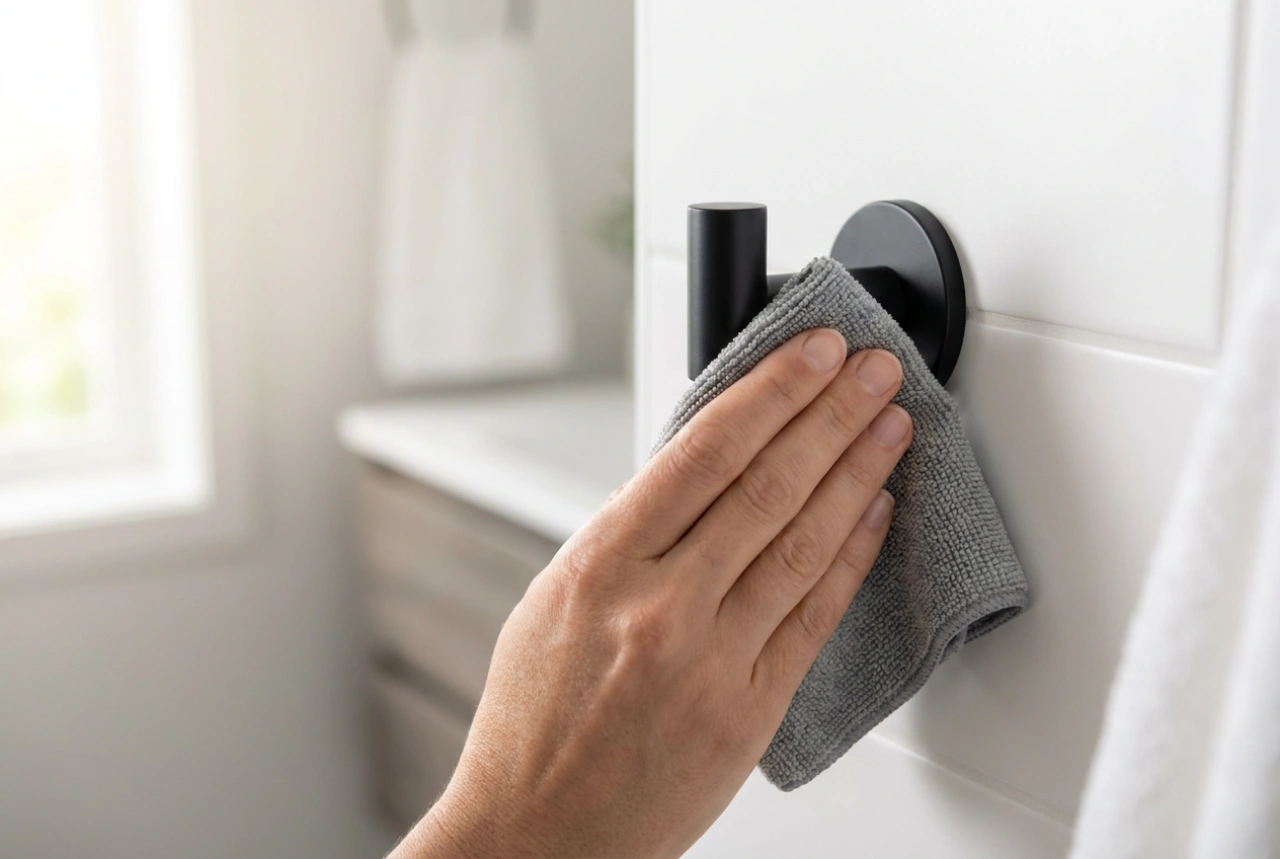
Even hydrophobic surfaces require periodic cleaning to remove accumulated skin cells, dust, and residual laundry soils. Synthetic baskets should be wiped down monthly using a solution of warm water and a mild surfactant. For deeper sanitisation, a diluted solution of hydrogen peroxide or oxygen-based bleach can be applied to neutralise any latent fungal spores without damaging the synthetic fibres or releasing harsh fumes.
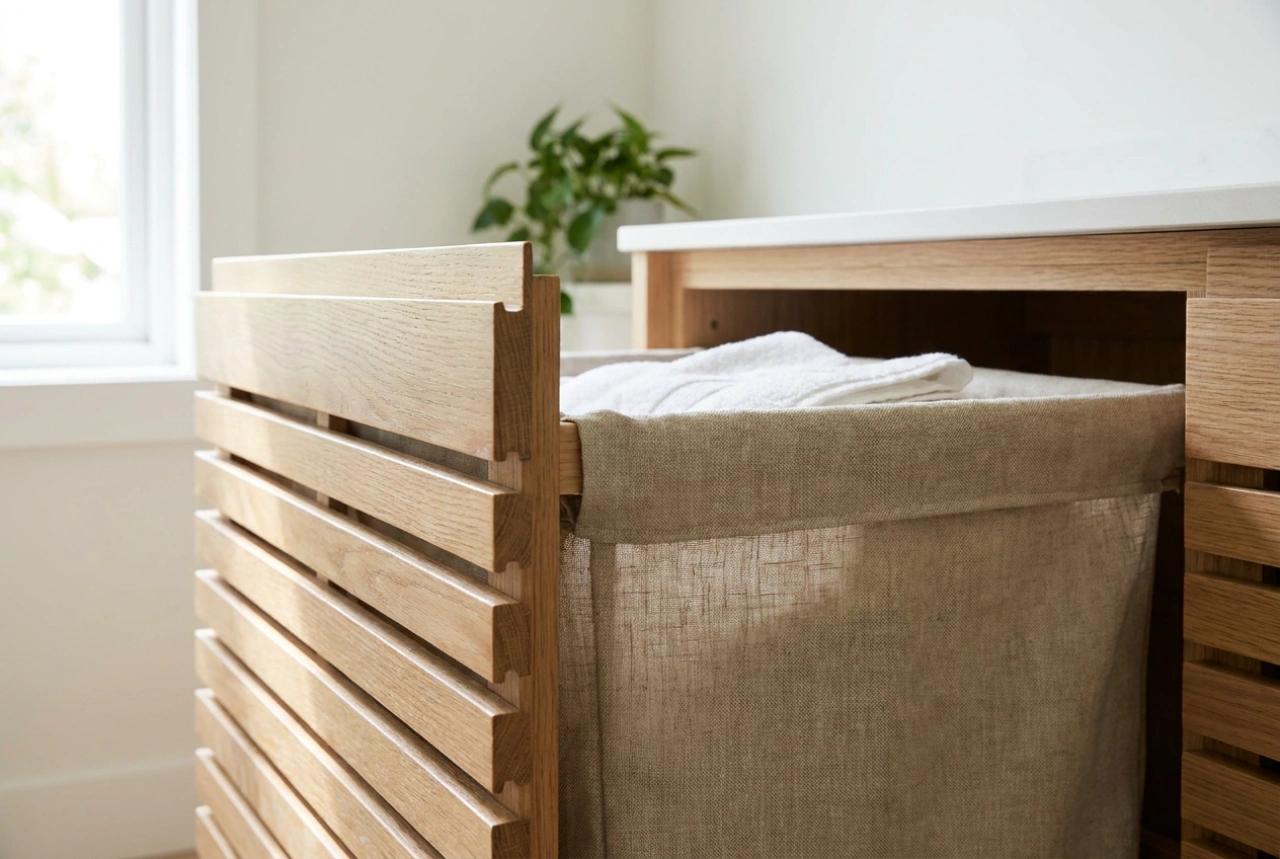
If your basket utilises a fabric liner, opt for a synthetic-cotton blend (such as 60% polyester and 40% cotton). Polyester provides rot resistance and fast drying times, while cotton adds flexibility. Wash this liner at a minimum of 60 degrees Celsius once every two weeks to effectively eliminate bacteria, dust mites, and fungal spores, ensuring your bathroom environment remains hygienic and fresh.