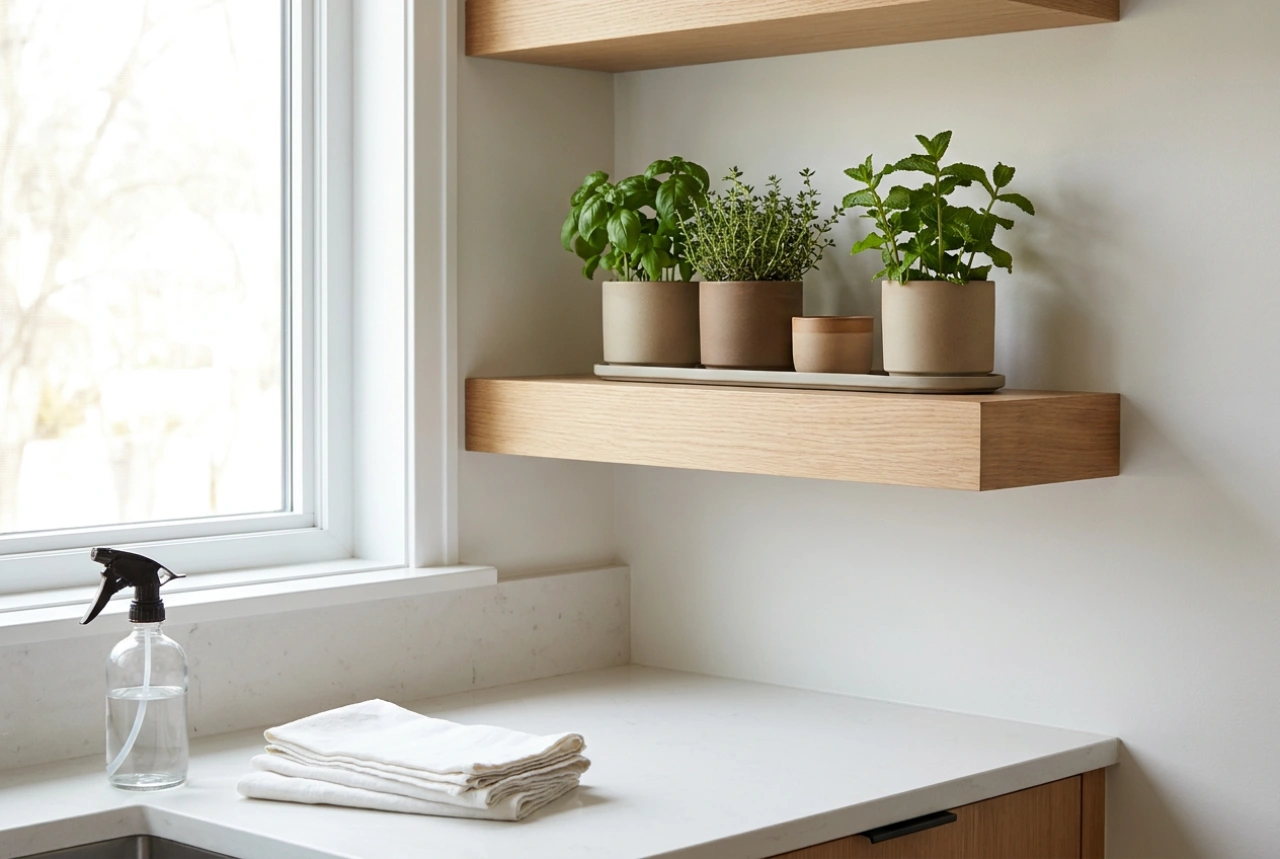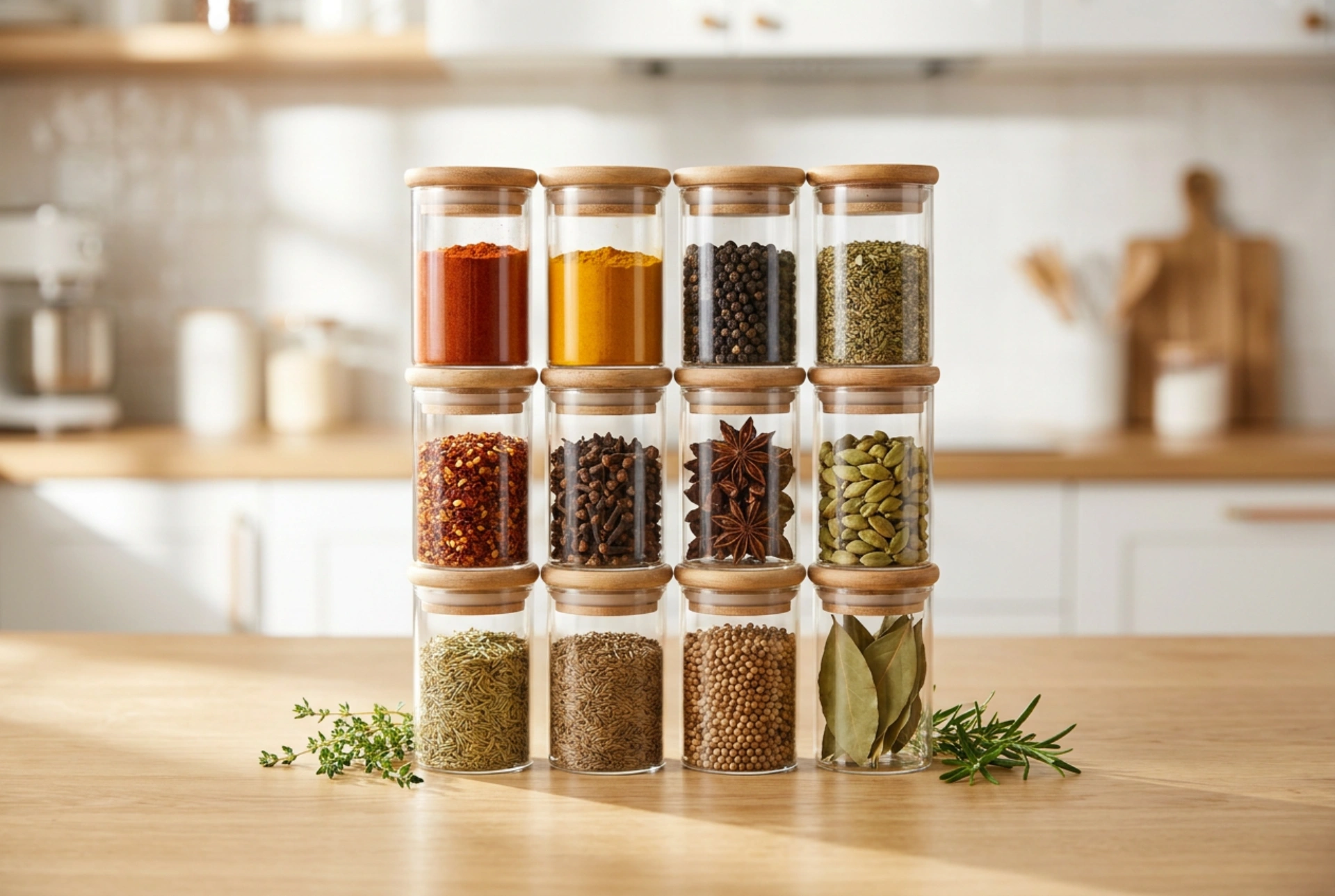


Transitioning to glass spice jars is more than an aesthetic upgrade; it is a scientifically sound method to preserve the volatile essential oils that give spices their distinct aromas and culinary properties. By understanding the material properties of glass and the mechanics of spice degradation, you can eliminate kitchen chaos and elevate your cooking precision.
The Chemical Advantage of Glass Over Plastic
Glass is an amorphous solid primarily composed of silica (silicon dioxide), which is highly inert. Unlike many polymers used in plastic containers, glass does not react with the volatile organic compounds—such as terpenes, aldehydes, and phenols—found in spices. Plastic containers are semi-permeable and can absorb these strong aromatic compounds over time, leading to cross-contamination of flavours and structural degradation of the plastic itself. Furthermore, plastics can leach synthetic chemicals, especially when exposed to heat or acidic spice components. Glass provides an absolute chemical barrier, ensuring that the molecular profile of each herb or spice remains pure and uncontaminated over long periods of storage.
Combating the Triad of Degradation: Air, Moisture, and Light
Spices degrade through three primary physical and chemical processes: oxidation, hydrolytic rancidity, and photodegradation. Implementing standardized glass storage acts as a physical defense system against these forces:
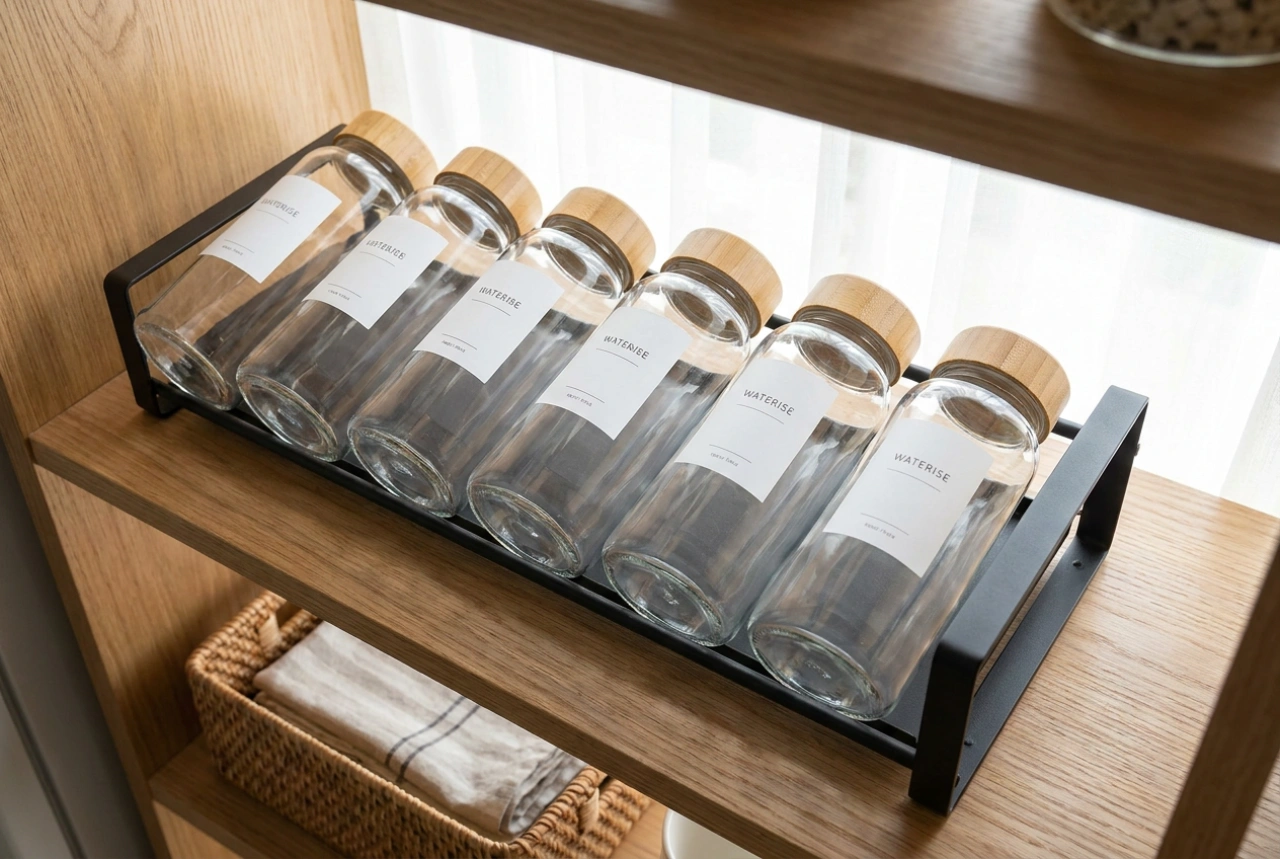
- Oxidation: Oxygen reacts with the delicate oils in ground spices, rendering them tasteless or bitter. Glass jars with airtight gaskets (such as silicone or natural rubber rings) block atmospheric oxygen exchange entirely, locking in the volatile flavours.
- Moisture and Humidity: Relative humidity causes fine spice powders to hygroscopically absorb water, leading to clumping, caking, and potential microbial growth. Standardized glass jars with tight seals maintain a dry internal microclimate, ensuring consistent flow and dispersion during cooking.
- Photodegradation: Electromagnetic radiation, particularly ultraviolet (UV) light, breaks down chemical bonds in organic pigments and flavour molecules. While clear glass allows easy inventory, storing these jars in a dark drawer or cupboard, or opting for dark amber glass, prevents light-induced deterioration.
Cognitive Ergonomics and Kitchen Workflow
Chaos in the kitchen often stems from high cognitive load and physical friction. Standardizing your spice storage into uniform glass jars reduces visual noise and speeds up identification. Using identical containers allows the brain to employ rapid pattern recognition based purely on the colour and texture of the spice, rather than searching through mismatched, branded plastic bottles. This visual transparency eliminates the need to open multiple containers to check their contents, minimizing exposure to ambient air and steam from cooking pots. Additionally, arranging jars in a single layer in a drawer or on a tiered rack ensures that every ingredient is within a single physical movement, streamlining the physical mechanics of seasoning.
Thermal Sanitisation and Odour Eradication
One of the greatest advantages of glass is its high thermal stability, allowing for rigorous sanitisation between refills. Glass can withstand the high temperatures required to denature proteins and destroy bacterial spores without warping or melting. When transitioning or refilling jars, physical and chemical cleaning is crucial to remove stubborn lipid residues and essential oils. Wash the jars in water heated to at least sixty degrees Celsius to dissolve hardened oils. To remove stubborn compounds like cumin or clove oil, wash the glass with a mild base such as sodium bicarbonate (baking soda) paste, which chemically neutralises acidic scent molecules. Ensure the glass is completely cool and dry before refilling, as even a single droplet of trapped moisture will trigger mold growth and spoilage.