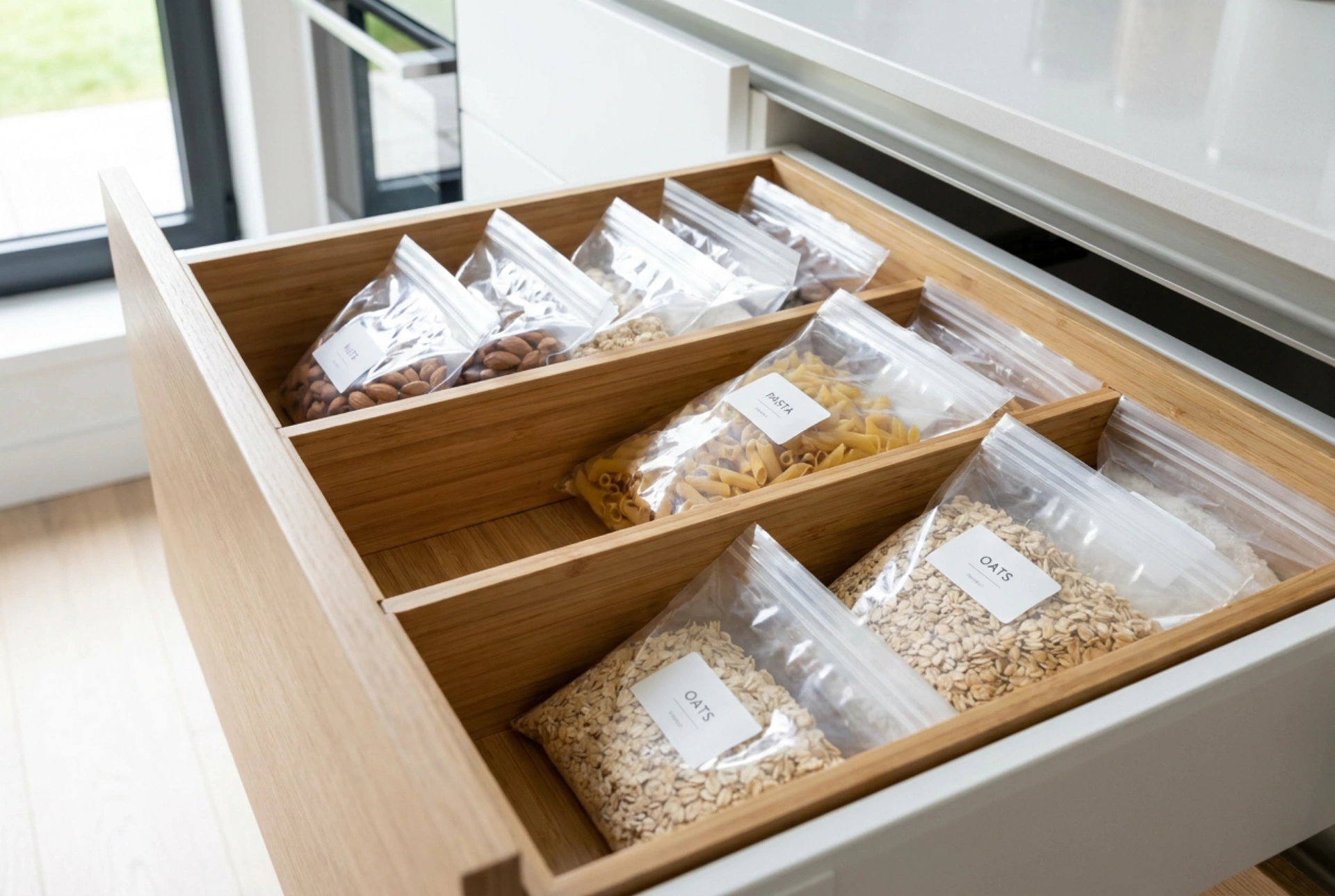


Efficiently managing food storage in kitchen drawers requires more than just sliding ingredients into plastic bags; it demands a systematic approach to labelling and physical organisation. By understanding how inks interact with low-density polyethylene (LDPE) and structuring your storage space, you can prevent ink smudging, reduce food waste, and maintain an easily navigable drawer.
The Science of Ink Adhesion on LDPE Plastics
Most standard slider zipper bags are manufactured from low-density polyethylene (LDPE), a polymer valued for its flexibility, moisture resistance, and high tensile strength. However, LDPE possesses extremely low surface energy, meaning it naturally repels liquid-based substances. When you attempt to write on a standard plastic bag with a water-based ballpoint or gel pen, the ink beads up due to surface tension, failing to form a cohesive bond with the polymer matrix.
To achieve a permanent mark, you must use solvent-based markers containing quick-drying organic solvents such as alcohol. These solvents temporarily interact with the surface of the polyethylene, allowing the pigment to settle and dry rapidly before the liquid can bead. Alternatively, many high-quality bags feature a matte white write-on panel. This textured area is treated during manufacturing to increase its surface roughness and energy, creating microscopic anchor points that hold onto ink much more effectively than the surrounding slick plastic.
Choosing the Right Labelling Medium
While direct writing is highly convenient, there are times when alternative labelling methods are superior, particularly for long-term freezer storage where temperature fluctuations and moisture condensation occur regularly.
- Alcohol-Based Permanent Markers: This is the absolute standard for write-on panels. Choose fine-tip options to prevent ink bleed and ensure the legibility of small text.
- Acrylic-Adhesive Freezer Tape: Traditional rubber-based adhesives lose their tackiness and fail at sub-zero temperatures. Pressure-sensitive acrylic adhesives, however, maintain their bond strength under extreme cold and resist moisture, making tape a highly reliable removable label option on non-textured bags.
- Pre-printed Labels: If you use self-adhesive labels, ensure they are rated for cold and humid environments. Apply them while the bag is completely dry and at room temperature, pressing firmly to activate the pressure-sensitive adhesive across the entire surface.
Optimising Drawer Space with Vertical Filing
Stacking slider zipper bags horizontally on top of one another creates a chaotic environment where the bottom items are easily forgotten and difficult to retrieve. Instead, treat your kitchen drawer like a filing cabinet.
Arranging the bags vertically—standing upright with the slider mechanism at the top—allows you to flip through them like index cards. To prevent the flexible LDPE bags from collapsing under gravity, introduce rigid bamboo or acrylic drawer dividers. These dividers segment the drawer into narrow channels slightly wider than the bags. By keeping the bags snugly positioned in a vertical orientation, you protect the slider seals from unnecessary pressure, prevent contents from shifting, and keep every single label fully visible at a glance.
Developing a Standardised Labelling System
To make your labelling truly functional, establish a consistent writing protocol. Haphazardly scribbled notes lead to confusion when searching for specific ingredients later on. Every label should ideally display three core data points:
- The Core Ingredient: Be specific. Write "Diced Chicken Breast" rather than just "Chicken" to avoid defrosting the wrong cut of meat.
- The Storage Date: Always include the day, month, and year. This enables a strict First-In, First-Out (FIFO) inventory rotation system.
- Portion or Prep Details: Note down specific details like "2 Portions / Unseasoned" or "Marinated in Soy & Ginger". This helps with meal planning without needing to open and inspect the bag's frozen contents.
Always write this information on the bag before filling it. Trying to write on an uneven, wet, or already filled bag compromises ink transfer and leads to illegible text.