

Mounting a bathroom towel rail without drilling requires more than just peeling a sticky backing; it demands a fundamental understanding of chemical adhesion and surface preparation to withstand constant humidity.
The Science of Adhesion Failure in Humid Environments
Most adhesive towel hooks fail not because the glue is weak, but because of a microscopic barrier between the adhesive and the tile. Bathrooms are high-humidity zones where water vapour constantly condenses on cold ceramic surfaces. If the bond between the adhesive and the tile is not molecularly tight, water molecules will find their way into the micro-gaps through capillary action. This process, known as moisture ingress, gradually displaces the adhesive, leading to sudden bond failure. To prevent this, the adhesive must form a continuous, hydrophobic barrier that seals out water entirely.
Surface Preparation: Eradicating Chemical Barriers
Standard household cleaners often leave behind thin films of surfactants, silicones, or polishing agents. While these make tiles look shiny, they lower the surface energy of the tile, preventing the adhesive from wetting the surface properly. To achieve a permanent bond, the tile must be chemically clean.
- Avoid soapy detergents: Standard dish soaps and bathroom cleaners leave behind residues that compromise adhesives.
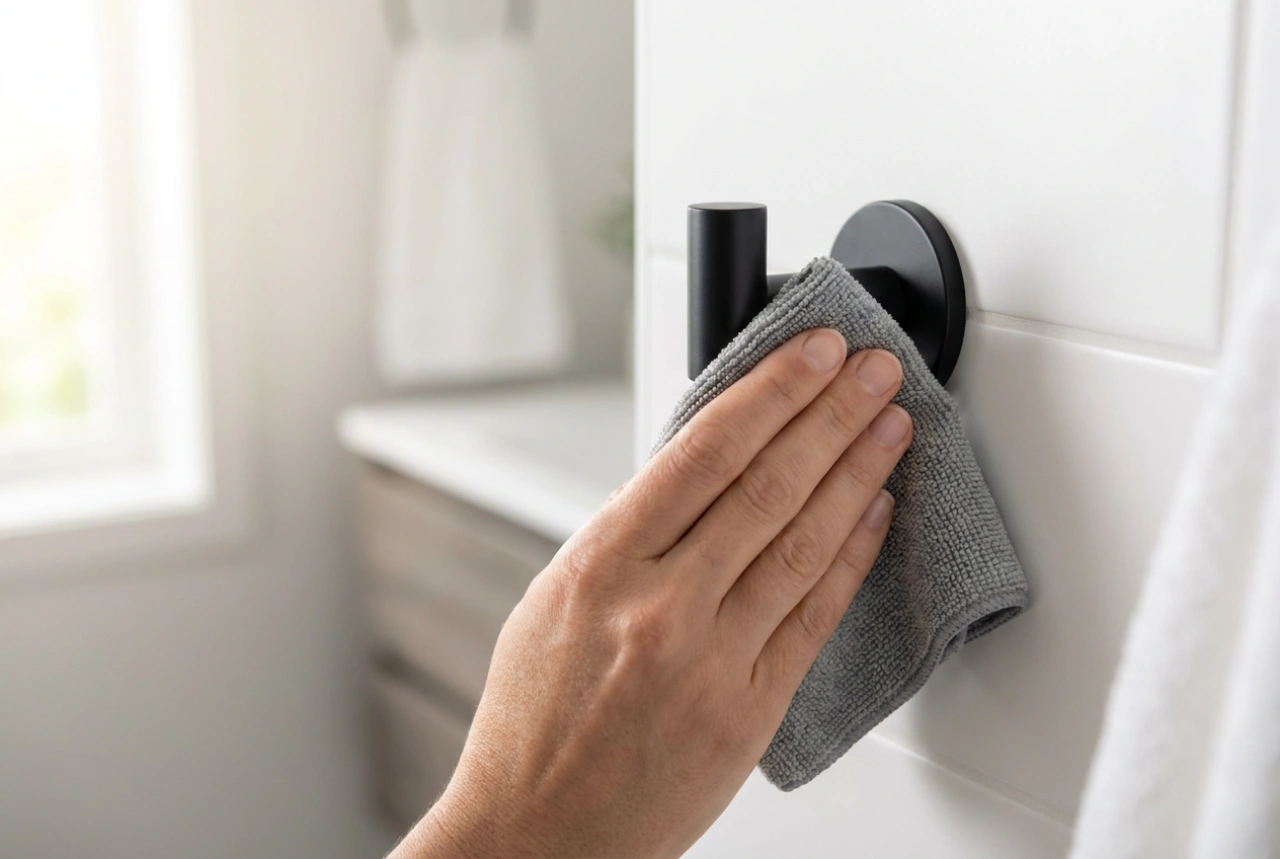
- Use pure solvents: Clean the target area thoroughly with a lint-free cloth soaked in isopropyl alcohol (99% concentration) or pure acetone. These solvents dissolve lipids, oils, and soap scum without leaving any film behind.
- Abrasive preparation: If the tile surface is extremely smooth or glazed, a very light, localized mechanical abrasion using a fine magic eraser or a high-grit abrasive pad can increase the physical surface area, creating micro-texture for mechanical interlocking.
Selecting the Right Bonding Technology
Two main adhesive technologies excel in wet environments: acrylic foam tape and silane-modified polymer (MS polymer) liquid adhesives. Understanding how they cure determines how you apply them.
Acrylic Foam Tapes
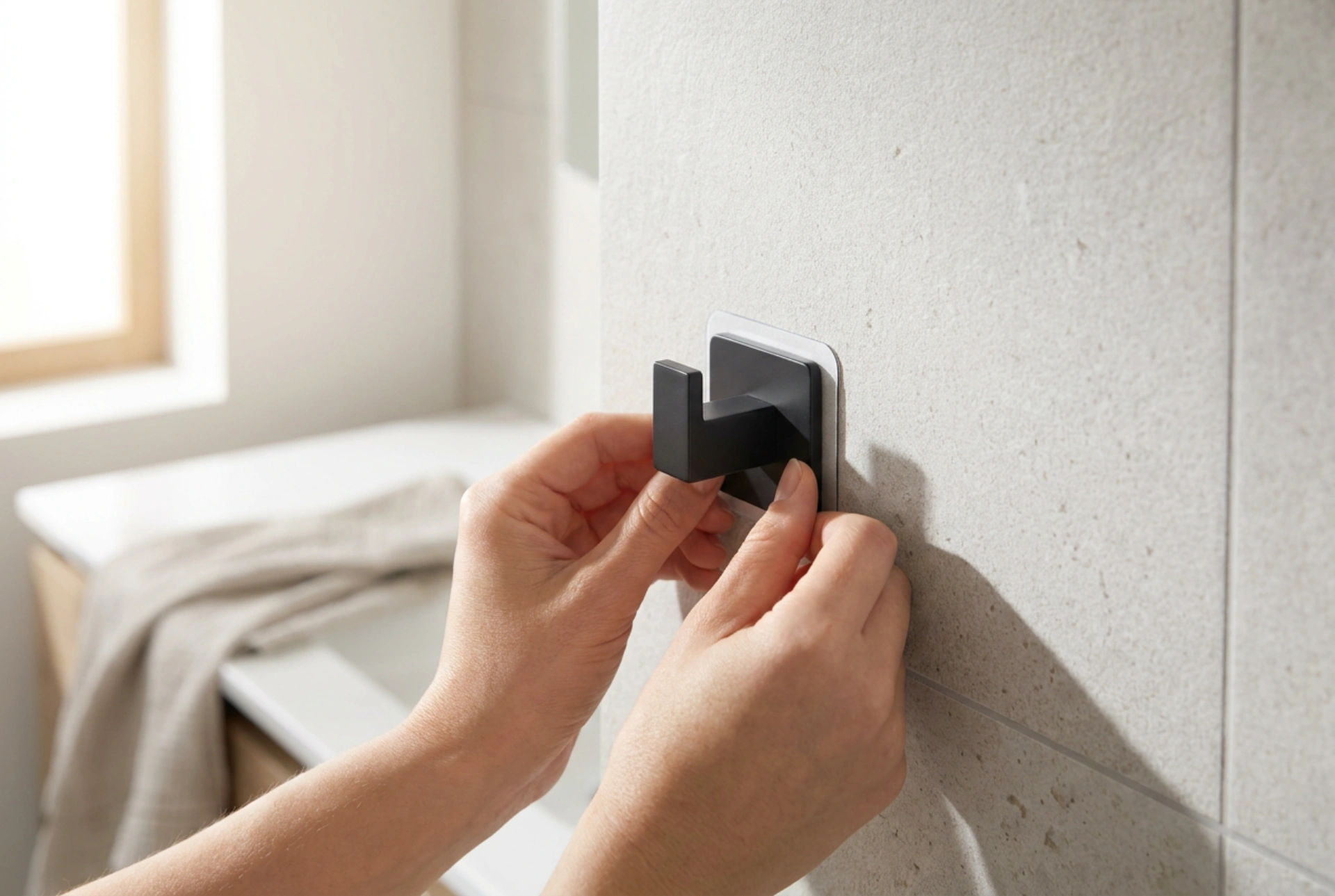
These are pressure-sensitive adhesives. They do not dry but instead flow under pressure into the microscopic valleys of the tile surface. To activate this bond, you must apply firm, even pressure across the entire hook base for at least thirty seconds. Once applied, they offer immediate, moisture-resistant sealing, though they still require time to reach maximum bond strength.
Silane-Modified Polymers
These liquid adhesives cure by reacting with ambient moisture in the air. Unlike solvent-based glues, they do not shrink as they cure, meaning they maintain a full, gap-filling seal behind the hook. They cure into a highly elastic, tough synthetic rubber that absorbs physical shocks while resisting water penetration indefinitely.
The Precise Step-by-Step Installation Protocol
To guarantee a lifelong bond, follow a strict chronological sequence that allows the chemical reactions to complete undisturbed.
- Check the temperature: Ensure the room temperature is between 15°C and 25°C. Cold tiles slow down the molecular mobility of adhesives, preventing proper wetting.
- Mark the spot: Use a pencil to mark the exact placement. Once the adhesive makes contact, repositioning it will ruin the molecular structure of the bond.
- Apply and press: Apply the adhesive or press the tape firmly onto the tile. If using a liquid polymer, apply it in vertical beads rather than circles to allow air and moisture to reach the adhesive for proper curing, and to prevent trapping air pockets that could hold water.
- The critical cure time: Do not hang anything on the hook for at least 24 to 48 hours. Even if the hook feels solid immediately, the chemical cross-linking within the polymer takes time to reach its ultimate tensile strength. Introducing load or steam too early will cause micro-fractures in the curing adhesive.