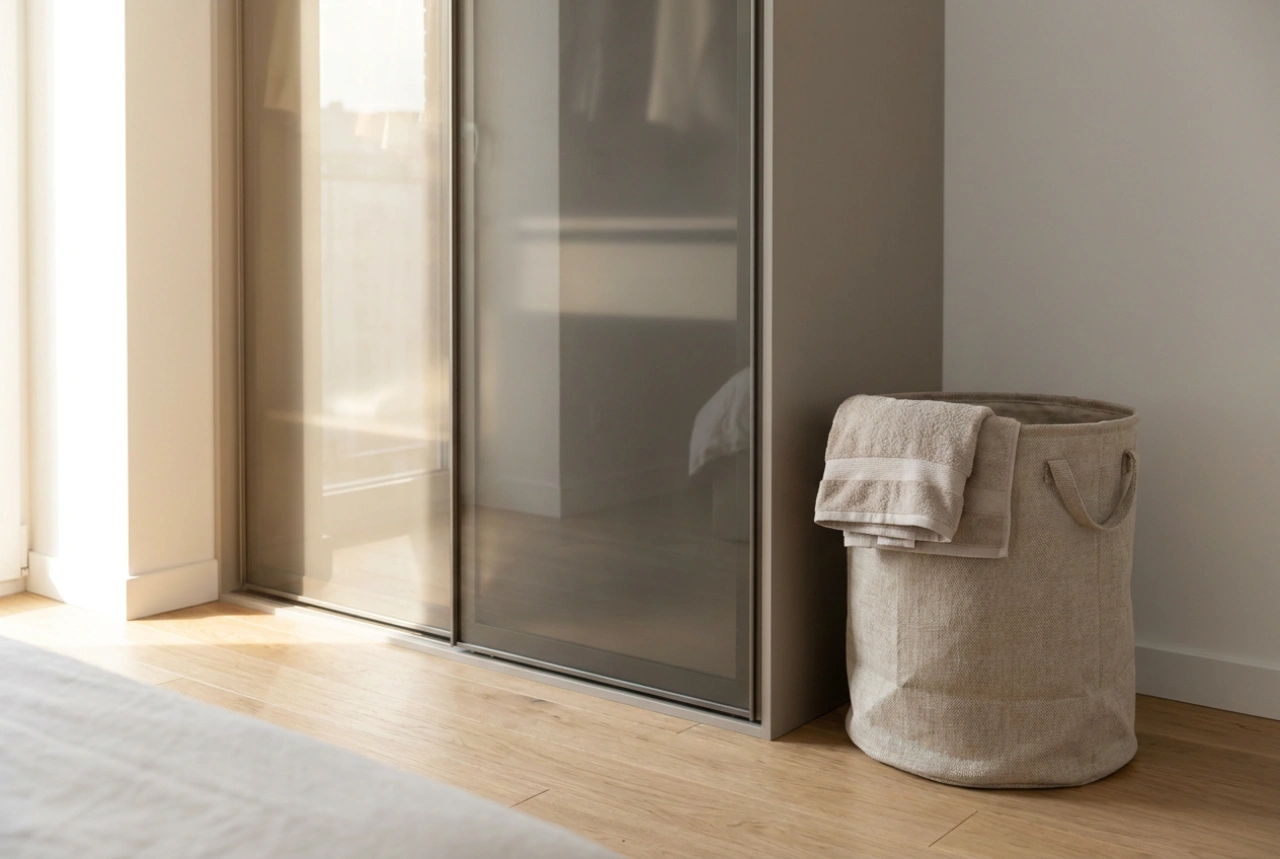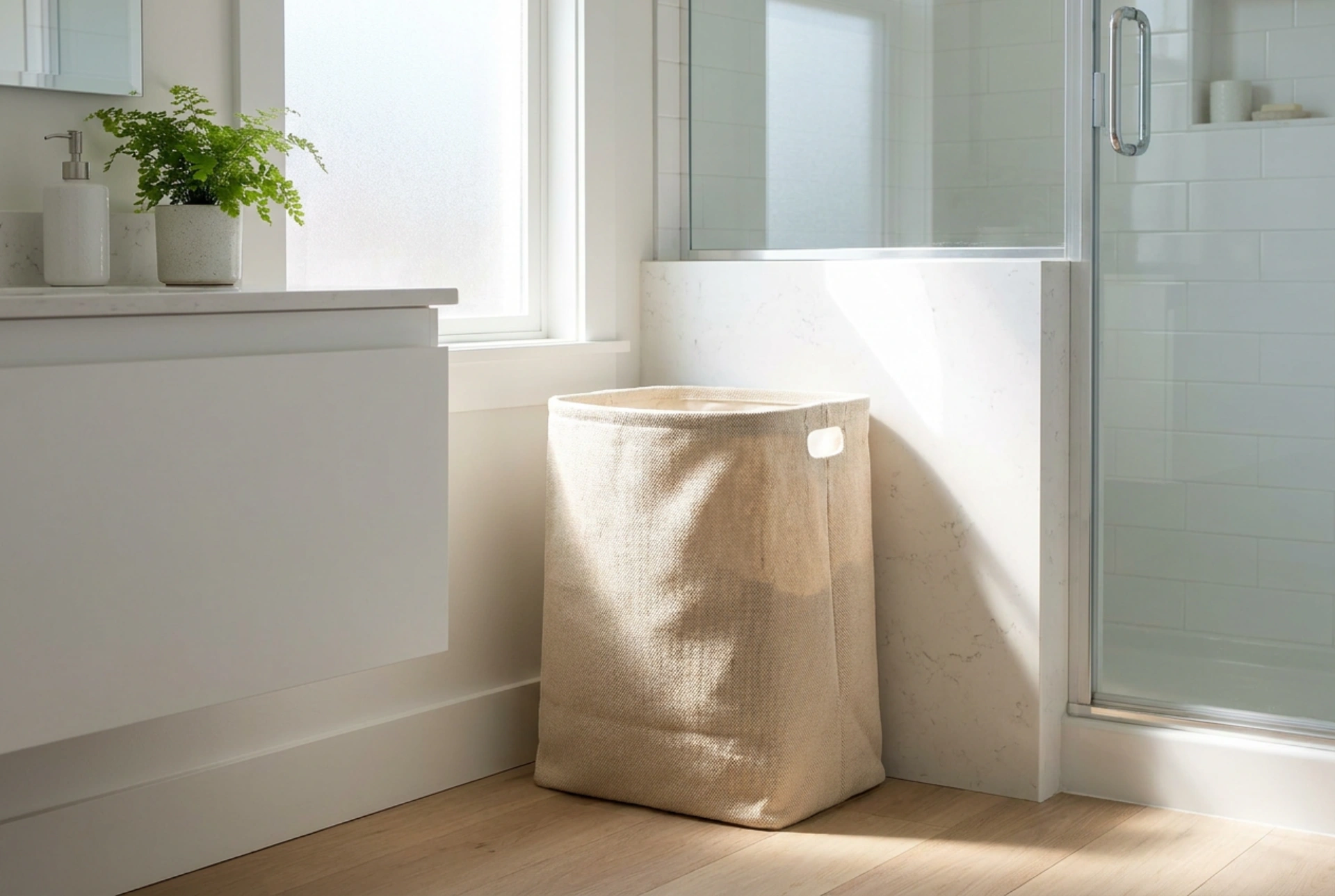


Placing a round laundry basket in a square corner might seem like a geometric contradiction, but this arrangement actually creates a crucial thermodynamic gap that prevents moisture build-up and mould growth in soiled garments. Understanding the physics of airflow and material properties allows you to turn a simple corner setup into an efficient, hygienic laundry station.
The Geometry of Airflow: Why Round Baskets Excel in Corners
When a square or rectangular laundry hamper is pushed tightly into a corner, its flat surfaces flush against the walls, it creates a pocket of dead air. Without movement, humidity rising from damp clothes or the bathroom environment becomes trapped, raising the local relative humidity. This stagnant microclimate is the primary breeding ground for anaerobic bacteria and fungal spores, which produce volatile organic compounds responsible for the characteristic musty odour of dirty laundry.
By contrast, placing a round basket into a ninety-degree corner inherently leaves a triangular void behind it. This gap is not wasted space; it acts as a natural ventilation chimney. According to the principles of convective heat transfer, air warmed by the ambient room temperature rises through this channel, pulling cooler air from the floor level. This continuous, passive air circulation draws moisture away from the outer walls of the basket, keeping both the structural walls of your home and your garments dry.
The Material Science of Woven Cotton and Moisture Transport
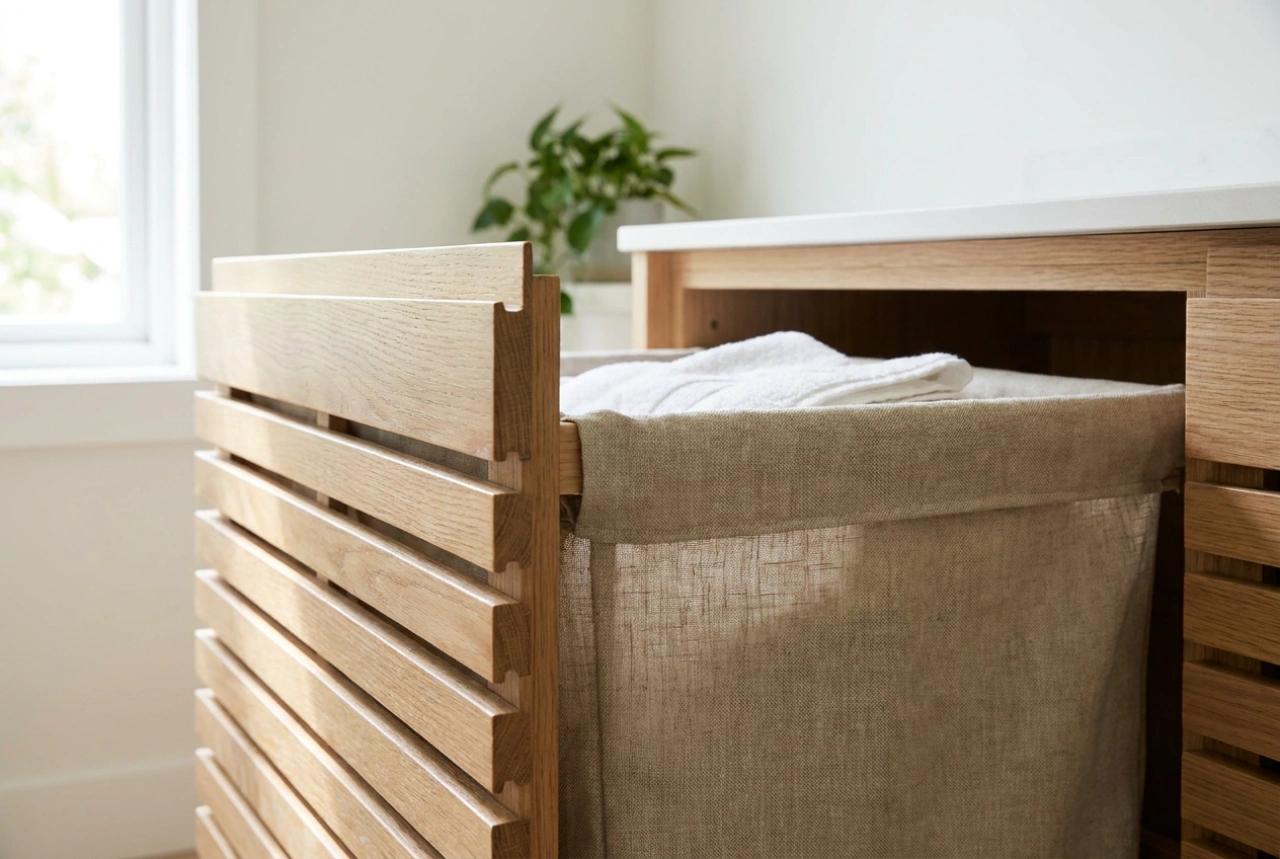
The choice of basket material plays an equally critical role in maintaining laundry hygiene. Woven cotton fibres possess a high level of natural porosity and vapor permeability compared to synthetic plastics. Cotton fibres are composed of cellulose chains containing hydrophilic hydroxyl groups. These groups allow the material to absorb micro-droplets of ambient moisture and transport them along the fibre shaft via capillary action.
This capillary movement distributes moisture across a larger surface area on the exterior of the basket, where the natural airflow in the corner void can evaporate it efficiently. In a solid plastic container, moisture from a damp towel remains trapped on the surface of the fabric, leading to rapid bacterial colonisation. A woven cotton basket acts as a semi-permeable membrane, balancing the relative humidity between the inside of the hamper and the surrounding room.
Strategic Positioning to Prevent Wall Damage and Condensation
To maximise the benefits of a round corner basket, precise positioning is essential. The basket should never make direct contact with the baseboards or the drywall. Maintaining a clearance of at least two centimetres is vital for two reasons:
- Thermal Bridging Prevention: Exterior walls are often colder than the interior room air. Direct contact between a damp basket and a cold wall creates a thermal bridge, causing rapid condensation on the plaster, which quickly leads to black mould.
- Mechanical Wear: Daily use of the basket causes micro-vibrations and shifting. Direct contact can abrade wall paint or wallpaper over time, leaving unsightly scuffs.
Additionally, consider the flooring material. If the basket is placed on a sensitive surface like engineered wood or natural stone, a small breathable barrier or a basket with raised wooden feet should be utilised. This prevents any moisture from migrating downward and causing warping or staining of the floor surface.
Hygienic Maintenance of Woven Laundry Hampers
Because woven cotton absorbs moisture, it requires periodic sanitisation to prevent the accumulation of dust, skin cells, and microscopic fungal spores. Do not wash structured woven baskets in a washing machine, as this can destroy their shape and weaken the fibres. Instead, use a dry-cleaning or targeted sanitisation method. Spritzing the interior with a seventy percent isopropyl alcohol solution neutralises bacteria on contact and evaporates rapidly without leaving the fabric wet. For odour neutralisation, a light dusting of sodium bicarbonate can be applied to the base, left for an hour to absorb acidic odour compounds, and then thoroughly vacuumed out using a brush attachment.