

An organised in-drawer spice rack fundamentally changes kitchen ergonomics by placing essential seasonings within immediate reach at a highly visible angle. By eliminating search times and protecting delicate volatile compounds from light and heat degradation, this storage solution directly optimises your cooking workflow.
The Ergonomics of Speed: Motion Economy in the Kitchen
In professional kitchen design, efficiency is determined by motion economy—minimising the physical steps and movements required to complete a task. Traditional spice storage in wall cabinets or countertop racks often forces the home cook to stretch, reach, or sift through rows of cylindrical jars. This repetitive searching interrupts the flow of cooking, particularly during high-heat phases like searing or stir-frying where seconds matter.
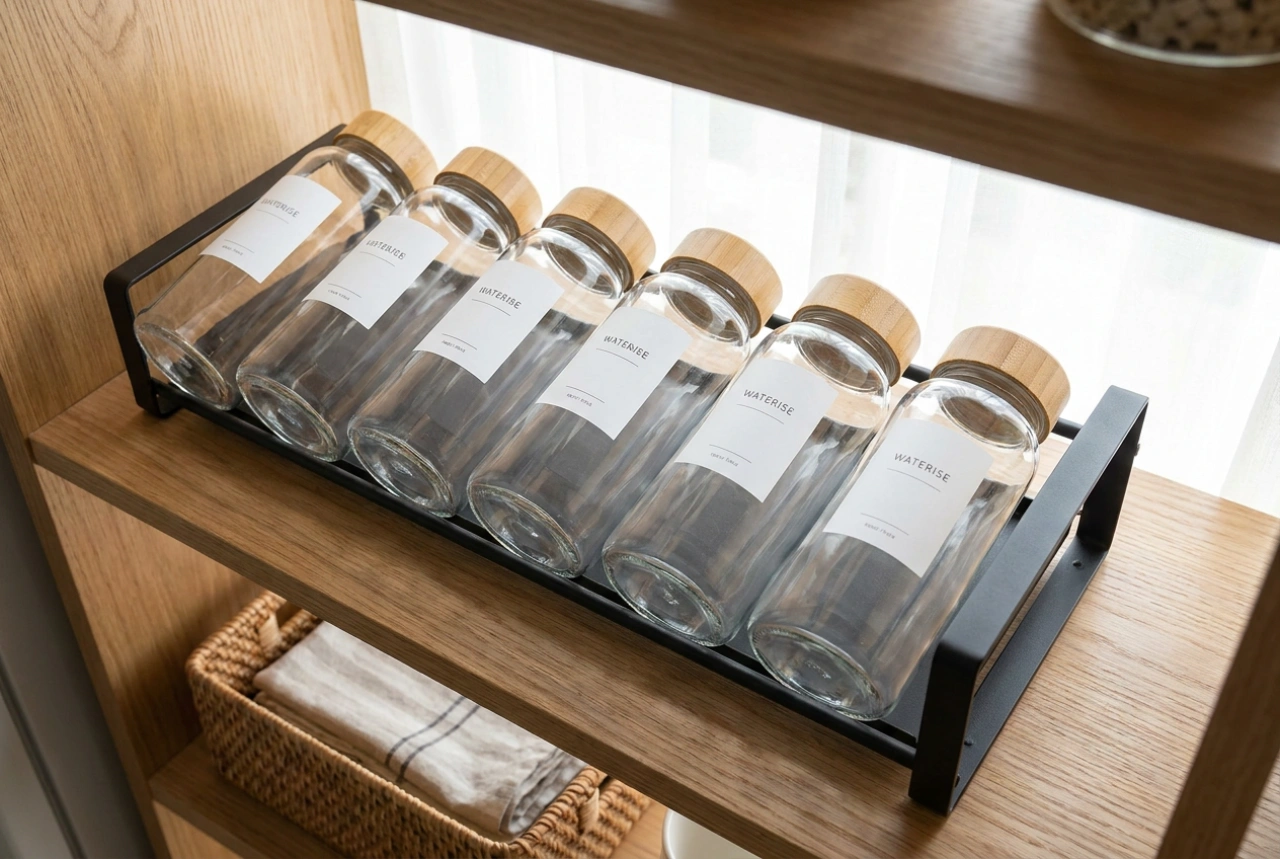
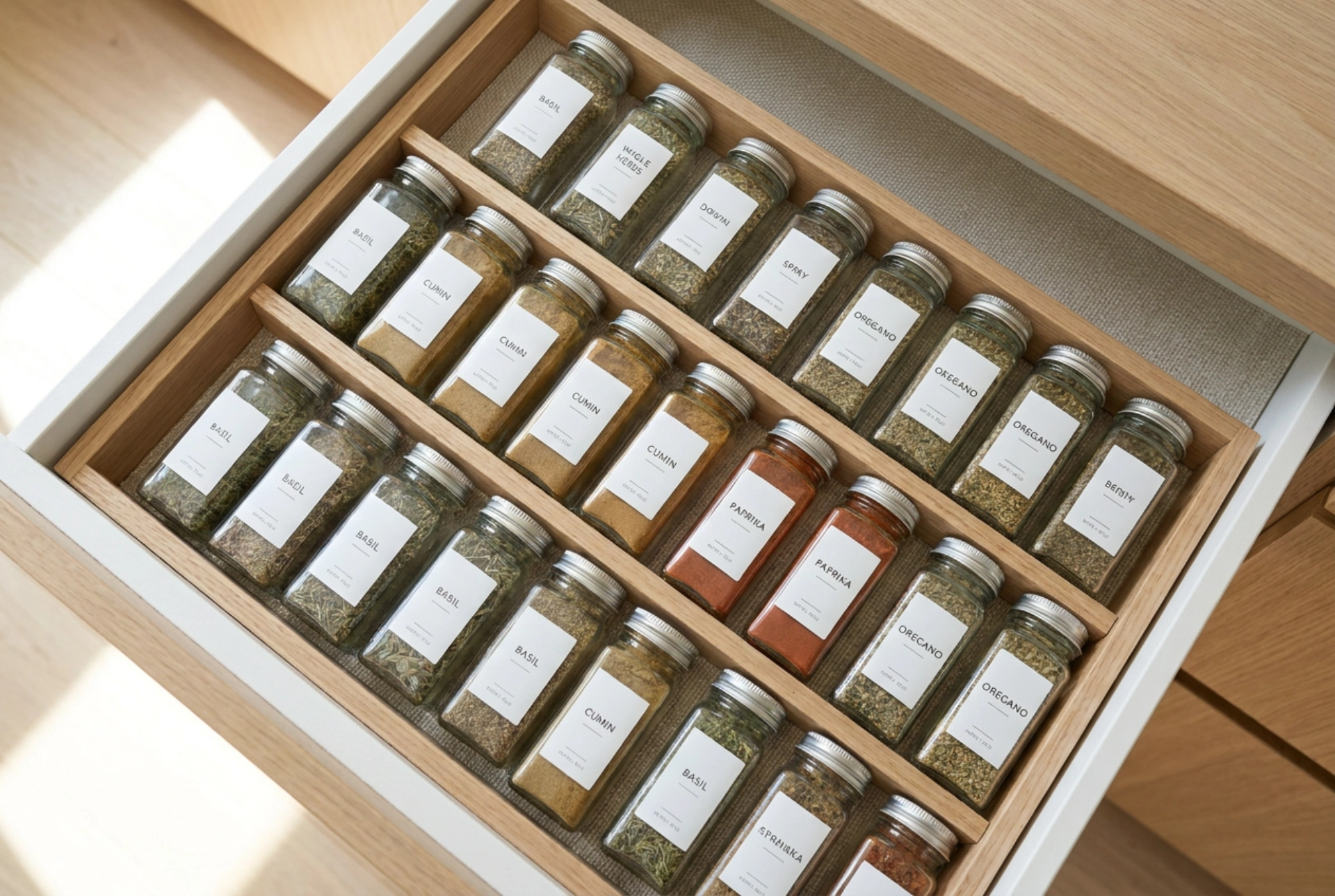
An angled in-drawer rack solves this by laying jars flat at a 30- to 45-degree angle. When you pull the drawer open, every single label is immediately visible from a standing position. This eliminates the need to pick up, read, and replace multiple jars. The kinetic movement of opening a waist-height drawer and selecting a spice requires significantly less physical effort and cognitive load than reaching above shoulder level into a dark cupboard.
Preserving Potency: The Chemistry of Spice Degradation
Beyond speed, the quality of your ingredients dictates the success of your cooking. Spices owe their distinct aromas and flavours to volatile organic compounds, such as piperine in black pepper, cinnamaldehyde in cinnamon, and curcumin in turmeric. These chemical compounds are highly sensitive to three environmental catalysts: light, heat, and oxygen.
- Light: Ultraviolet radiation triggers photo-oxidation, breaking down chemical bonds in spices and causing them to lose colour and flavour.
- Heat: Storing spices near the stovetop or oven exposes them to thermal fluctuations, accelerating the evaporation of volatile oils.
- Moisture: Steam from cooking pots can enter loosely sealed jars, causing clumping and promoting microscopic fungal growth.
By housing spices inside a closed drawer, you create a dark, temperature-stable microclimate. Keeping them away from the ambient heat of the range hood preserves these vital oils for much longer, ensuring that a single teaspoon of cumin delivers its full, intended chemical punch without requiring you to compensate with double the quantity or extended simmering times.
Aesthetic and Material Selection for In-Drawer Inserts
Choosing the right material for your drawer insert affects both durability and hygiene. The two primary options are timber (such as beech or oak) and synthetic polymers (acrylic or textured plastics).
Wooden inserts offer structural rigidity and absorb micro-vibrations when the drawer is opened and closed, preventing jars from rattling. However, because wood is porous, it can absorb spilled oils or ground spices. To maintain wooden inserts, they should be treated periodically with food-safe mineral oil and cleaned only with a dry or slightly damp microfibre cloth. Synthetic inserts, on the other hand, are non-porous and chemically inert, making them highly resistant to staining and easy to wash with standard dishwashing detergent.
Practical Layout Strategies for Rapid Access
To maximise the speed benefits of your in-drawer rack, implement a logical categorisation system. Do not rely on random placement. Instead, arrange your spices according to one of these functional methods:
- Frequency of Use: Place your daily essentials (salt, black pepper, garlic powder, paprika) in the front row closest to the drawer handle, leaving specialty spices toward the back.
- Culinary Profiles: Group spices by flavour families, such as sweet baking spices (nutmeg, cinnamon, cardamom) in one section, and savoury herbs (oregano, thyme, rosemary) in another.
- Alphabetical Order: Highly efficient for large collections exceeding twenty individual spices, ensuring a predictable search pattern every time.
Additionally, transition your spices into uniform, clear glass jars with airtight seals. Glass is an impermeable barrier that does not absorb odours or leach chemicals. Uniform sizing ensures that jars sit perfectly nested within the rack's grooves, preventing rolling and maintaining a clean, cohesive visual line that speeds up cognitive recognition.