

Organising kitchen spices in uniform glass jars does more than just create visual order; it preserves the delicate volatile oils responsible for aroma and flavour. By understanding the physics of spice preservation and using systematic decanting techniques, you can eliminate kitchen clutter and extend the shelf life of your ingredients.
The Science of Spice Preservation
Spices owe their distinct aromas and flavours to volatile organic compounds, such as piperine in black pepper, cinnamaldehyde in cinnamon, and eugenol in cloves. These compounds are highly sensitive to environmental factors: heat, light, air, and moisture. When exposed to oxygen, oxidation reactions break down these flavour molecules, rendering the spices bland over time.
Glass is the ideal material for spice storage because it is completely non-porous and chemically inert. Unlike plastic, which can absorb volatile oils and slowly leak oxygen over time, high-quality glass provides an absolute barrier to gases. However, clear glass does not protect against ultraviolet (UV) radiation. UV light acts as a catalyst for photo-degradation, breaking chemical bonds in organic compounds and causing vibrant spices like paprika and turmeric to fade and lose potency. To mitigate this, glass jars must be stored in dark drawers or cupboards rather than exposed on countertops or near heat-generating appliances like ovens and hobs.
Selecting and Preparing Your Glass Vessels
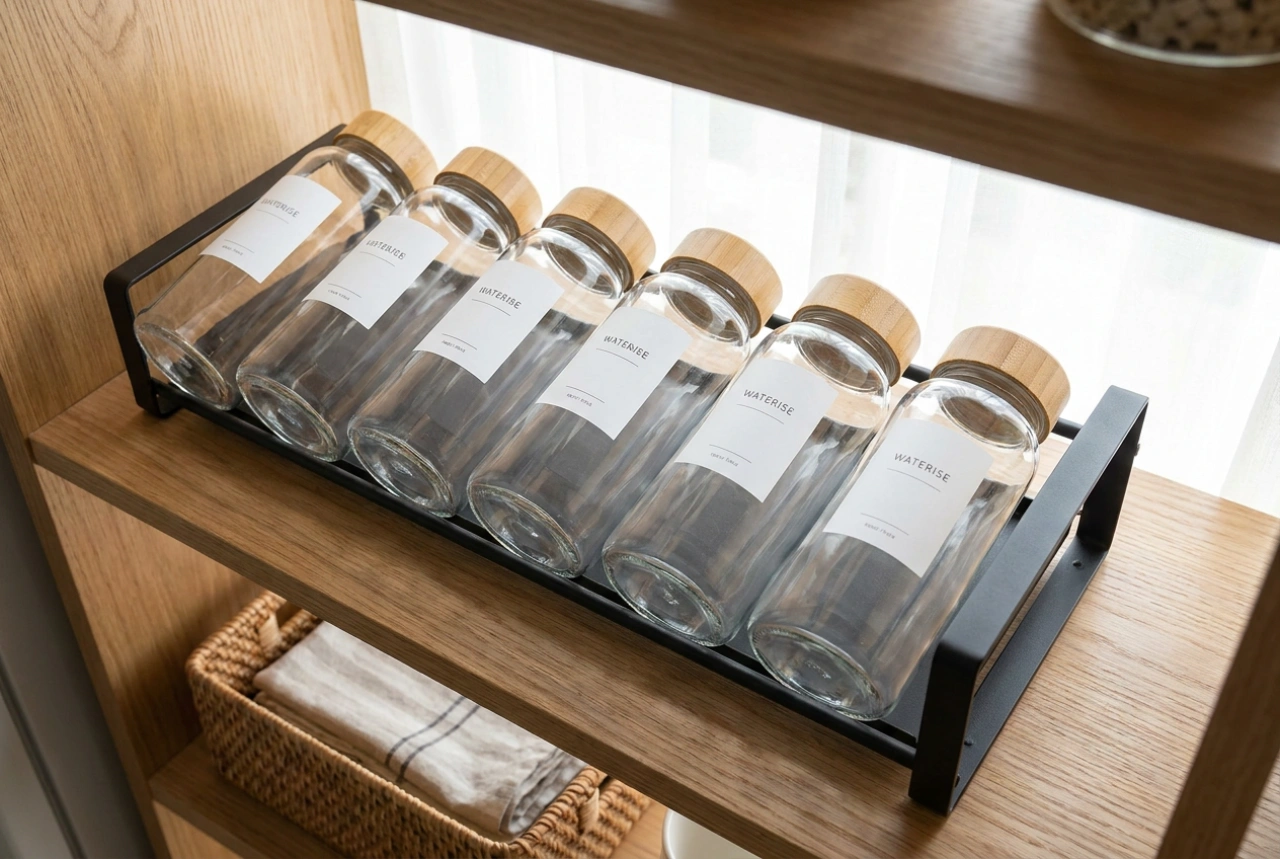
When selecting glass containers, uniformity is key to preventing spatial chaos. Standardising on one or two jar sizes allows for efficient stacking and nesting. Opt for high-density soda-lime or borosilicate glass jars fitted with airtight silicone or rubber seals. A secure seal prevents the exchange of ambient air and stops moisture from entering the vessel.
Before transferring your spices, the jars must undergo thorough cleaning and sanitisation to remove industrial residues or previous food particles. Wash the jars in warm water with a fragrance-free, neutral detergent. Crucially, the jars must be completely dry before decanting. Even a single microscopic droplet of water increases the water activity inside the jar, creating a micro-environment ripe for mould growth and causing hygroscopic spices—such as garlic powder or onion salt—to clump into solid masses. Air-dry the jars upside down on a clean rack, then place them in a warm oven at 70°C for fifteen minutes to ensure absolute evaporation of moisture.
Decanting Techniques Without the Mess
Transferring spices from commercial packets to glass jars often results in static cling and fine dust scattering across kitchen worktops. To prevent this, avoid pouring directly from the packet. Instead, use a small, dry stainless steel funnel. Stainless steel is preferable to plastic as it does not generate static electricity, allowing fine powders like ground cumin or ginger to slide smoothly into the jar without clinging to the sides.
If a funnel is unavailable, roll a piece of clean parchment paper into a cone shape. The smooth, non-stick surface of parchment paper facilitates an easy flow with minimal friction. Always decant over a clean, dry baking tray; any accidental spills are captured on the tray and can be easily reclaimed or discarded without making a mess on your worktops.
Ergonomic Layout and Labelling Systems
To maintain a clutter-free system, the arrangement of your glass jars must reflect your cooking habits. Group your spices logically using one of three proven methods:
- Alphabetical order: Best for large collections where quick, systematic retrieval is necessary.
- Frequency of use: Keeps everyday essentials like black pepper and sea salt at the front, with specialty spices stored at the back.
- Culinary profiles: Groups spices by cuisine or use, such as sweet baking spices, Mediterranean herbs, or warm curry spices.
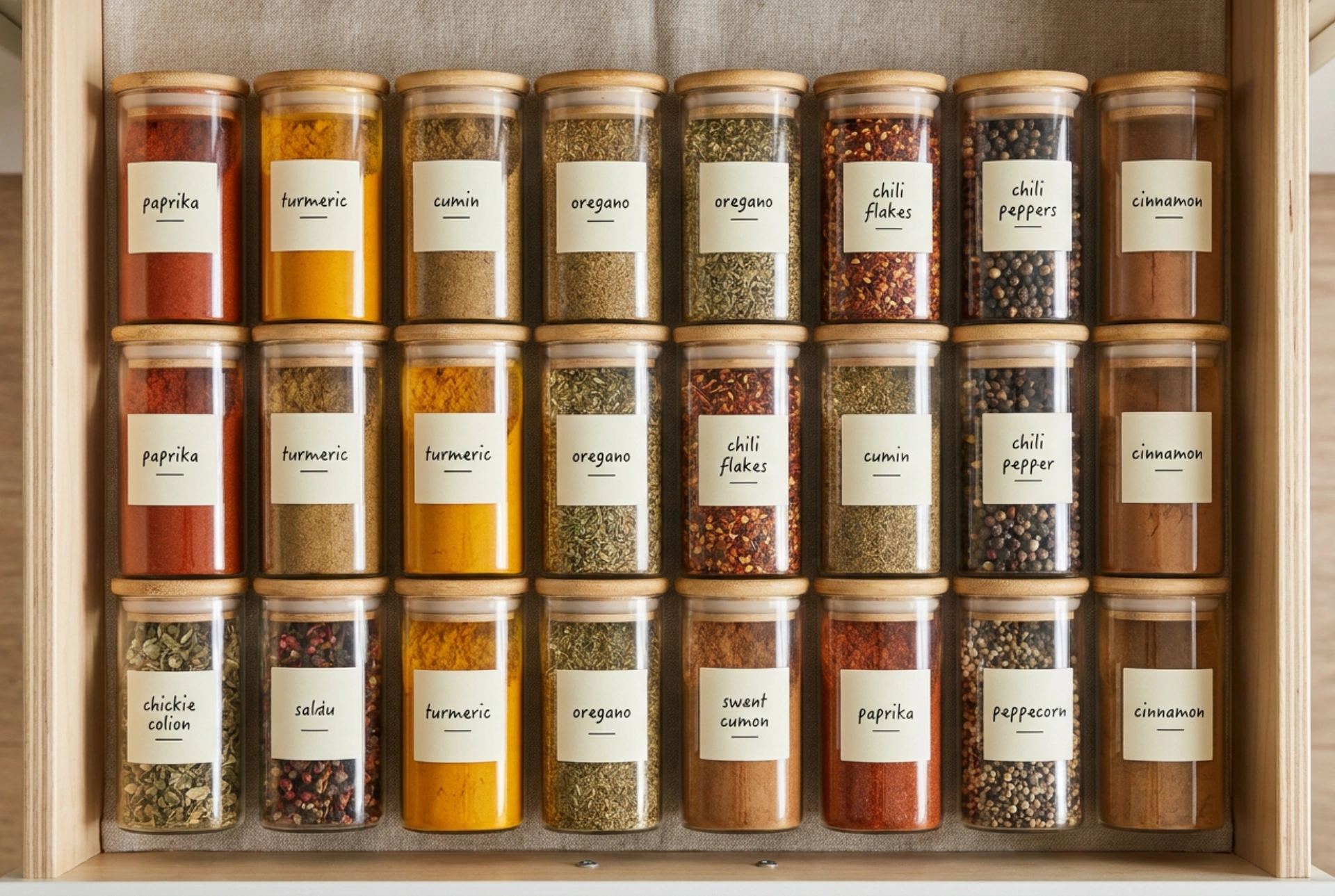
If storing jars in a deep kitchen drawer, lay them horizontally on angled profile inserts. These inserts prevent the jars from rolling when the drawer is opened and closed, preserving a neat grid system. For drawer storage, place labels on the lids for immediate overhead recognition. If storing jars vertically on a pantry shelf, place labels on the side of the glass body, facing forward. Use water-resistant, matte labels that can withstand occasional damp hands, and always write the purchase or decanting date on the bottom of the jar to monitor freshness.