

Limiting a physical photo collection to a small, curated album forces a shift from digital excess to intentional preservation. Selecting and protecting your most significant prints requires an understanding of material science, handling techniques, and chemical interactions that prevent physical degradation over time.
The Chemistry of Photo Preservation: Materials Matter
To ensure photographic prints survive for generations, the materials housing them must be chemically inert. Photographic paper and inks are highly sensitive to acidity and volatile organic compounds (VOCs). When choosing a small photo album, the primary specification to look for is "acid-free" and "lignin-free" construction.
Lignin is a natural polymer found in wood pulp. Over time, lignin breaks down and releases acidic byproducts, causing paper to yellow and become brittle. Acidic environments accelerate the fading of photographic dyes and yellowing of the paper base. Furthermore, plastic pockets must be made of chemically stable polymers like polypropylene or polyester (polyethylene terephthalate). Avoid albums containing polyvinyl chloride (PVC). PVC decomposes over time, releasing hydrochloric acid and plasticizers that create a sticky residue, bonding permanently to the emulsion of your photographs and destroying the image layer.
The Curation Process: Selecting with Intention
A compact album thrives on strict curation. Rather than printing every shot, focus on a narrative structure that represents a cohesive memory arc. A successful curation technique involves the "three-element rule" for each spread: an establishing shot (context or landscape), a detail shot (textures, objects, or close-ups), and an action or emotional focal point (portraits or candid moments). This variation in scale prevents visual fatigue and tells a complete story within a limited number of pages.
When selecting prints, evaluate the physical quality of the image. High-contrast images with well-defined midtones translate best to physical prints. Avoid printing low-light digital photos that contain excessive digital noise, as physical printing processes can muddy these dark areas, leading to loss of detail and silver-halide or ink bleeding over time.
Handling and Mounting Techniques
The physical act of assembling a photo album requires precise handling to prevent microscopic damage. Human skin naturally secretes oils (sebum) and sweat, which contain salts and amino acids. When these substances transfer to a photographic surface, they attract moisture and microscopic fungi, leading to silver mirroring or mold growth. Wearing lightweight cotton gloves during assembly is the most effective preventive measure.
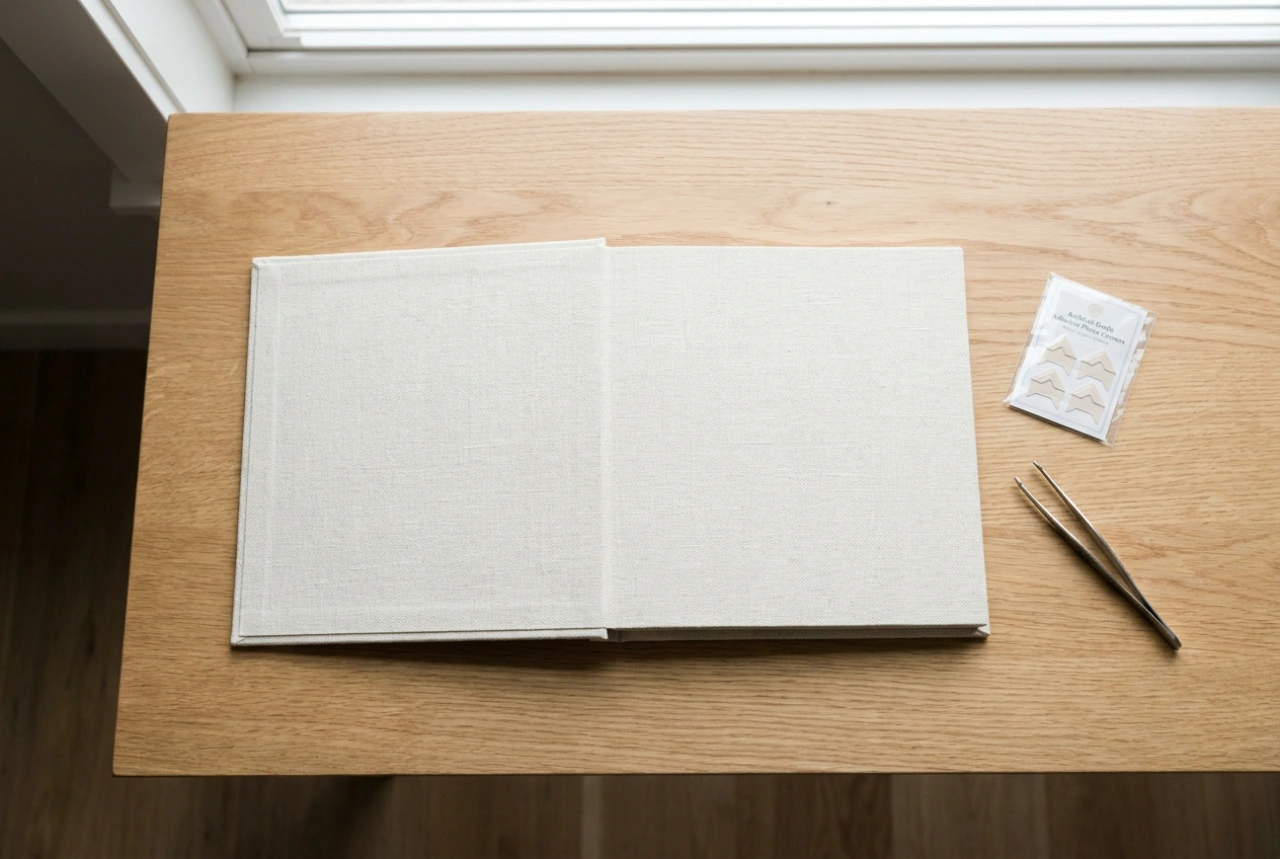
- Photo Corners: Using adhesive-free photo corners made of polyester or acid-free paper is the safest mounting method. This technique allows the print to expand and contract naturally with changes in humidity without warping, and permits easy removal of the photo without damage.
- Double-Sided Adhesive: If using adhesive strips, ensure they are certified by the Photographic Activity Test (PAT) (ISO 18916). This standard guarantees that the adhesive will not react chemically with the silver gelatin or inkjet dyes.
- Page Placement: Place photos with sufficient margins. Prevent physical friction by ensuring that opposing pages do not rub directly against each other; instead, use acid-free glassine paper inserts as protective barriers between pages.
Environmental Control and Storage
Even the highest quality album will degrade if stored in unstable environmental conditions. The three main catalysts of photographic decay are ultraviolet (UV) radiation, high humidity, and temperature fluctuations.
Keep albums out of direct sunlight. UV rays break down the molecular bonds of dyes, causing rapid fading. Relative humidity (RH) should ideally be maintained between 30% and 50%. High humidity (above 60%) promotes fungal growth and softens the gelatin emulsion, making prints sticky and prone to adhering to adjacent surfaces. Conversely, extremely low humidity (below 15%) makes paper and gelatin brittle, leading to cracking. Store your album flat rather than vertically to prevent the pages from sagging under their own weight and causing structural stress to the binding.