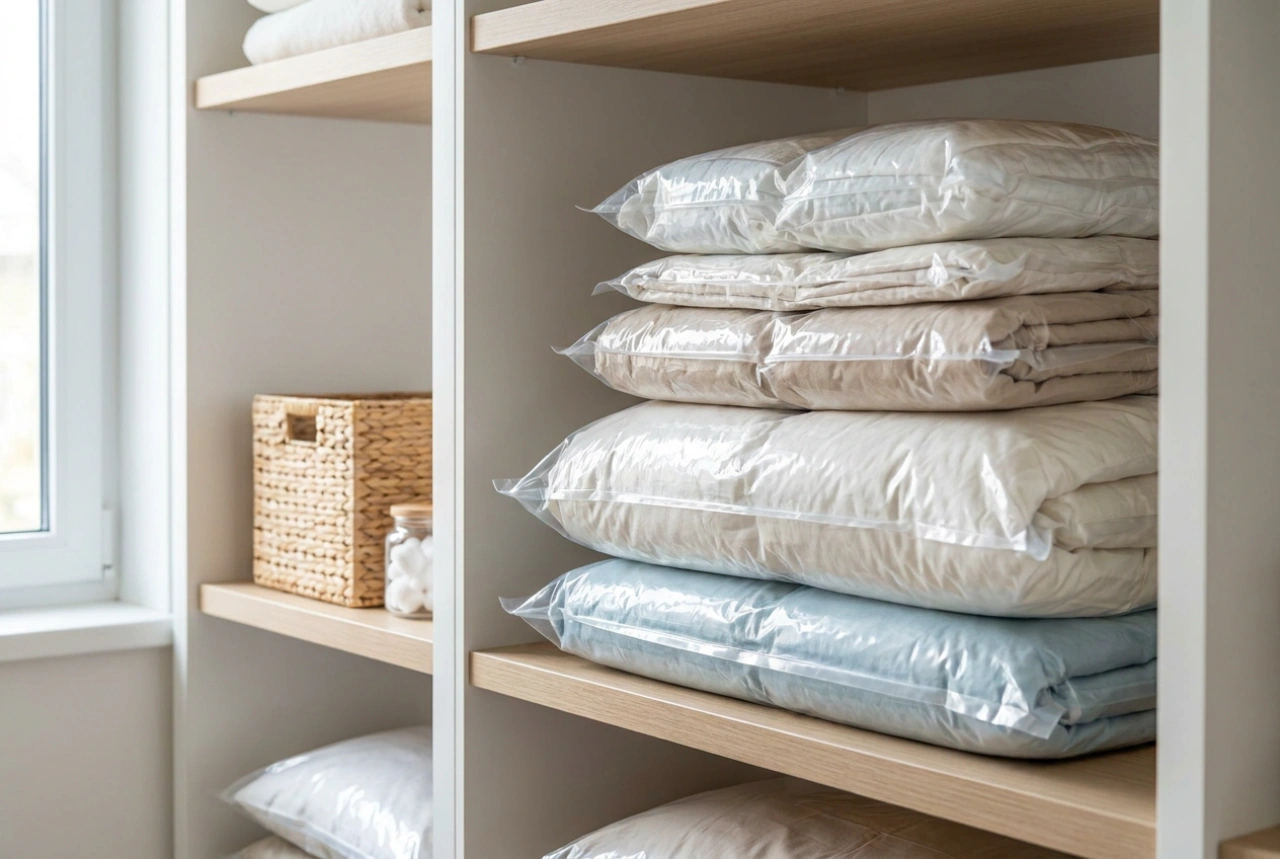


Compressing bulky bedding into vacuum storage bags is an excellent space-saving technique, but it often leaves fabrics with stubborn, deep-set creases that are incredibly difficult to iron out. Understanding the relationship between fabric moisture, fiber structure, and compression pressure allows you to store your linens safely and keep them pristine upon unpacking.
The Molecular Mechanics of Creasing
To prevent permanent creasing, we must first understand why it occurs. Natural fibers like cotton, linen, and wool are made of polymer chains held together by hydrogen bonds. These bonds are highly sensitive to moisture and pressure. When bedding is folded and subjected to the intense pressure of a vacuum bag, the fibers are forced into sharp angles. If there is even a trace of moisture present, these hydrogen bonds break and reform in these bent positions, effectively locking the crease into the physical memory of the fabric. Synthetic fibers like polyester are less prone to hydrogen bonding but can still suffer from mechanical deformation under prolonged, high-pressure compression, especially if exposed to temperature fluctuations during storage.
The Critical Importance of Absolute Dryness and Cooling
The most common mistake when vacuum packing textiles is storing them immediately after ironing or while they still hold residual atmospheric moisture. Bedding that feels dry to the touch can still contain up to 8-12% humidity. Before packing, ensure your linens are completely bone-dry. If you iron your sheets to sanitize them, let them cool completely on a flat surface or a drying rack for at least two to three hours. Packing warm fibers locks in the shape of any fold instantly. Allowing the fabric to cool down to room temperature stabilizes the polymer chains, making them far more resilient to the impending pressure of compression.
The Soft-Roll Folding Method
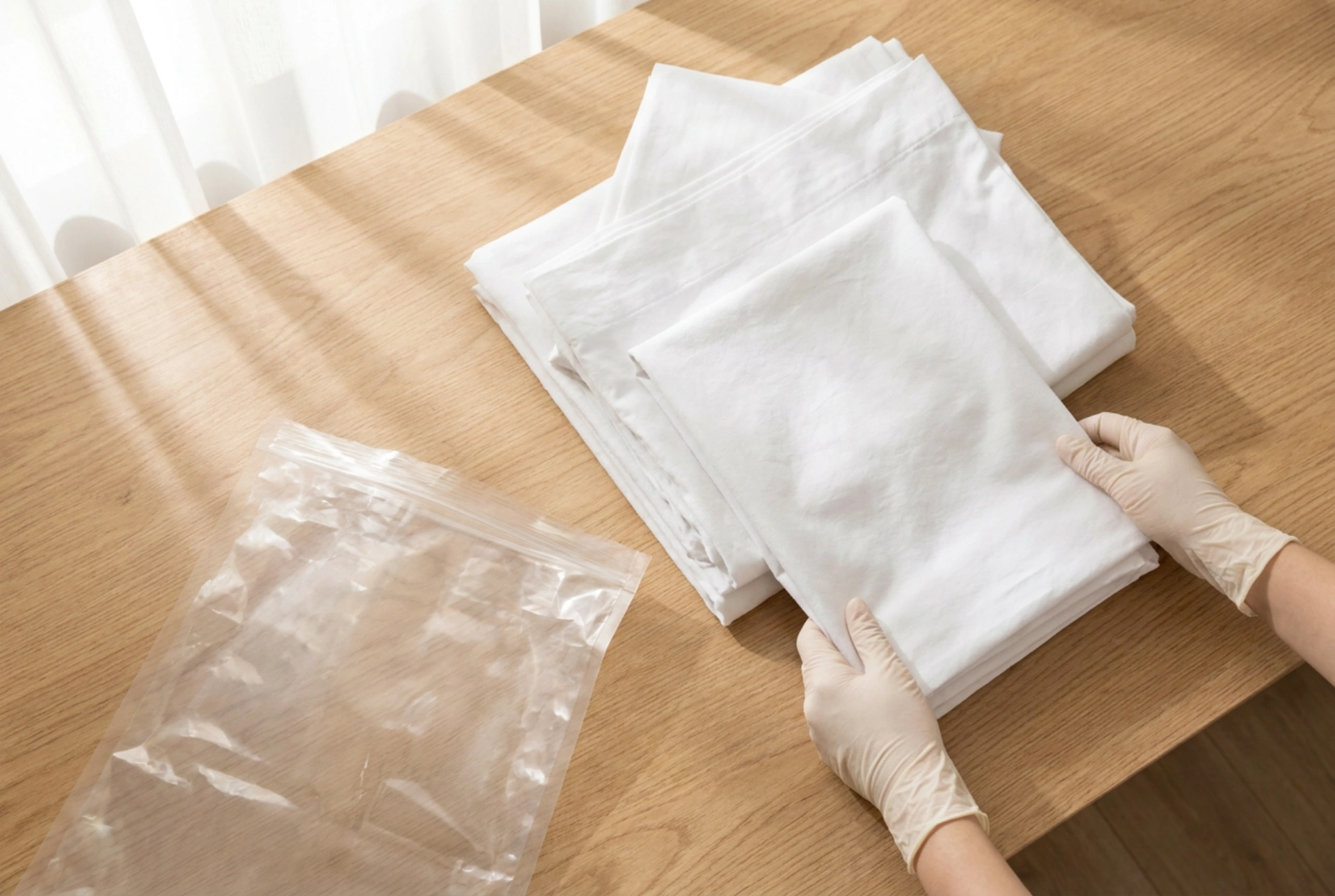
Sharp, hard-pressed folds are the primary culprits behind permanent creases. Instead of folding your sheets and duvet covers into tight, flat squares, transition to the soft-roll method. First, fold the bedding loosely into a wide rectangle, ensuring all hems and seams lie flat to avoid creating localized high-pressure points. Once folded loosely, roll the textile gently from one end to the other, creating a soft cylinder. This cylindrical shape distributes the mechanical pressure of the vacuum bag evenly across a curved surface rather than concentrating it along sharp, folded edges. When packing multiple sets, place the rolled bundles side-by-side in a single layer inside the bag.
The Golden Rule of Compression: Stop at Eighty Percent
It is highly tempting to vacuum all the air out of the storage bag until it becomes as hard as a stone. However, complete air extraction is highly damaging to natural fibers. Over-compression crushes the microscopic air pockets within the fibers, causing structural damage that reduces the loft and softness of your bedding permanently, especially for down-filled duvets or thick quilted covers. To protect your textiles, extract only about 80% of the air. The bag should be compressed and firm enough to save space, but still retain a slight degree of flexibility. This remaining cushion of air prevents the fibers from being locked into a rigid, deformed state.
Unpacking and Fiber Restoration
When you remove your bedding from seasonal storage, the fibers will naturally require a brief period to recover their original volume and shape. Shake the linens vigorously to introduce air back between the fibers. Hang them in a well-ventilated room or a slightly humid environment, such as a bathroom after a warm shower. The ambient humidity gently breaks the temporary hydrogen bonds formed during storage, allowing the fibers to relax and return to their flat state. Alternatively, tumbling the linens in a dryer on a no-heat or low-heat air-fluff cycle for ten minutes with a dry, clean wool ball will restore the natural loft and smooth out any minor surface wrinkles without the need for intensive ironing.