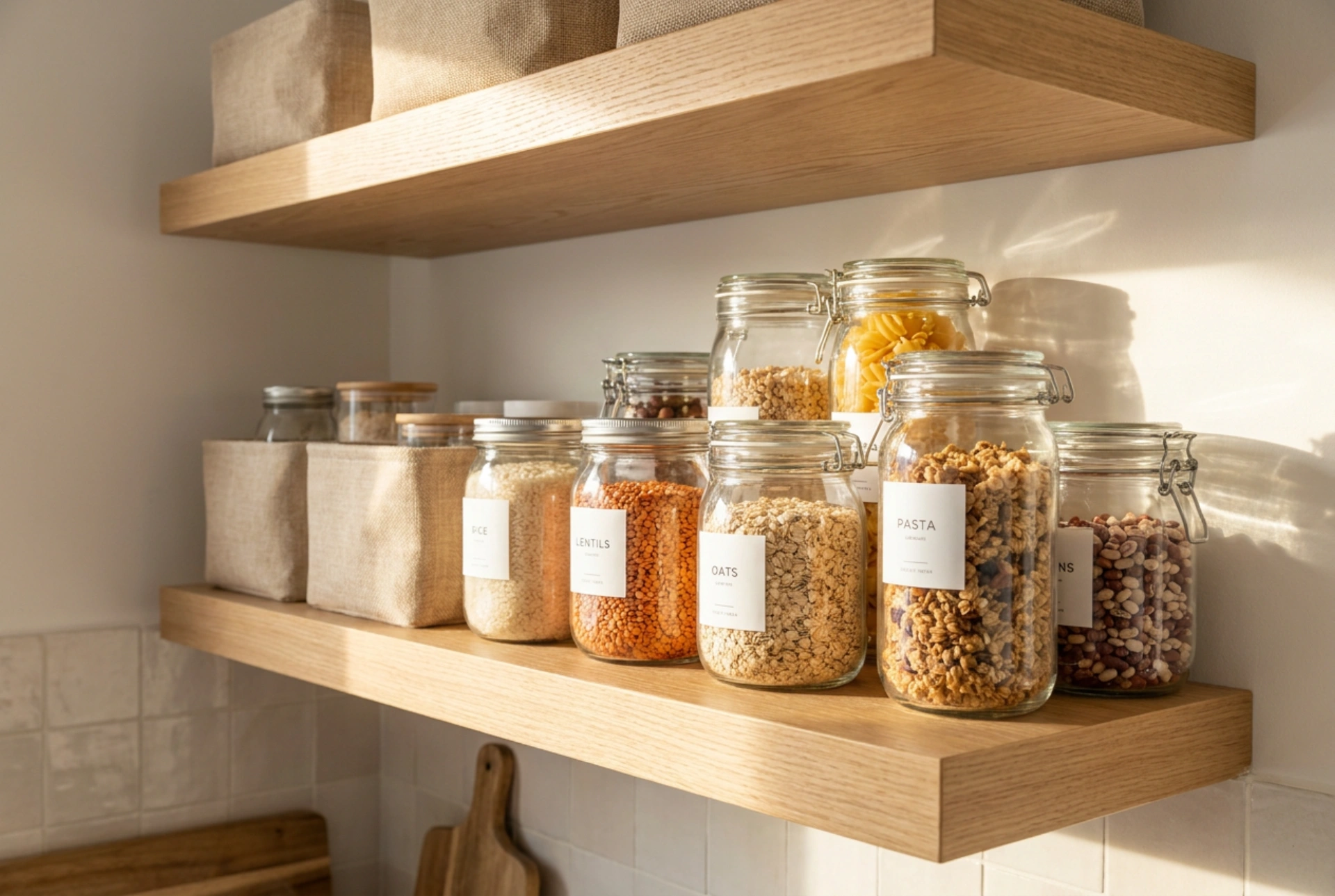


Creating functional, visually uniform labels for household storage is more than an aesthetic choice; it requires understanding the chemical and physical compatibility between the adhesive, the substrate, and the environmental conditions. Choosing the correct combination of label material, adhesive type, and printing technology ensures that your labels remain legible, water-resistant, and securely bonded over years of use.
Selecting the Right Label Material: Paper vs. Synthetic Polymers
The choice of label material depends heavily on where the container will be stored. Paper labels are economical and easy to print using standard office equipment, but they lack resistance to moisture and oils. When exposed to humidity in a pantry or kitchen, paper fibres swell, causing the print to bleed and the edges to curl.
For high-moisture environments, synthetic polymer films such as polyester (PET) or polypropylene (PP) are superior. These plastics are hydrophobic, meaning they do not absorb water, and possess high tensile strength. Polyester labels resist tearing and can withstand exposure to cleaning chemicals, making them ideal for kitchen jars and utility room boxes. Polyethylene (PE) is highly flexible and conforms well to squeezable plastic bottles, whereas rigid polypropylene works best on flat glass or hard plastic surfaces.
Matching Printing Technology to Material and Environment
Not all printers are compatible with every label sheet. Understanding how different printing methods interact with materials prevents smudging and fading:
- Inkjet Printing: Inkjet printers deposit liquid ink droplets onto the surface. If printing on synthetic materials, you must use sheets specifically coated for inkjet printing; otherwise, the ink cannot penetrate the non-porous plastic and will remain wet. Pigment-based inks offer significantly better water and UV resistance than dye-based inks, which fade quickly when exposed to sunlight.
- Laser Printing: Laser printers use static electricity to transfer dry toner powder to the sheet, which is then fused using high-heat rollers. Laser prints are highly durable, dry instantly, and resist water. However, you must use heat-stable laser-compatible synthetic sheets; standard plastics can melt inside the printer, damaging the mechanism.
- Thermal Transfer Printing: Using a heated ribbon to melt pigment onto the label, this standard creates highly resilient prints. It is ideal for long-term organization but requires dedicated desktop labelling machines.
The Chemistry of Adhesives: Permanent vs. Removable
Adhesives used on labels are Pressure-Sensitive Adhesives (PSAs). They do not undergo a chemical reaction to cure; instead, they rely on physical contact and pressure to flow into the microscopic crevices of the container\'s surface. There are two primary chemical bases for household label adhesives:
Acrylic-based adhesives: These offer excellent resistance to UV light, temperature fluctuations, and chemical exposure. They build a stronger bond over the first 24 hours and do not yellow over time. They are highly compatible with glass and high-energy plastics.
Rubber-based adhesives: These have high initial tack but are susceptible to degradation from UV rays and elevated temperatures. They can degrade and leave sticky, gummy residues when removed.
For containers that may be repurposed, select removable acrylic adhesives. These provide enough cohesion to stay in place but have lower peel adhesion, allowing clean removal without leaving sticky residue. If permanent labels are chosen, removing them later may require organic solvents like isopropyl alcohol to dissolve the polymer chains of the adhesive.
Surface Preparation and Application Protocol
To ensure a long-lasting bond, the surface of the glass or plastic container must be prepared at a molecular level. Even invisible oils from fingers or factory release agents can dramatically reduce adhesive contact.
First, clean the surface with isopropyl alcohol (99% concentration). Avoid standard glass cleaners, as they often contain surfactants or silicones that leave a thin, invisible film, preventing the adhesive from making direct contact with the substrate. Allow the alcohol to evaporate completely.
When applying the label, do so at room temperature (ideally between 15°C and 22°C). Low temperatures increase the viscosity of the adhesive, making it glass-like and unable to flow into the surface textures. Apply pressure firmly starting from the centre and smoothing outwards to the edges. This physical pressure activates the PSA, forcing it to wet the surface and initiate the molecular bonding process.