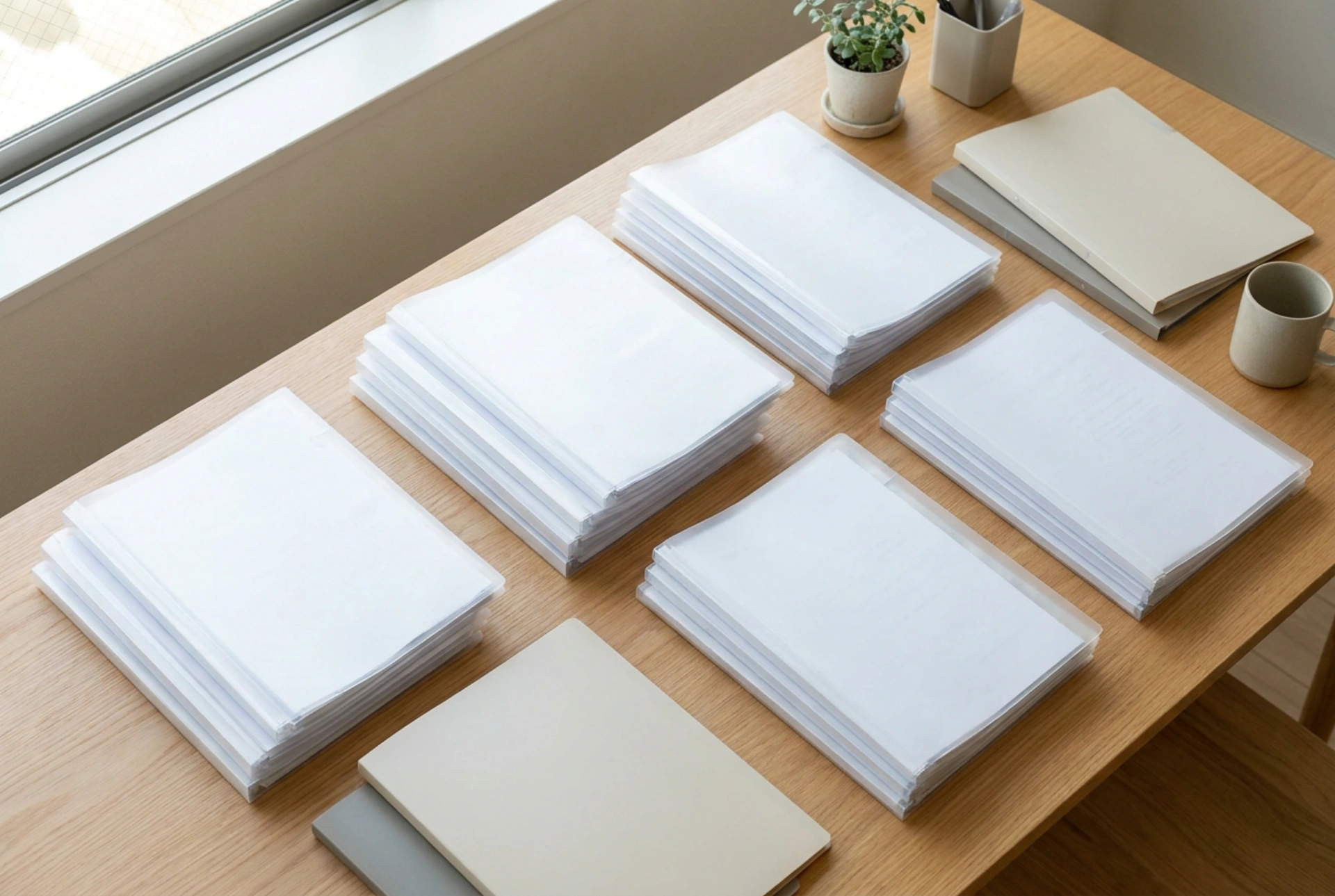


Rigid sheet protectors are highly effective tools for safeguarding valuable family certificates, historical letters, and vital contracts from mechanical wear and chemical degradation. Achieving professional-grade preservation at home requires understanding the fundamental material science of polymers and the physical laws of paper conservation.
The Chemistry of Plastics: Why Material Choice is Critical
Not all plastic sleeves are created equal, and using the wrong polymer can actively destroy your documents over time. The primary culprit in document degradation is polyvinyl chloride (PVC). PVC is naturally rigid and brittle; to make it flexible and usable for stationery, manufacturers mix in chemical plasticisers, such as phthalates. Over time, these plasticisers migrate to the surface of the sleeve, reacting with the ink on your documents, causing it to lift, smear, or fuse permanently to the plastic. Additionally, degrading PVC releases trace amounts of hydrochloric acid, which accelerates the acid hydrolysis of paper cellulose, causing sheets to turn yellow and brittle.
For safe, long-term archiving, you must select chemically inert polymers:
- Polypropylene (PP): A highly stable, acid-free, and copy-safe polymer. It does not contain harmful plasticisers, making it excellent for everyday archival needs.
- Polyester (PET): The gold standard for archival preservation. It is exceptionally clear, rigid, and chemically inert, offering maximum protection against chemical reactions and physical distortion.
Mechanical Protection and Force Distribution
The primary physical benefit of rigid document sleeves is their ability to resist bending forces. Thin, flexible sleeves merely protect against dust and light spills but offer no structural support. When documents are stored vertically or handled frequently, flexible plastics allow the paper to sag, crease, and curl under its own weight.
Rigid sleeves distribute mechanical pressure evenly across the entire surface of the document. When stored vertically in an archival box, the rigid polymer walls support the weight of the paper, preventing gravity from causing structural warping. When handling documents, the rigid barrier prevents the direct transfer of natural skin oils, moisture, and dirt, which can feed fungal spores and attract damaging micro-organisms.
The Correct Insertion Technique and Static Management
Inserting fragile, aged paper into a tight plastic sleeve can easily lead to torn edges or crumpled corners. Synthetic polymers naturally accumulate electrostatic charges, which pull the paper toward the inner walls of the sleeve, causing friction and resistance during insertion.
To safely insert a delicate document, follow this controlled method:
- The Guide Sheet Method: Place a clean sheet of heavy, acid-free cardstock slightly larger than your document directly behind it. This acts as a rigid guide.
- Controlled Flexing: Gently flex the rigid sleeve slightly to bow the opening, creating a small air gap between the two plastic sheets.
- Smooth Insertion: Slide the guide sheet and document together into the sleeve. Once fully inserted, carefully slide the guide sheet out while holding the document in place. This minimises direct friction on the historical paper.
Managing the Microclimate and Moisture
While plastic sleeves protect against external liquid spills, they can also trap ambient moisture if not managed correctly. If a document is sealed in a high-humidity environment, the moisture cannot escape, creating a microclimate that facilitates mold growth and paper degradation.
Always ensure your archiving workspace has a relative humidity level between 35% and 50%. Allow documents that have been stored in damp environments to acclimate to a dry, air-conditioned room for 24 hours before sealing them. Choose top-loading sleeves that remain open at the top, allowing the internal microclimate to naturally balance with the ambient air, rather than completely airtight pockets which pose a higher risk of moisture condensation.