

Installing a self-adhesive towel rail without drilling requires meticulous surface preparation to ensure the molecular bond between the adhesive and the wall remains unbroken under load.
The Physics of Chemical Adhesion
Self-adhesive bathroom accessories typically utilise pressure-sensitive adhesives (PSAs), often backed by an acrylic foam carrier. Unlike liquid glues that cure by chemical reaction or evaporation, PSAs rely on van der Waals forces—weak physical attractions that occur at the molecular level when two surfaces are brought into intimate contact. For these forces to hold the weight of a damp towel, the adhesive must achieve maximum "wet-out," which means it must flow into every microscopic pore of the wall surface. Any barrier, such as dust, grease, or moisture, prevents this molecular contact, drastically reducing the load-bearing capacity of the hanger.
Microscopic Decontamination: Removing Grease and Dust
Even a wall that looks perfectly clean is covered in invisible layers of dust, skin oils, and airborne surfactants from aerosols or cooking. Preparing the surface requires a solvent that dissolves lipids without dissolving the paint or tile glaze underneath. Isopropyl alcohol (IPA) diluted to a 70% concentration is the industry standard for this task. The water content in 70% IPA slows evaporation slightly, allowing the alcohol to break down oily contaminants more effectively than 99% pure alcohol, which evaporates too rapidly to lift the debris.
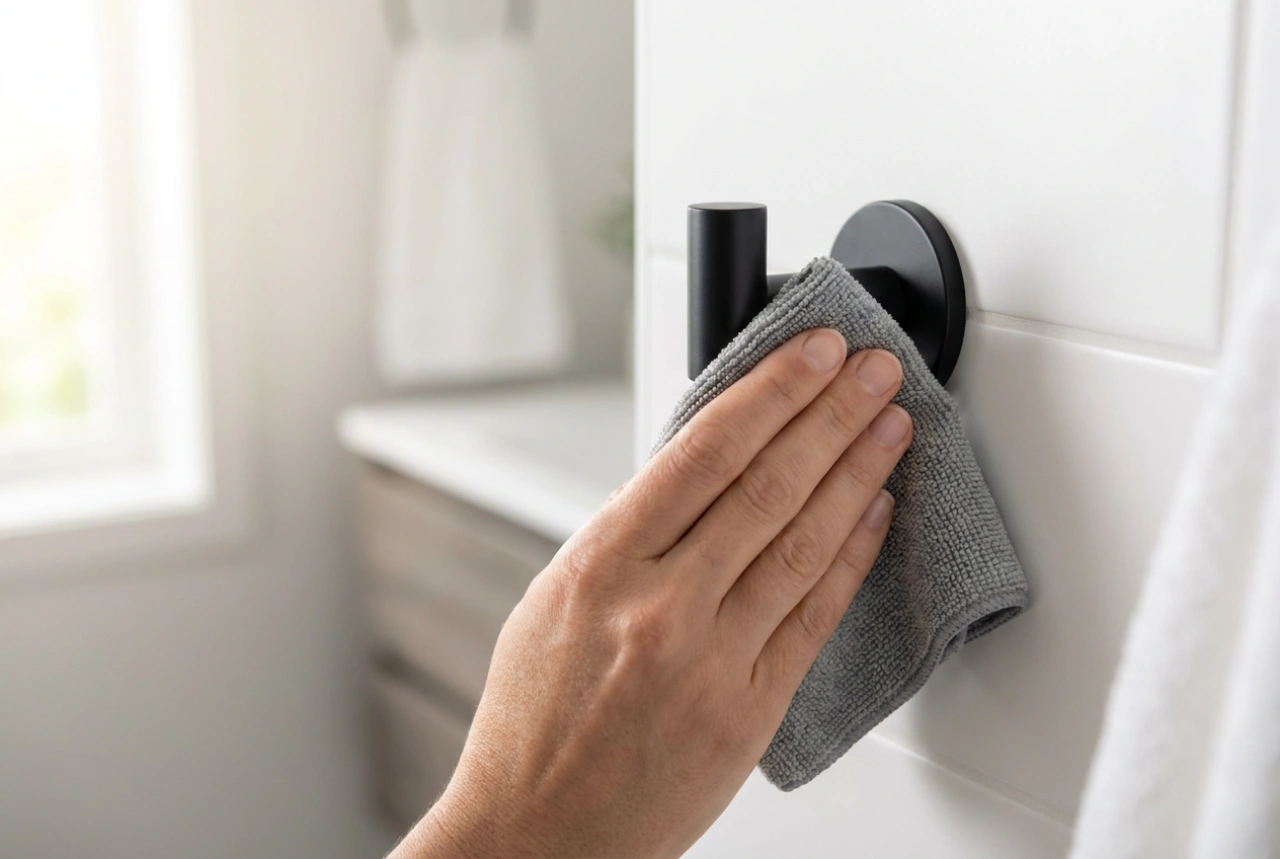
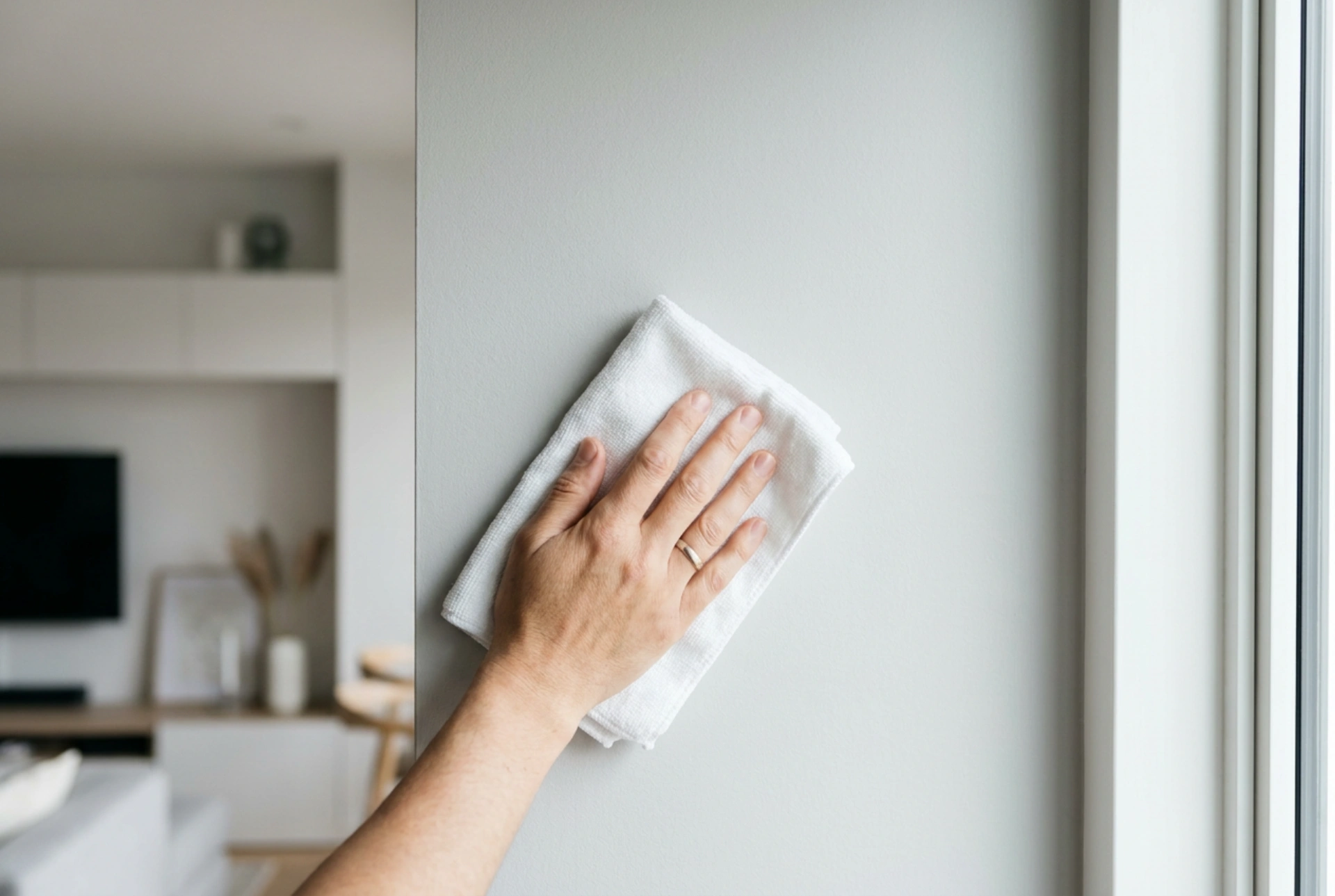
- First wipe: Spray the IPA onto a clean, lint-free microfiber cloth (never directly onto the wall to avoid oversaturating the plaster) and wipe firmly in a circular motion to lift grease.
- Second wipe: Use a dry section of the cloth to remove the dissolved residue before the solvent evaporates, preventing the contaminants from redepositing onto the surface.
- Drying time: Allow at least five minutes for any residual moisture to evaporate completely. Moisture acts as a barrier, preventing the adhesive polymer chains from bonding with the wall substrate.
Optimising Bond Strength: Temperature and Mechanical Pressure
Viscoelastic materials like acrylic adhesives are temperature-sensitive. If the wall or the adhesive tape is too cold (typically below 15°C), the polymer chains become rigid, resisting the deformation necessary to wet the surface. Warm the wall area and the adhesive pad gently with a hairdryer on a low setting for 10-15 seconds. This lowers the viscosity of the adhesive, encouraging it to flow into the wall’s texture.
When applying the hanger, apply firm, uniform pressure across the entire surface of the adhesive pad for at least 30 to 60 seconds. This mechanical force is essential to trigger the wet-out process, forcing out air pockets that would otherwise reduce the active contact area. Press from the centre outwards to ensure no air remains trapped between the adhesive and the wall.
Why Immediate Loading Leads to Failure
The most common cause of adhesive failure is premature loading. Although the bond feels strong immediately after application, the polymer chains require time to reorganise and flow deeply into the microscopic crevices of the substrate. This process, known as curing or wetting out, takes time. Under standard room conditions, an acrylic adhesive pad reaches only about 50% of its ultimate strength after 20 minutes, 90% after 24 hours, and 100% after 72 hours. Hanging a heavy, damp towel before this molecular flow is complete will cause the adhesive to peel away, rendering the bond permanently ineffective.