

Proper storage of pet food is critical to prevent lipid oxidation, fungal proliferation, and pest infestation. Understanding the chemistry of food degradation and selecting the correct container materials ensures your dog’s meals remain fresh, safe, and nutritionally intact.
The Science of Pet Food Spoilage: Air, Light, and Moisture
Dry dog food, or kibble, contains fats and oils that are highly susceptible to lipid oxidation when exposed to atmospheric oxygen. This chemical reaction breaks down essential fatty acids into peroxides, eventually forming volatile aldehydes and ketones. These compounds produce a rancid smell, reduce the nutritional quality of the food, and can cause digestive upset. Furthermore, environmental humidity introduces moisture that allows mold spores, such as Aspergillus species, to germinate and release hazardous mycotoxins.
Ultraviolet (UV) radiation also plays a destructive role. Exposure to natural or artificial light accelerates photo-oxidation and degrades light-sensitive vitamins, particularly vitamin A, vitamin E, and the B-complex group. To preserve chemical stability, food must be stored in a cool, dark, and airtight environment.
Material Science: Selecting the Ideal Container
The physical properties of your storage container directly affect the rate of food degradation. Choosing the right material is a balance of porosity, light penetration, and chemical inertness.
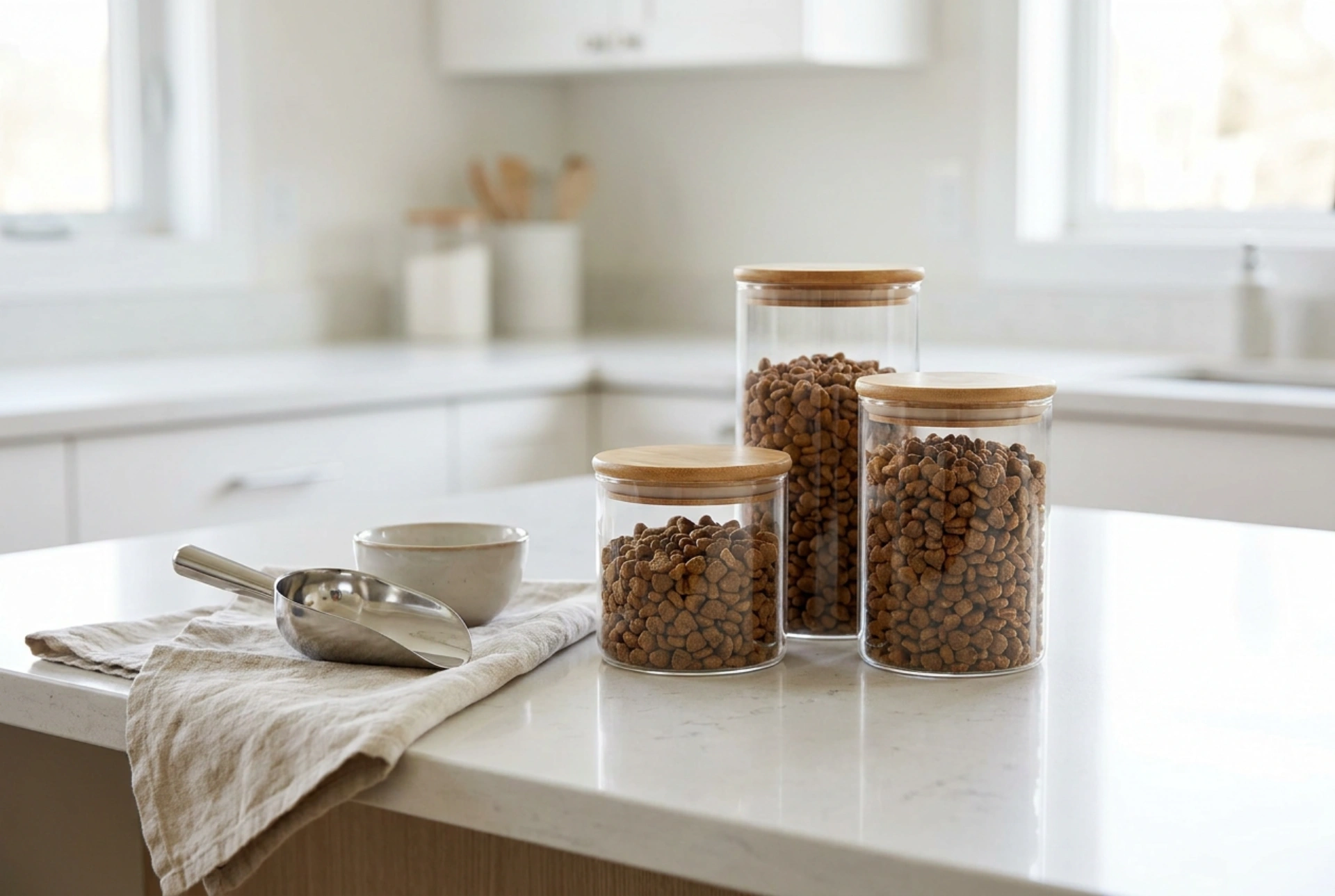
- Glass Canisters: Glass is completely non-porous and chemically inert. It does not absorb lipids, moisture, or organic compounds, meaning it cannot harbour lingering rancid oils from previous batches. To counter the issue of light exposure, glass containers should be kept in dark cupboards or made of dark, amber-coloured glass.
- Stainless Steel: High-grade stainless steel (such as 304 or 316 food-grade steel) is highly durable, non-porous, and completely opaque, protecting the food from all UV degradation. It resists scratching, which prevents microscopic pockets where bacteria can multiply.
- Food-Grade Plastics: If utilising plastic containers, ensure they are made of high-density polyethylene (HDPE) or polypropylene (PP). However, plastics are naturally more porous than glass or metal. Over time, the abrasive edges of dry kibble scratch the plastic walls. These micro-scratches trap fats and moisture, creating a breeding ground for bacterial biofilms that cannot be easily washed away.
Hygienic Portioning and the Prevention of Cross-Contamination
The process of transferring food from the container to the feeding bowl is a common point of biological contamination. Simple changes in mechanical handling can dramatically improve hygiene.
Always use a dedicated stainless steel or ceramic scoop. Avoid plastic scoops, as they scratch easily and can harbour microscopic food debris. Never use your bare hands to handle or portion dry pet food. Human skin transfers moisture, natural sebum, and external bacteria directly onto the dry kibble, triggering localized spoilage and bacterial growth within the storage bin.
Additionally, strictly enforce the First-In, First-Out (FIFO) principle. A common mistake is pouring a fresh bag of food directly on top of the remaining kibble in a half-empty container. This inoculates the fresh batch with degraded, oxidized fats and bacterial colonies from the bottom of the bin. Always empty the container completely, sanitise it, and ensure it is fully dry before refilling.
Cleaning Protocols and Moisture Management
A rigorous washing routine is necessary to eliminate microscopic oily residues and bacterial biofilms. Wash all food containers and portioning scoops at least once every two weeks using hot water (above 60°C) and a mild, fragrance-free surfactant. For glass and stainless steel containers, periodic rinsing with a diluted oxygen-based bleaching agent can sterilise the surfaces without leaving harmful chemical residues.
Crucially, the container must be absolutely dry before refilling. Even a single micro-droplet of trapped water raises the local relative humidity within the sealed container, creating a humid micro-climate that triggers fungal growth and mold. Let all parts air-dry completely in a well-ventilated space for several hours before introducing new food.