

Keeping a lunch box and its accompanying cutlery clean, organised, and free from cross-contamination requires understanding the physical behaviour of transported food and the material science of storage containers.
The Mechanics of Food Migration and Compartmentalisation
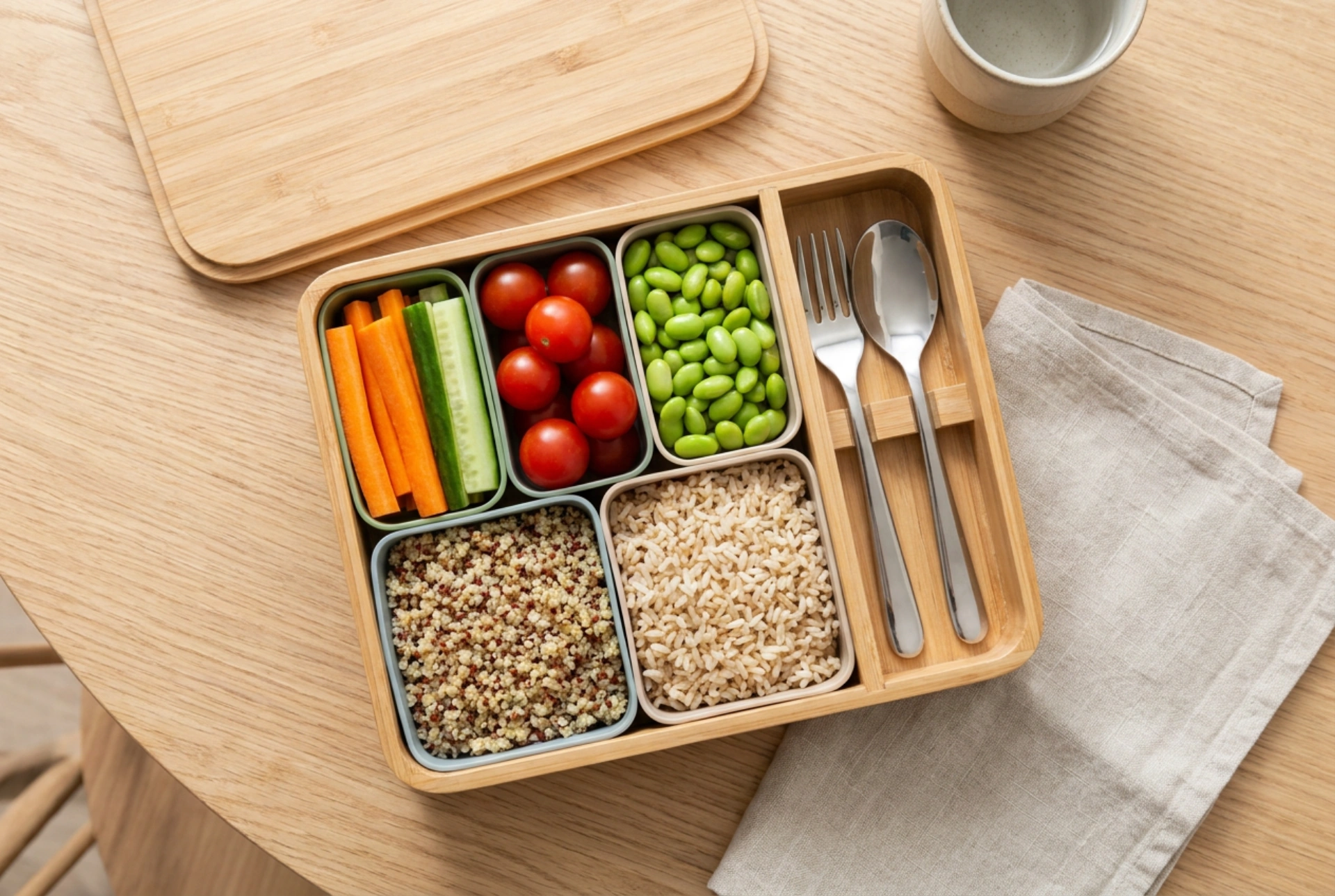
When transporting a lunch box, kinetic energy from movement causes liquids and semi-solids to shift. Without proper physical barriers, capillary action draws moisture across surfaces, leading to soggy textures and mixed flavours. Using a bento-style box with rigid, integrated dividers or flexible silicone cups creates high-friction barriers that contain food within its designated zones.
To prevent leaks between compartments, look for containers with silicone seals moulded directly into the lid. Silicone is a highly elastomeric polymer that conforms to the edges of the dividers under tension, creating an airtight and watertight seal. When packing, place dry grains and high-density proteins in the main compartments, and relegate high-viscosity liquids, like dressings, to separate, dedicated leak-proof screw-top pots.
Cutlery Protection and Material Interactions
Storing cutlery directly inside the food compartment is a common mistake that compromises both food safety and the longevity of your container. Metal forks and spoons rattling against plastic or silicone walls cause micro-scratches. These microscopic abrasions damage the smooth polymer surface, creating ideal breeding grounds for bacterial biofilms that are exceptionally difficult to sanitise.
Always opt for a lunch box with a dedicated, isolated cutlery slot—either in a top lid compartment or a separate fabric wrap. If using stainless steel cutlery, ensure it is high-grade (such as 18/10 or 18/8 chromium-nickel alloy) to resist corrosion from acidic ingredients like tomatoes or vinaigrettes. For lightweight alternatives, reusable polymer cutlery should be free from bisphenols and possess high impact resistance to prevent splintering.
Preventing Biofilms and Odours: The Chemistry of Cleaning
Plastics are lipophilic (fat-loving), meaning they naturally attract and bond with oils and fats from food. Over time, these fats oxidise, causing stubborn stains and sour odours. Simple rinsing is insufficient to break these chemical bonds. To clean your lunch box and cutlery effectively, you must employ surfactants (standard washing-up liquid) at the correct temperature.
Wash your container in warm water (around 45°C to 50°C). This temperature range melts solid fats, allowing the hydrophobic ends of the surfactant molecules to attach to the grease, while the hydrophilic ends bond with water, lifting the residue away. For persistent stains or odours in silicone seals and plastic corners, use a paste of sodium bicarbonate (baking soda) and water. Sodium bicarbonate acts as a mild abrasive and a natural deodoriser by neutralising acidic odour compounds. Avoid abrasive nylon scouring pads, which scratch the surface; instead, use a soft microfiber cloth.
The Packing Protocol: Ensuring Dryness and Thermal Stability
Moisture is the primary catalyst for microbial growth. Packing damp cutlery into a dark, sealed compartment creates an ideal humid microclimate for mould and anaerobic bacteria. Always dry your cutlery thoroughly with a clean lint-free towel before placing it in its holder.
Furthermore, manage the temperature profile of your meal. Packing warm food alongside cool, raw vegetables causes condensation to form on the inside of the lid. This condensation drips across compartments, carrying food particles and moisture into the cutlery zone. Allow cooked elements to cool to room temperature before sealing the lid, or use a thermal barrier if your lunch box supports dual-temperature zones.
Weekly Maintenance Checklist for Longevity
- Deep Sanitisation: Soak the container and cutlery in a solution of warm water and sodium percarbonate (oxygen bleach) for 15 minutes to eliminate stubborn organic pigments and microbes.
- Seal Inspection: Remove removable silicone gaskets using a blunt tool to clean the groove beneath, where yeast and mould frequently accumulate.
- Air Drying: Allow all components to air dry completely in a well-ventilated area before reassembly and storage.