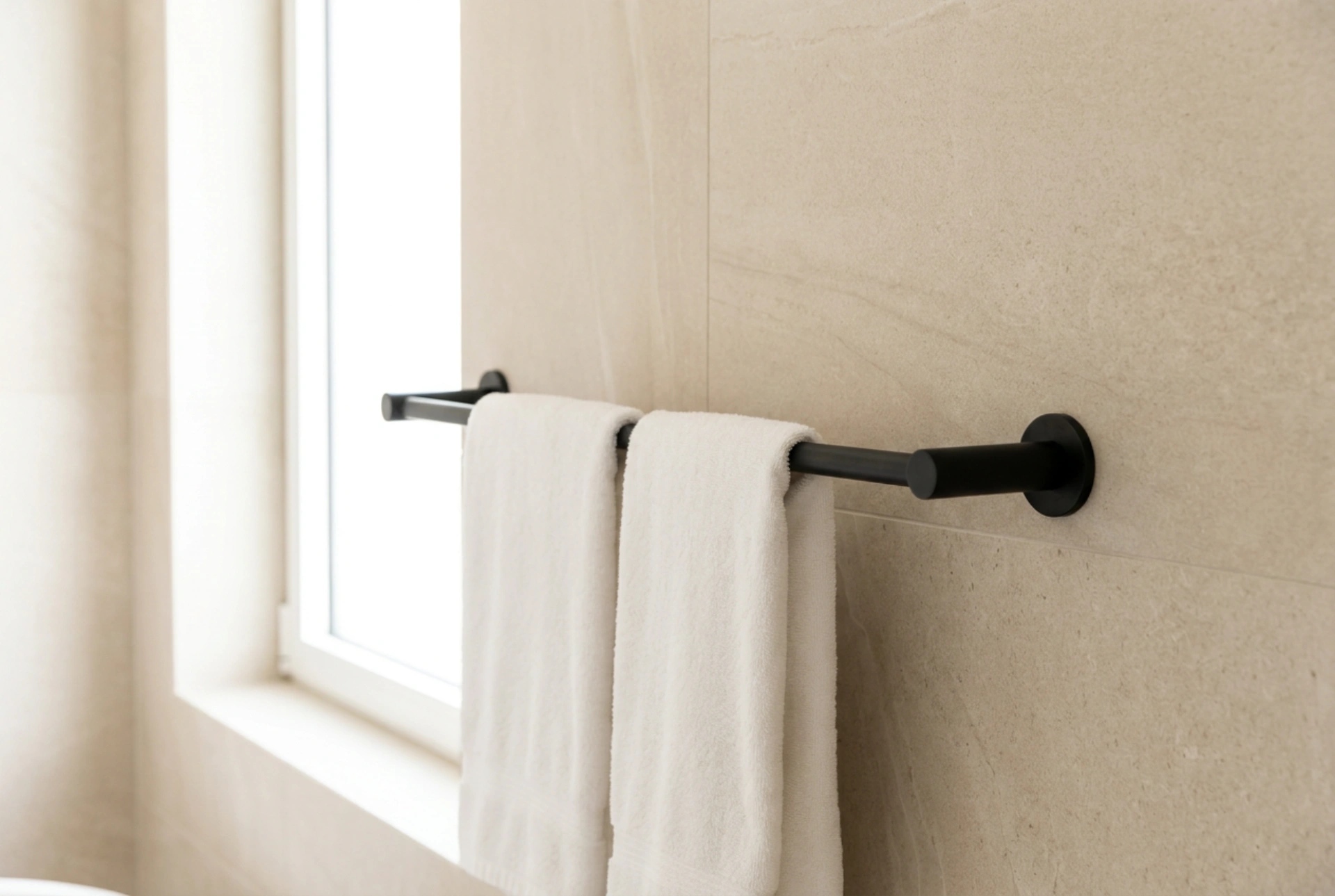


Matte black towel rails add a sleek, modern aesthetic to bathrooms, but their porous, light-scattering surface texture makes them highly susceptible to unsightly limescale deposits, soap scum, and oily fingerprint smudges. Keeping these fixtures pristine requires understanding the physical properties of matte coatings and applying targeted cleaning techniques that protect the delicate finish.
The Science Behind Matte Black Vulnerability
Unlike glossy chrome, which reflects light evenly, matte black finishes rely on a microscopically rough surface that scatters light in all directions to eliminate reflections. While visually appealing, this microscopic roughness creates tiny recesses where hard water minerals, soap residues, and skin lipids easily become trapped. When tap water evaporates from the rail, it leaves behind calcium and magnesium carbonates (limescale) nestled in these microscopic pockets. Similarly, the natural oils from your hands, along with fatty acids from soaps and hand creams, fill these crevices, altering how light scatters and creating dark, greasy-looking streaks.
Selecting the Right Chemistry: What to Use and Avoid
Maintaining a matte surface demands chemical precision. Harsh acidic cleaners, such as concentrated vinegar or citric acid, can chemically attack anodized layers or powder coatings over time, leading to irreversible discoloration or patchy glossiness. Highly alkaline solutions or chlorine-based bleaching agents can degrade the binders in the paint coating. Instead, opt for mild, pH-neutral surfactants combined with distilled or demineralised water. Distilled water is crucial because it lacks dissolved minerals, ensuring that no new scale deposits are introduced during the cleaning process. For stubborn greasy residue, isopropyl alcohol (IPA) diluted to 50% with distilled water serves as an excellent degreaser. IPA evaporates rapidly without leaving any chemical residue or altering the matte surface structure.
The Daily Mechanics of Streak-Free Maintenance
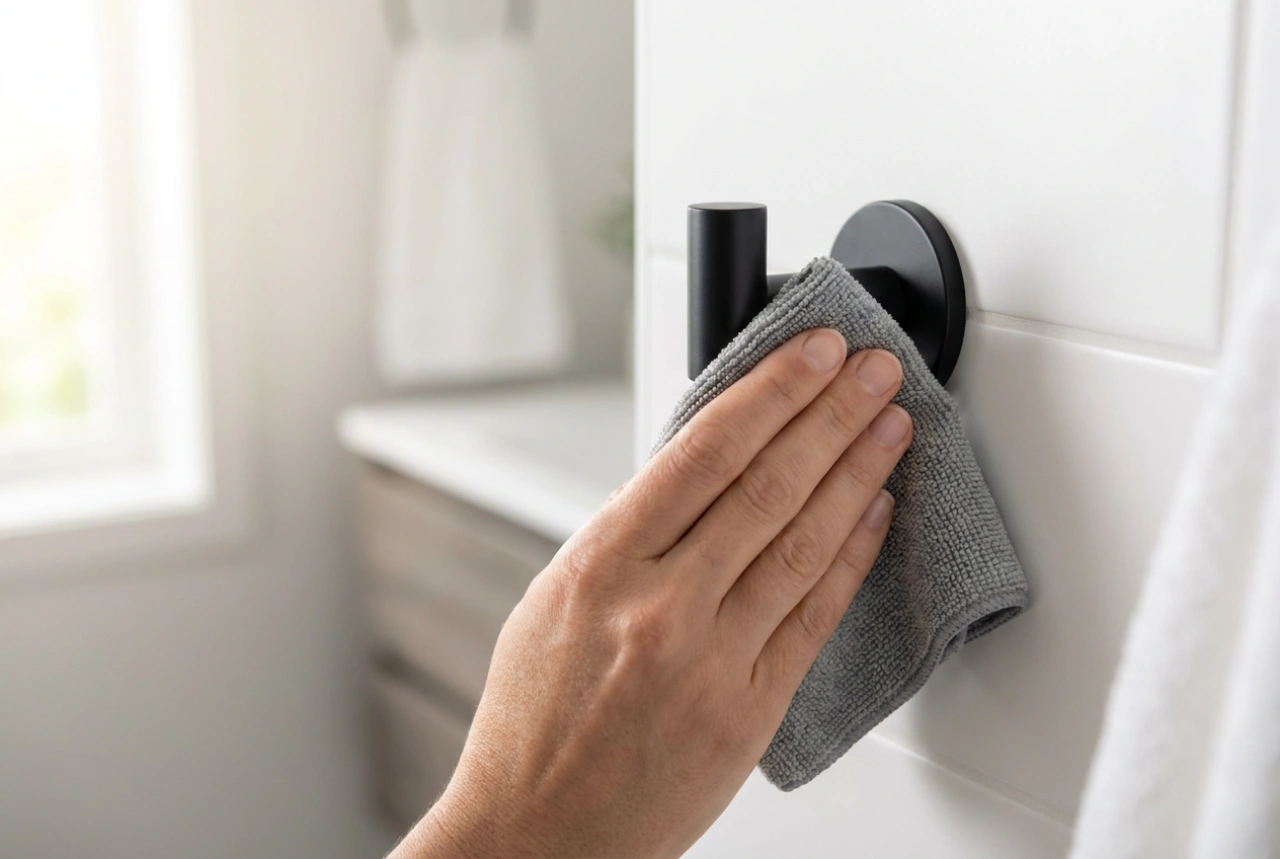
Preventing buildup is far easier than removing hardened scale. Implementing a quick, structured daily routine will preserve the finish indefinitely. First, immediately after using towels, wipe any visible water droplets off the rail. Water cannot deposit minerals if it is not allowed to evaporate on the surface. When a deeper clean is necessary, follow this sequence: dampative wiping using a soft, high-density microfiber cloth. The split fibers of microfiber create capillary action that lifts oils and dirt out of the matte microscopic pores without requiring abrasive force. Wipe in gentle, overlapping circular motions to ensure coverage of all surface contours. Crucially, always follow with a completely dry, clean microfiber cloth to buff the surface dry. Never allow the fixture to air-dry, as this is the primary cause of streak formation.
Creating a Hydrophobic Shield
To reduce the frequency of cleaning, you can apply principles of surface tension to make the metal hydrophobic. Applying an ultra-thin layer of cosmetic-grade mineral oil or a specialized polymer-based hydrophobic sealant designed for matte surfaces changes how water behaves. When water contacts a hydrophobic surface, it cannot spread out; instead, it forms high-contact-angle beads that roll off easily under gravity or minimal airflow. To apply, place a few drops of mineral oil on a dry microfiber cloth, buff it thoroughly into the clean towel rail, and then use a second dry cloth to remove any excess. The surface should feel completely dry to the touch, leaving a microscopic protective barrier that repels water, sweat, and soap residue, preventing them from bonding to the matte finish.