

High-efficiency cooking relies on seamless ergonomics and the preservation of ingredient quality. Strategically placing and organizing a kitchen herb shelf requires balancing physical accessibility with strict environmental controls to protect volatile aromatic compounds.
The Science of Herb Degradation: Heat, Light, and Moisture
Dried and fresh herbs owe their distinct aromas and flavors to volatile organic compounds, such as linalool, thymol, carvacrol, and eugenol. These chemical compounds are highly sensitive to thermal degradation, photo-oxidation, and moisture. Placing an open herb shelf directly above or adjacent to a cooktop exposes the jars to localized thermal currents and rising steam. Water vapor increases the relative humidity inside poorly sealed containers, leading to hydrolytic rancidity, clumping, and microbial growth like mold.
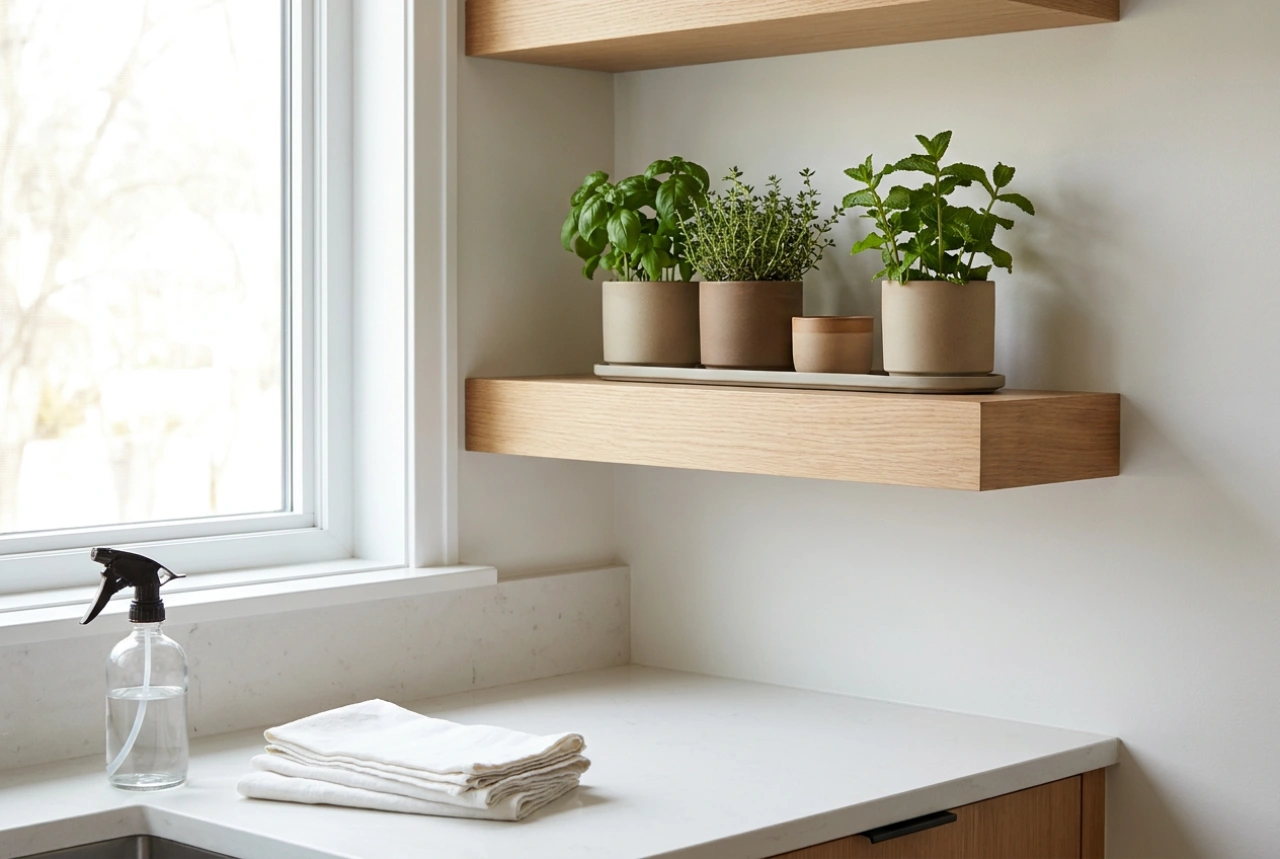
Furthermore, ultraviolet (UV) radiation from natural sunlight breaks down chlorophyll and accelerates the decomposition of essential oils. This photo-degradation turns vibrant green herbs into a gray, flavorless dust. To prevent this, a herb shelf must never be positioned in direct path of window light or immediately above the stove's heat plume. Instead, it should be mounted in a cool, shaded zone where the temperature remains stable, ideally below twenty-two degrees Celsius.
Material Chemistry of Storage Containers
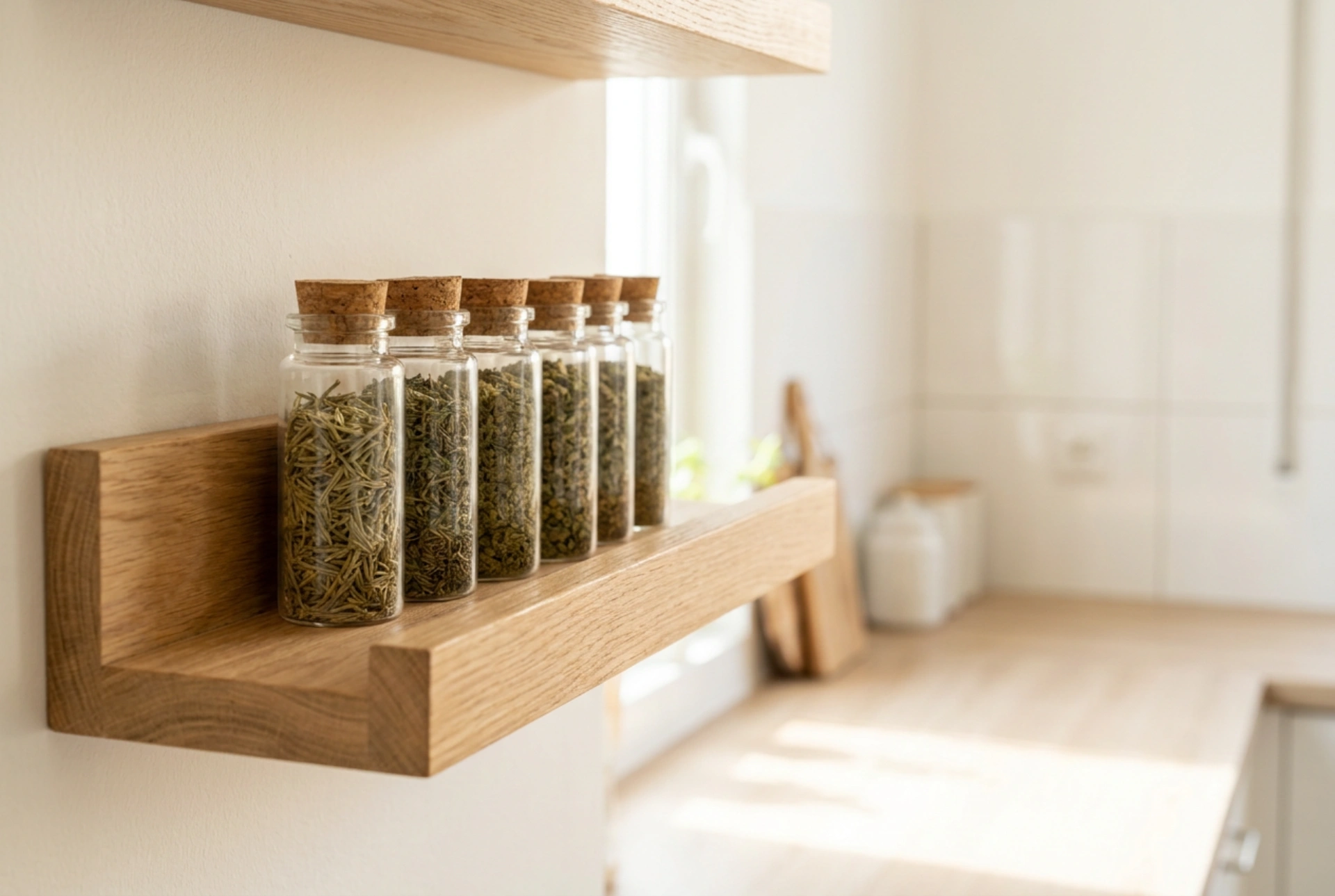
The choice of container material directly affects the shelf life of stored herbs. While clear borosilicate glass is highly durable and chemically inert, it allows full-spectrum light transmission, offering zero protection against photo-oxidation. If your kitchen layout forces you to place the shelf in a brightly lit area, amber, cobalt blue, or violet glass jars should be used. These colored glasses act as optical filters, blocking damaging UV and visible light wavelengths while allowing only harmless infrared and violet light to pass through.
For complete light exclusion, opaque materials such as stainless steel, ceramic, or food-grade tinplate are superior, though they require clear external labeling since visual inventory is impossible. Regardless of the container material, the sealing mechanism is critical. Standard twist-off metal lids often fail to prevent micro-gaseous exchange. Opt for jars equipped with mechanical wire-bale clasps and silicone gaskets, or screw-on lids with plastisol liners. These systems create a hermetic seal, locking in volatile oils and keeping ambient moisture out.
Ergonomic Placement and Kinetic Workflow
To optimize cooking efficiency, the herb shelf must be positioned within the primary preparation and cooking zones. Ergonomically, the optimal mounting height is between one hundred and twenty and one hundred and fifty centimeters from the floor. This range corresponds to the comfortable eye-to-chest level of most users, allowing for rapid visual scanning and physical reach without the need to stretch, bend, or use step stools.
The shelf should be located approximately sixty to ninety centimeters lateral to the range or prep counter. This distance places the herbs within the secondary reach zone—accessible by extending the arm without rotating the torso. This minimizes steps taken during active cooking, reducing the risk of burning delicate ingredients while searching for seasonings. A single-tier or shallow multi-tier design is preferred; deep shelves encourage double-stacking, which obscures jars, slows down retrieval times, and increases the likelihood of accidental drops.
Systemic Organization of Botanical Families
An efficient herb shelf should be organized by botanical and chemical properties rather than simple alphabetical order. This systematic approach aligns with how ingredients behave during the cooking process:
- Phenolic and Hardy Herbs: Group rosemary, thyme, oregano, and marjoram together. These herbs contain robust phenolic compounds that tolerate slight thermal fluctuations and are typically added early in the cooking process.
- Monoterpene-Rich Herbs: Group delicate leafy herbs like basil, tarragon, dill, and parsley. These contain highly delicate monoterpenes that degrade rapidly under mild warmth and should occupy the coolest, lowest section of the shelf.
- Powdered Spices and Ground Seeds: Keep ground coriander, cumin, and fennel seeds grouped separately. Because grinding increases the surface area exposed to oxygen, these oxidize much faster than whole leaves and must be monitored closely.
Maintaining Container Hygiene and Dry Conditions
Before refilling any jar on your shelf, it must undergo thorough sanitation and dehydration. Wash containers in hot water with an unscented, neutral detergent to remove residual oils from the previous batch, which can oxidize and spoil the new contents. After rinsing, dry the jars completely. Even a single micro-droplet of water trapped inside a sealed jar will create a high-humidity microclimate, triggering rapid spoilage and mold growth within forty-eight hours. Air-drying for a full twenty-four hours on a clean rack is highly recommended before filling.